Academic anti CD19 CAR-T cell therapy for relapsed/refractory B-cell lymphomas in real-world clinical practice: a prospective cohort study - Summary - MDSpire
Advertisement
Academic anti CD19 CAR-T cell therapy for relapsed/refractory B-cell lymphomas in real-world clinical practice: a prospective cohort study
To assess the efficacy and safety of academic CAR-T cells in patients with relapsed/refractory B-cell lymphomas.
Approach:
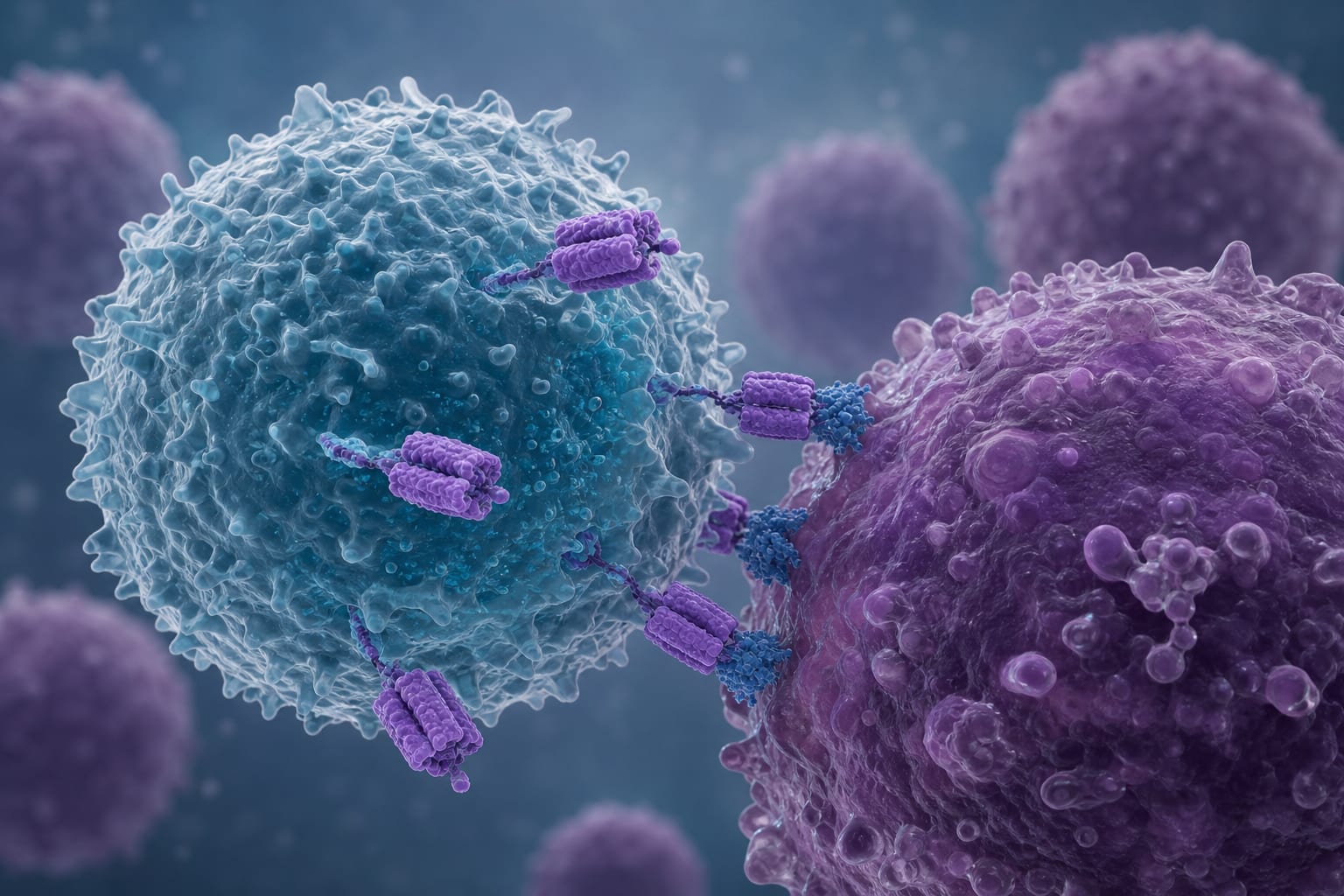
CAR-T Cell Production: The CAR-T cell product was manufactured using a lentiviral vector encoding anti-CD19 CAR, which is crucial for the therapeutic efficacy of the treatment.
Key Findings:
Complete response achieved in 57.5% of patients.
4-year event-free survival (EFS) rate was 46.2 ± 6.3%.
4-year overall survival (OS) rate was 67 ± 5.9%.
In patients with follicular lymphoma, complete response was 83.3% with a 4-year EFS of 81.7 ± 9.6%.
Cytokine release syndrome (CRS) occurred in 43.4% of patients, with ≥ grade 3 in 2.6%.
Neurotoxicity (ICANS) was identified in 26.3% of patients, with grade 4 ICANS in 2.6%.
Interpretation:
Limitations:
The study is limited to a single center and may not be generalizable.
The follow-up period may not be sufficient to assess long-term outcomes.
Conclusion:
The academic CAR T-cell product is a potential option for patients in regions where commercial products are not accessible.
by Natalya E. Konoplya, Tatiana M. Doroshenko, Katsiaryna Yu. Zharkova, Tatyana V. Savich, Ihar M. Seviaryn, Nadezhda M. Bobrova, Alexey A. Beleevsky, Eldar Kh. Sarydze, Sergey L. Polyakov