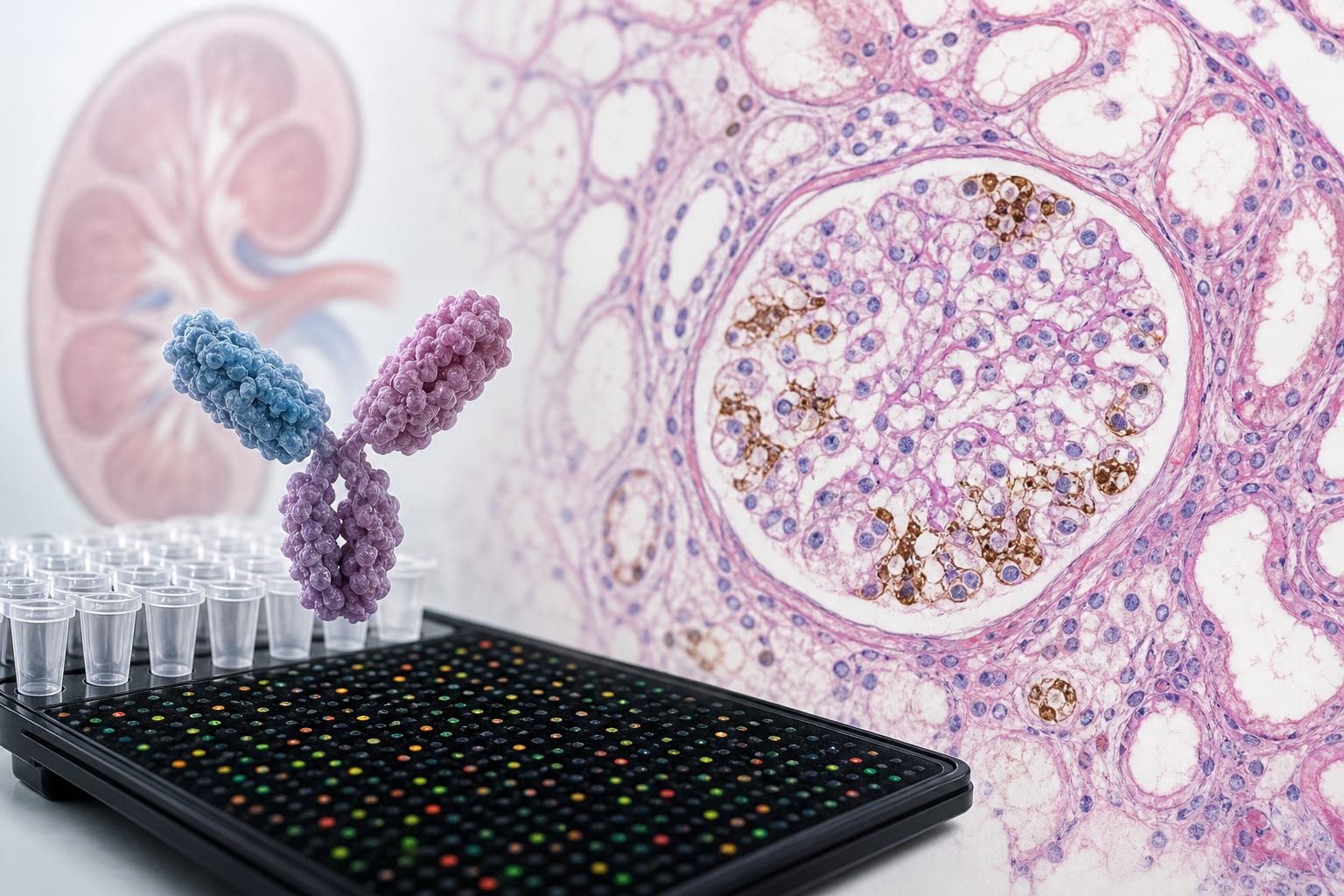
To investigate the association between intragraft donor-specific antibodies (gDSA) detected in kidney biopsy eluates and histologic findings in kidney transplant recipients with concurrent serum donor-specific antibodies (sDSA).
Highest gDSA positivity was found in C4d-only lesions (100.0%), aABMR (90.9%), and aABMR+TCMR (83.3%).
Lower gDSA positivity was observed in caABMR (44.4%), no rejection (22.7%), and aTCMR (14.3%).
The gDSA positive rate in aABMR was significantly higher than in the no-rejection group (P = 0.003; OR 34, 95% CI 3.5–334).
The sum of gDSA MFI was significantly higher in aABMR, aABMR+TCMR, and C4d-only lesions (P = 0.009, 0.035, and 0.007, respectively).
No significant difference in the sum of sDSA MFI across histologic groups.
Interpretation:
The presence and intensity of gDSA in kidney transplant recipients with concurrent sDSA correlate with specific histologic findings.
Limitations:
The study included a small number of biopsies in certain histologic categories, such as C4d-only (n = 3) and IFTA III (n = 2), which may limit the generalizability of findings.
Conclusion:
gDSA may provide additional insights into the immunologic context of histologic variability in kidney transplant recipients with circulating sDSA.
by Hyunjae Lee, Eun Youn Roh, Tae-Shin Kim, Yu Jung Choi, Inseong Oh, Hajeong Lee, Sang Il Min, Chang Wook Jeong, Hee Gyung Kang, Jongwon Ha, Kyung Chul Moon, Eun Young Song