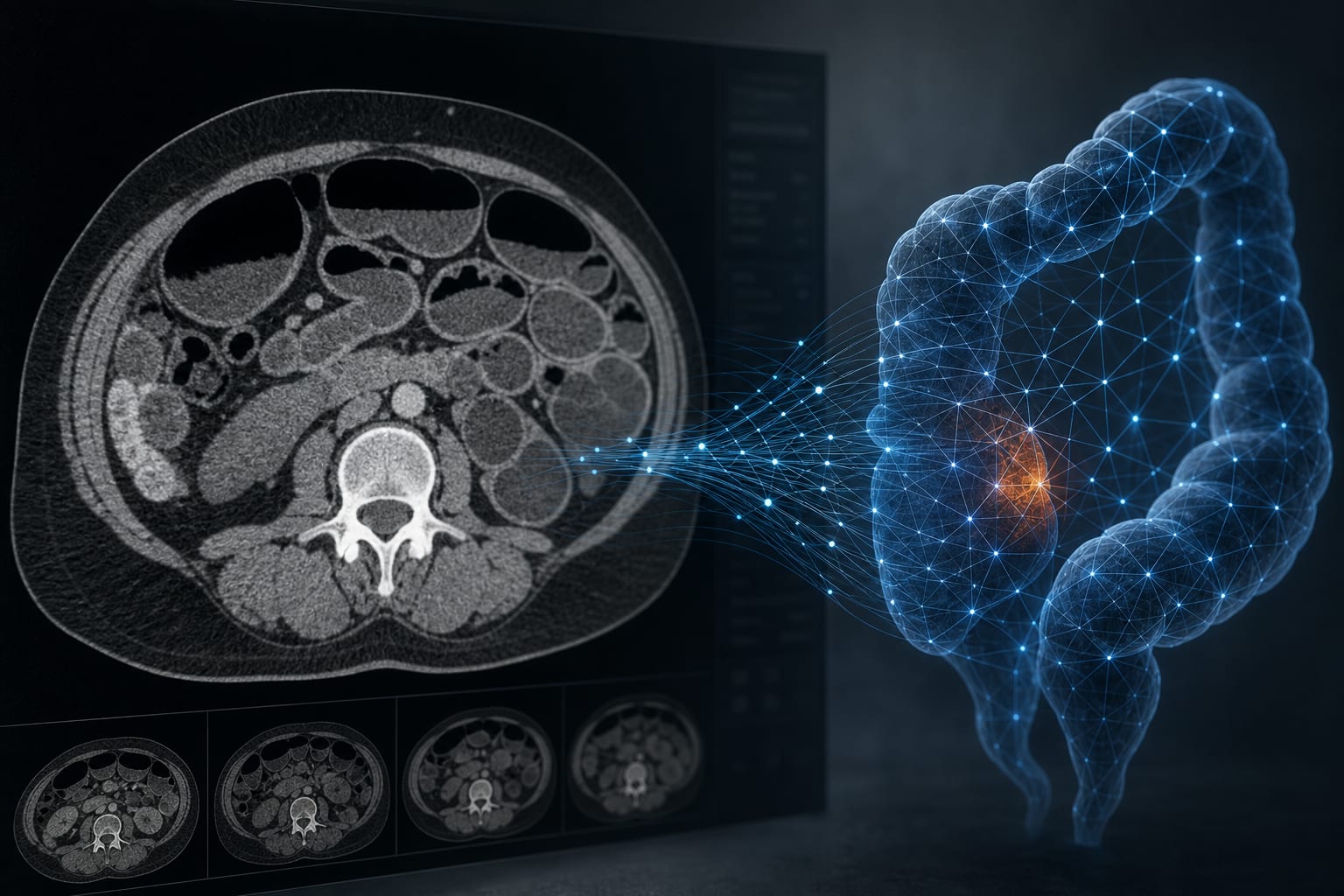
To summarize and clarify the clinical scope, validation status, and translational limitations of prediction models for intestinal obstruction.
Approach:
Search Strategy: PubMed was searched for studies on intestinal obstruction and prediction models, focusing on articles published from database inception to October 31, 2025.
Model Classification: Models were categorized based on clinical tasks such as diagnosis, prediction of surgery, strangulation, and treatment failure.
Performance Evaluation: Performance was assessed considering methodological heterogeneity, external validation, and clinical workflow feasibility.
Key Findings:
Conventional clinical scores are transparent and inexpensive but show variable performance across endpoints and settings.
CT-integrated models enhance anatomical and ischemic risk assessment but depend on imaging availability and reader expertise.
Machine-learning models demonstrate high discrimination in selected datasets but often lack external validation.
Interpretation:
The transition from static clinical scores to dynamic multimodal decision-support systems is underway, emphasizing the need for rigorous validation and integration into clinical workflows.
Limitations:
Many studies are retrospective and single-center, limiting generalizability.
AUC values across studies are not directly comparable due to methodological differences in population, endpoint, and design.
Conclusion:
Immediate research priorities include multicenter validation, standardized definitions, and improved explainability and integration of AI models in emergency surgical care.