To assess the validity of binary subphenotyping in ARDS and explore the potential for a continuous spectrum model of inflammatory subphenotypes.
Approach:
Subphenotype Classification: The study discusses the development of parsimonious classifier algorithms for ARDS subphenotype classification using clinically accessible variables.
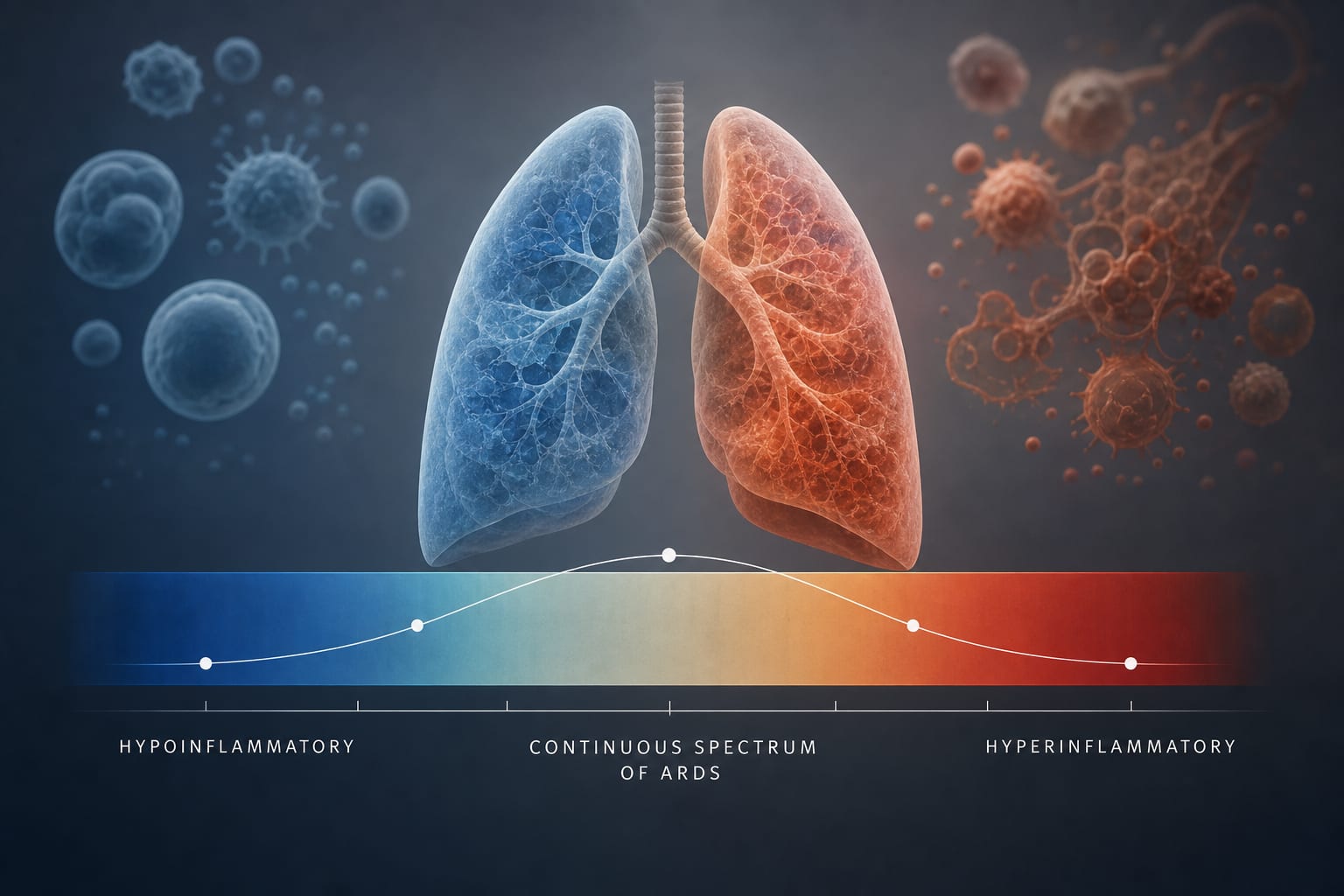
Continuous Probability Evaluation: Kitsios and colleagues evaluated continuous probabilities of inflammatory subphenotype assignment in patients with acute hypoxemic respiratory failure and ARDS.
Longitudinal Analysis: The study emphasizes the importance of longitudinal analyses to observe transitions between hyperinflammatory and hypoinflammatory phenotypes over time.
Key Findings:
Binary subphenotyping may fail to capture the full spectrum of ARDS pathophysiology.
Substantial heterogeneity exists within traditionally defined hyperinflammatory and hypoinflammatory groups.
Dynamic changes in subphenotype probability provide important prognostic information.
Interpretation:
Kitsios and colleagues' findings indicate that a probabilistic, dynamic model of subphenotyping may enhance precision-based medicine in ARDS.
Limitations:
The studies are post-hoc analyses with variability in biomarkers and patient cohorts.
Lack of prospective validation and real-time stratification limits bedside application.
Observed stability in biomarker-based subphenotypes may not reflect true homogeneity.
Conclusion:
Moving beyond binary classification toward a continuous spectrum model may improve risk stratification and treatment outcomes in ARDS.