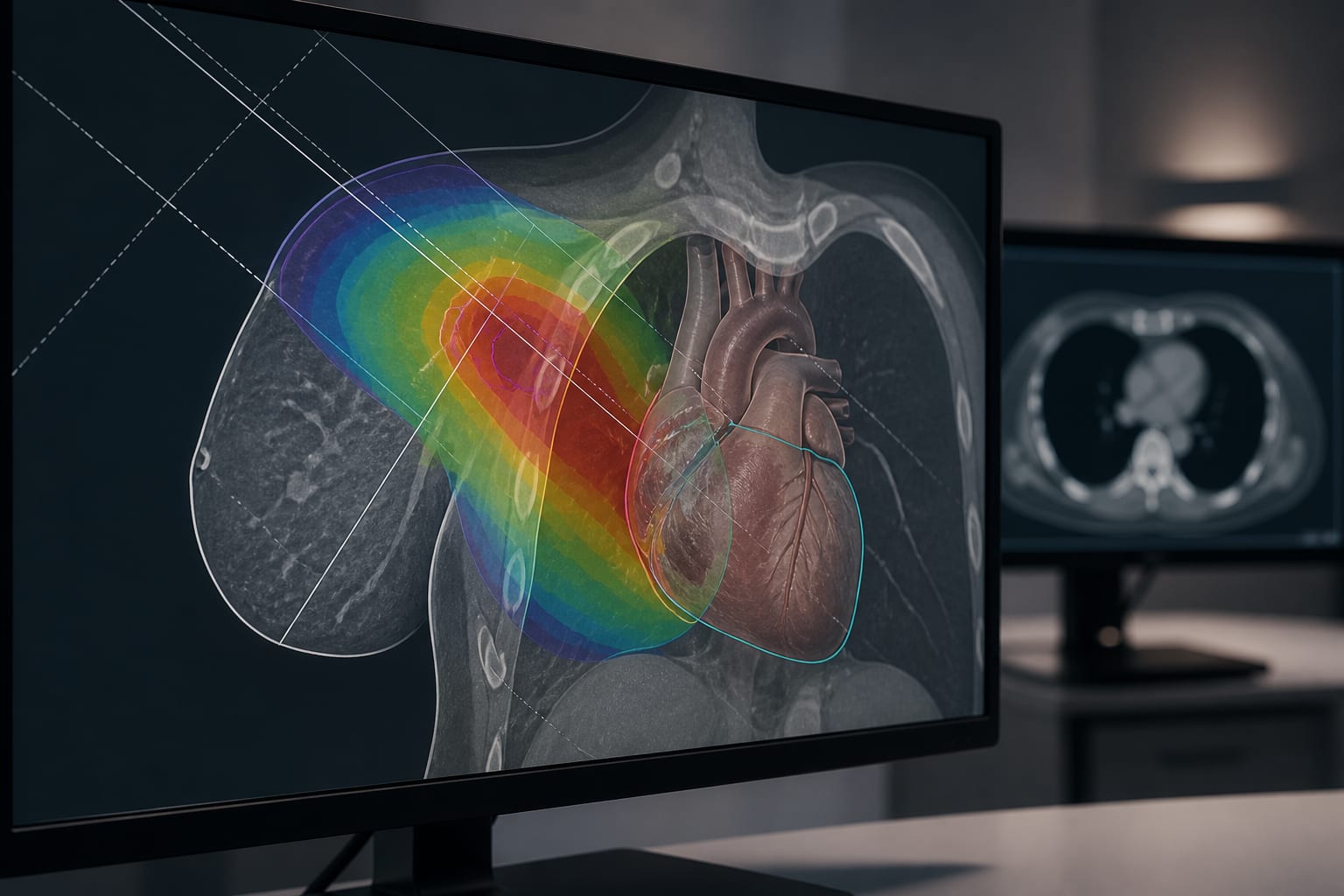
To assess the cardiovascular risk associated with left-sided versus right-sided postoperative breast radiotherapy in women with varying baseline cardiovascular risk factors.
Approach:
Study Cohort: Analysis of a nationwide Korean cohort comprising 23,305 women who underwent postoperative breast radiotherapy without a history of ischemic heart disease.
Cardiovascular Risk Factors: Evaluation of the 8-year cumulative incidence of ischemic heart disease (IHD) based on the number of baseline cardiovascular risk factors.
Key Findings:
Left-sided radiotherapy was associated with a higher IHD risk compared to right-sided treatment, particularly in women with 3 or more cardiovascular risk factors.
The 8-year cumulative incidence of IHD was 20.3% for left-sided radiotherapy versus 15.2% for right-sided radiotherapy.
No significant difference in IHD risk was found among women with 0 to 2 risk factors.
Interpretation:
The study highlights the importance of considering both anatomical factors and patient vulnerability in assessing cardiovascular risks associated with breast radiotherapy.
Limitations:
The analysis did not include patient-level dosimetry and used laterality as a proxy for cardiac radiation exposure.
Follow-up began at surgery rather than at the start of radiotherapy, and IHD was identified through administrative claims.
The median follow-up of 4.3 years may be insufficient for assessing radiation-associated coronary disease.
Conclusion:
The findings indicate the importance of considering absolute cardiovascular risk in treatment planning.
The evolution of breast cancer care is increasingly challenging a long-standing assumption in oncology: that greater treatment intensity necessarily translates into better outcomes.