Exploring the benefits, facilitators and barriers to male involvement in sexual and reproductive health: a qualitative study of nurses’ and midwives’ perspectives in Ghana - Summary - MDSpire
Advertisement
Exploring the benefits, facilitators and barriers to male involvement in sexual and reproductive health: a qualitative study of nurses’ and midwives’ perspectives in Ghana
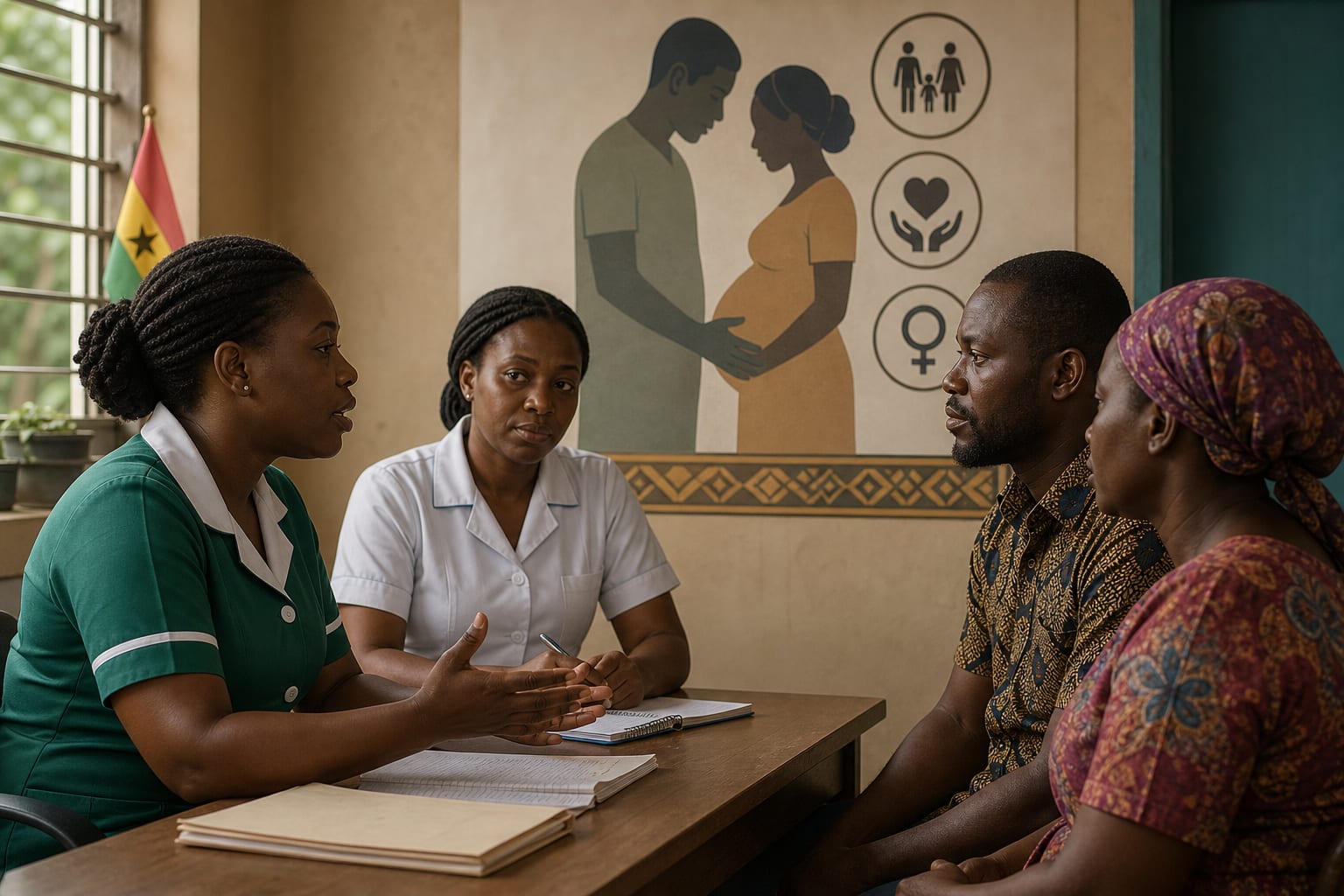
To explore the perspectives of nurses and midwives on male involvement in sexual and reproductive health (SRH), identifying benefits, challenges, and strategies for enhancement.
Approach:
Study Design: Qualitative exploratory design using focus group discussions with 32 nurses and midwives in Greater Accra Region, Ghana.
Data Collection: Semi-structured interview guide and recorded interviews.
Data Analysis: Thematic analysis based on Braun and Clark’s framework.
Key Findings:
Benefits of male involvement include improved health outcomes for women and reduced complications due to emotional and logistical support from male partners.
Barriers to participation include cultural norms, societal expectations, and inadequate knowledge.
Participants expressed a strong desire to promote male involvement in SRH.
Interpretation:
Comprehensive education and community engagement are necessary to reshape attitudes towards male involvement, with a noted gap in formal training for healthcare providers.
Limitations:
The study primarily reflects the views of healthcare providers and may not encompass all perspectives on male involvement.
The qualitative nature of the study may limit generalizability.
Conclusion:
Enhancing male involvement in SRH can significantly improve maternal health outcomes, with nurses and midwives playing a crucial role in this initiative.