To evaluate whether former smokers who quit more than 10 years ago still have elevated lung cancer and other-cause mortality, questioning the appropriateness of current cessation-based screening eligibility criteria and its implications for patient care.
Key Findings:
Former smokers who quit over 10 years ago had elevated other-cause mortality compared to never smokers, indicating a need for reevaluation of screening criteria.
Current smokers had 2-3 times higher hazards of death from causes other than lung cancer, underscoring the risks of continued smoking.
Former smokers' risk varied by age at cessation, with significant increases in mortality for those who quit later in life, highlighting the importance of cessation timing.
Lung cancer mortality did not decrease with longer time since quitting when accounting for cumulative smoking exposure, suggesting persistent risk.
Absolute rates of other-cause mortality in past-eligible smokers were similar to younger eligible smokers, raising questions about current eligibility thresholds.
Interpretation:
The findings suggest that fixed cessation-based cutoffs for lung cancer screening may not adequately reflect the long-term risk profiles of former smokers, indicating a potential need for revised guidelines.
Limitations:
The study was observational and did not assess clinical screening outcomes, which limits the applicability of the findings.
Cox models did not adjust for potential confounders beyond age, sex, and smoking-related variables, which may affect the validity of the results.
Subgroup estimates, especially among older women, were based on small event numbers, limiting precision and generalizability.
The cohort had lower smoking prevalence than the general population, which may affect the generalizability of the findings to broader populations.
Conclusion:
The study indicates that former smokers who previously met screening criteria may still have sufficient lung cancer risk to warrant consideration for screening, suggesting a potential need for modifying eligibility criteria, but further research is necessary to validate these findings.
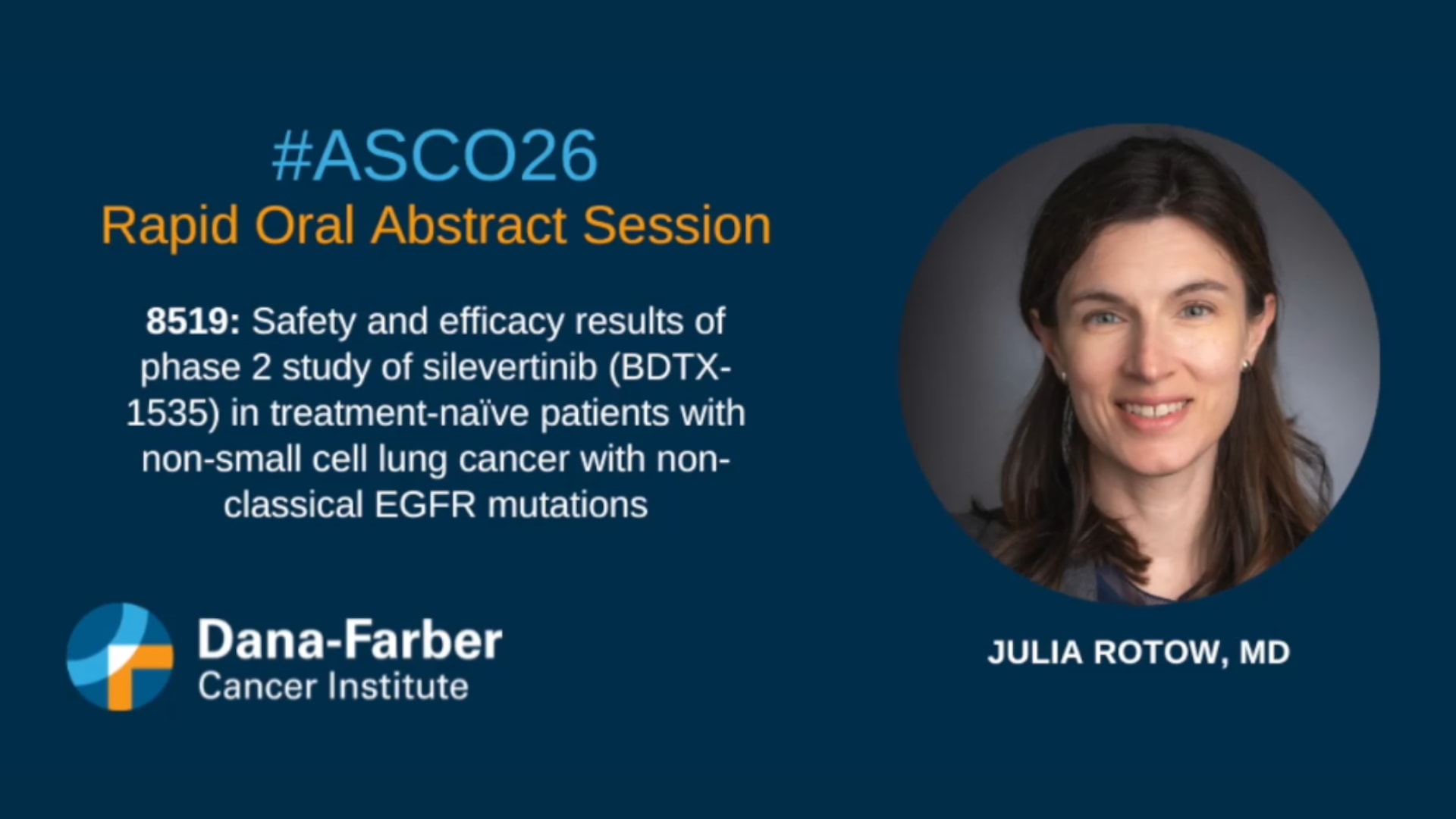
Dana-Farber Cancer Institute's Dr. Julia Rotow reported on a study looking at silevertinib, with data showing it may offer a new first-line option for hard-to-treat EGFR non-small cell lung cancer variants, with encouraging brain activity and manageable side effects.