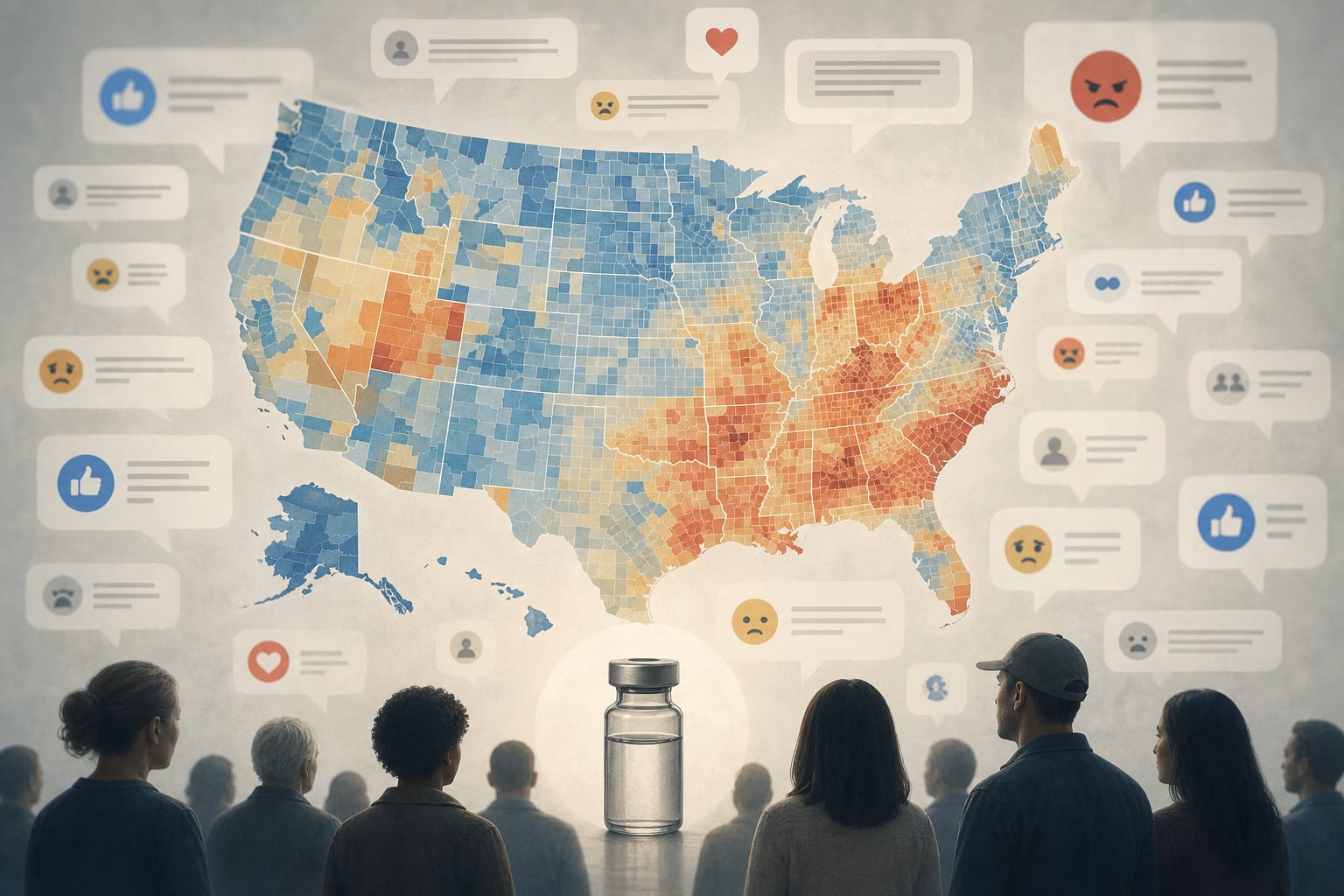
Collective Emotion to Guide Clinicians and Public Health—When Evidence Is Not Enough
-
By
-
Anish K. Agarwal
-
Rachel Solnick
-
June 1, 2026
-
Objective:
To evaluate nationwide emotional responses to the arrival of COVID-19 vaccines using social media data.
Key Findings:
- The first COVID-19 vaccine administration was associated with increases in joy and anger, alongside a decline in fear.
- Emotional responses to scientific progress are layered and heterogeneous, with joy reflecting hope and anger arising from frustration and mistrust.
- Communities with higher COVID-19 death tolls showed larger increases in joy and smaller increases in anger.
- Democratic-leaning counties experienced larger increases in joy and decreases in fear compared to Republican-leaning counties.
- Anger is a significant emotional response that can undermine clinician-patient relationships and complicate public health efforts.
Interpretation:
Remove all editorial interpretations and focus solely on findings.
Limitations:
- Social media data may not represent all populations and should be interpreted as directional rather than population-prevalence estimates.
- The study does not evaluate the effectiveness of tailored communication strategies in clinical settings.
Conclusion:
Remove unsupported claims and focus on findings.