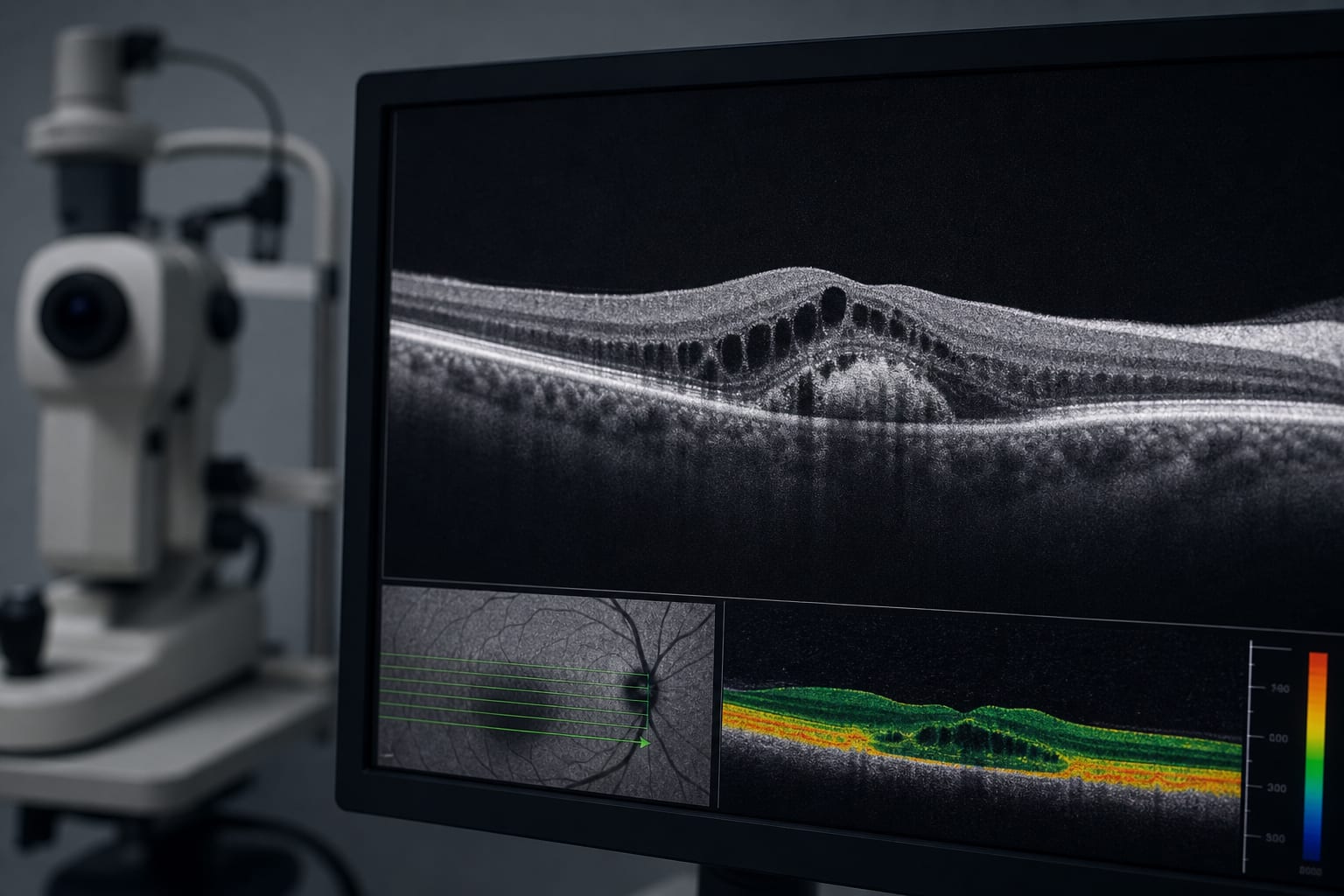
To examine whether community optometrist-led monitoring of patients with quiescent neovascular age-related macular degeneration (QnAMD) is noninferior to hospital-based monitoring.
Approach:
Key Findings:
Community optometrists had a false-negative rate of 3.8%, compared to 7.8% in the hospital group, meeting the noninferiority margin.
False-positive rates were higher in the community group (8.4% vs 3.5%), indicating a tendency toward overreferral.
The study emphasized the need for a carefully selected and trained group of optometrists operating within a structured shared-care pathway.
Interpretation:
The results should not be interpreted as applicable to all community optometrists, as the study involved a specifically trained and accredited group operating under a structured system.
Limitations:
The study's findings may not be directly applicable to other healthcare systems due to differences in optometrist credentialing and training.
The referral pathways and classification categories available to community optometrists may not reflect standard practices elsewhere.
Conclusion:
The FENETRE trial results must be interpreted cautiously and not generalized without considering local healthcare structures.