To synthesize recent evidence on the biological architecture of immune-excluded and immune-suppressive tumor microenvironments (TMEs) and explore spatial biomarkers for patient stratification and therapeutic decision-making, emphasizing their significance in improving immunotherapy outcomes.
Key Findings:
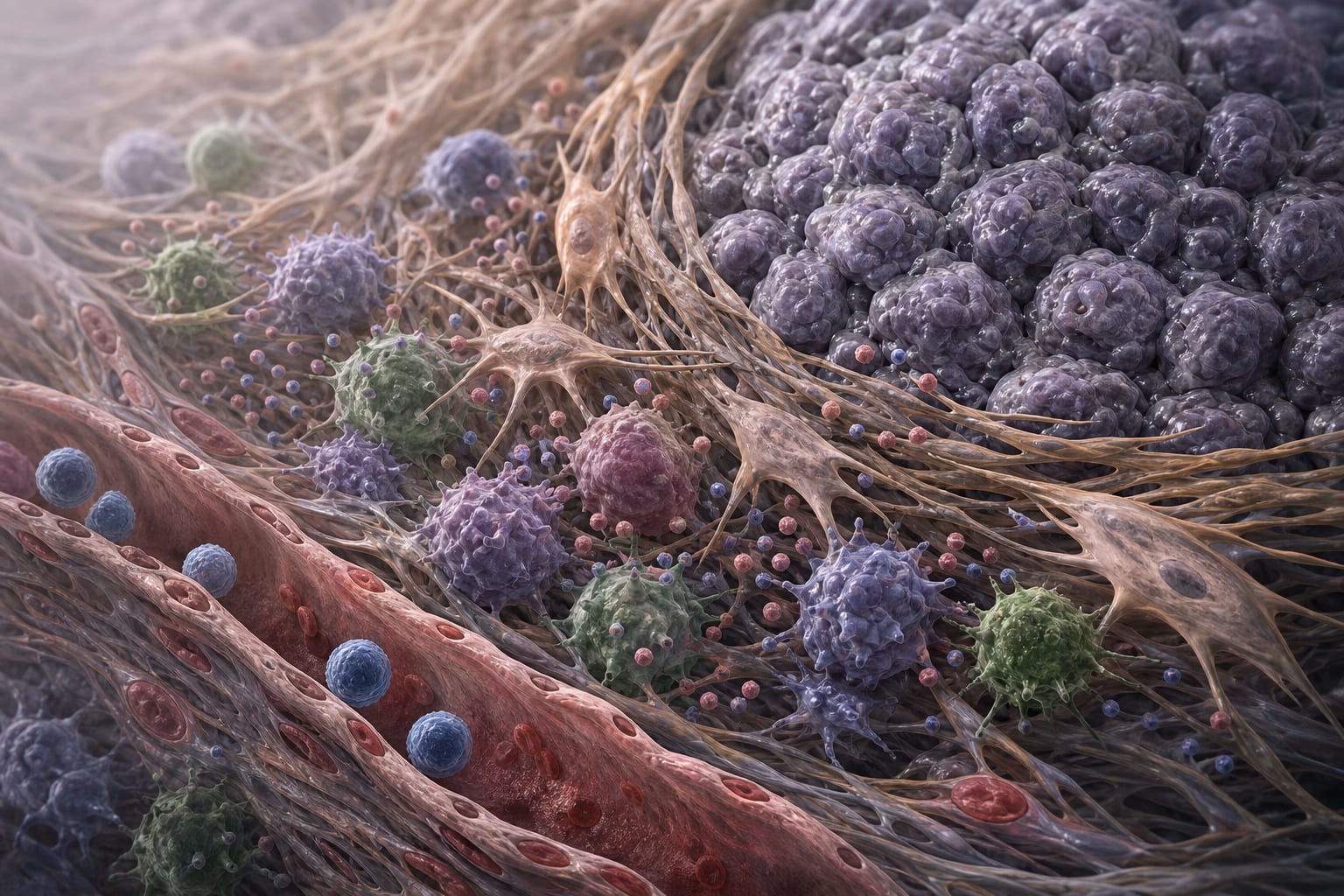
Resistant TMEs are spatially organized and dynamically evolving ecosystems.
CAF/ECM remodeling, suppressive myeloid populations, cytokine circuits, vascular dysfunction, and metabolic stress impair T-cell trafficking and effector fitness.
Spatially resolved technologies may refine patient stratification by identifying dominant resistance modules.
Interpretation:
Immune-excluded and immune-suppressive TMEs represent heterogeneous resistance states that require a nuanced understanding of their spatial and biological characteristics, with implications for therapeutic strategies.
Limitations:
Prospective clinical validation of spatial biomarkers remains limited, and potential biases in the reviewed studies should be considered.
Conclusion:
Future progress will depend on integrating spatially informed biomarker systems, longitudinal profiling, and mechanism-based combination therapies to convert nonresponsive tumors into immunologically permissive niches, highlighting the critical role of spatial biomarkers in therapeutic interventions.