Distinct prognostic value of aspartate-to-alanine aminotransferase ratio (AAR) in traumatic brain injury versus hemorrhagic stroke: a cohort study of 1,069 patients - Summary - MDSpire

Distinct prognostic value of aspartate-to-alanine aminotransferase ratio (AAR) in traumatic brain injury versus hemorrhagic stroke: a cohort study of 1,069 patients

  • By

  • Dilmurat Gheyret

  • Xiaotao Gao

  • Ziwei Zhou

  • Lei Li

  • Jinchao Wang

  • Xu Zhang

  • Haoran Jia

  • Shu Zhang

  • Mirzat Turhon

  • Maimaitili Aisha

  • Cong Wang

  • Yuhan Li

  • Yingsheng Wei

  • Shuo An

  • Jian Sun

  • Jianning Zhang

  • Hengjie Yuan

  • Ye Tian

  • June 4, 2026

  • 0 min

Share

Objective:

To examine the disease-specific prognostic value of the aspartate aminotransferase-to-alanine aminotransferase ratio (AAR) in traumatic brain injury (TBI), intracerebral hemorrhage (ICH), and aneurysmal subarachnoid hemorrhage (aSAH), with a focus on comparing these conditions.

Key Findings:
  • Unfavorable outcomes occurred in 39.3% of patients.
  • Higher AAR was associated with poor outcomes in the overall cohort (adjusted OR 1.34, 95% CI: 1.07–1.66).
  • In TBI, elevated AAR was a robust independent predictor of poor outcomes (adjusted OR 2.15, 95% CI: 1.46–3.15).
  • AAR showed no significant prognostic value in ICH or aSAH (p = 0.746 and p = 0.810, respectively).
  • A significant dose–response relationship between AAR and unfavorable outcomes was observed (P for trend < 0.001).
Interpretation:

The prognostic value of AAR is heterogeneous, serving as a strong predictor in TBI but lacking utility in hemorrhagic stroke, indicating distinct pathophysiological mechanisms and highlighting the need for tailored clinical approaches.

Limitations:
  • Retrospective design may introduce bias.
  • Exclusion of patients with pre-existing liver disease limits generalizability.
  • Potential confounding factors not controlled for may affect results.
Conclusion:

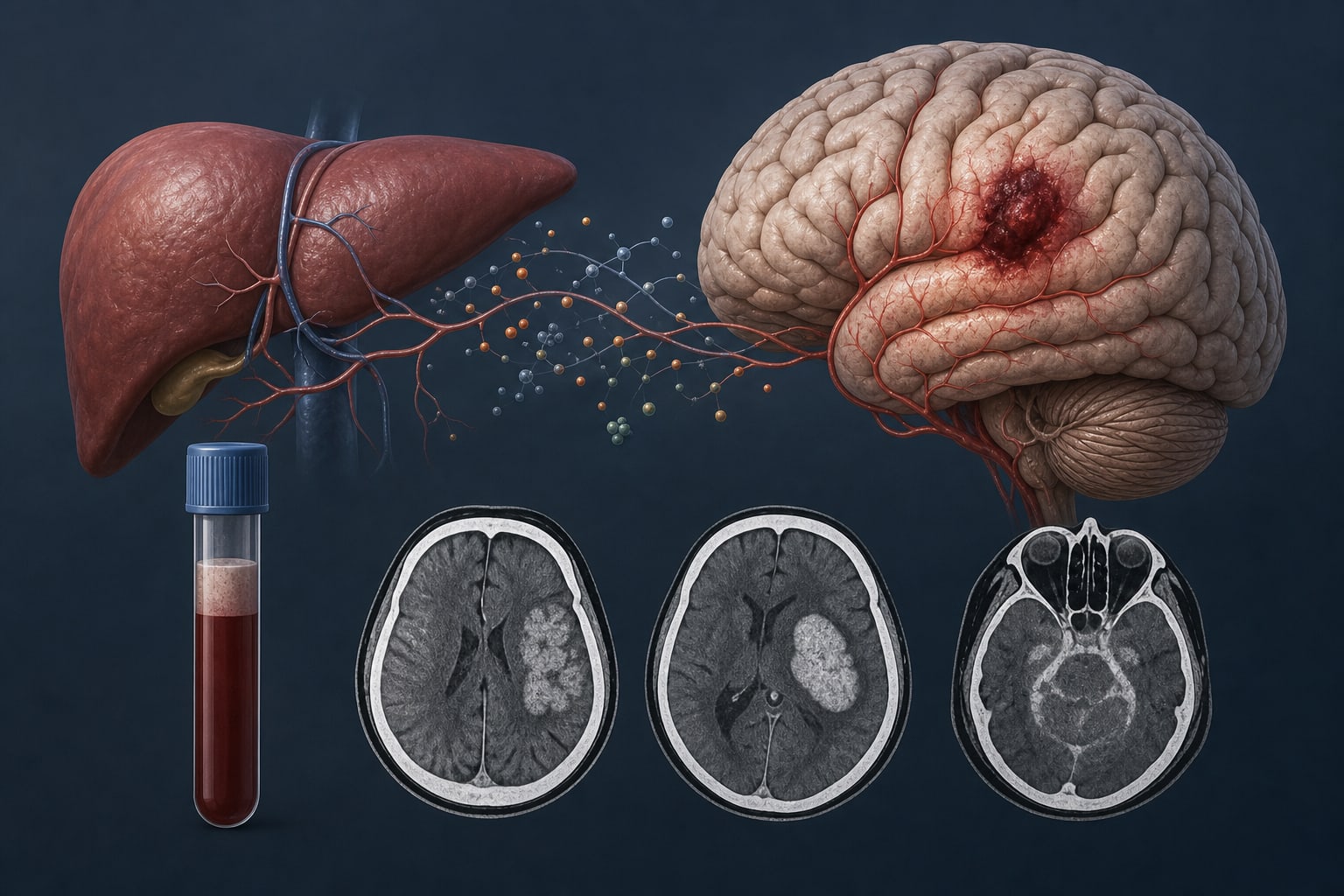
AAR is a powerful predictor in TBI reflecting systemic metabolic stress, but not in hemorrhagic stroke, underscoring the importance of understanding the liver-brain axis in clinical settings.

Original Source(s)

Related Content