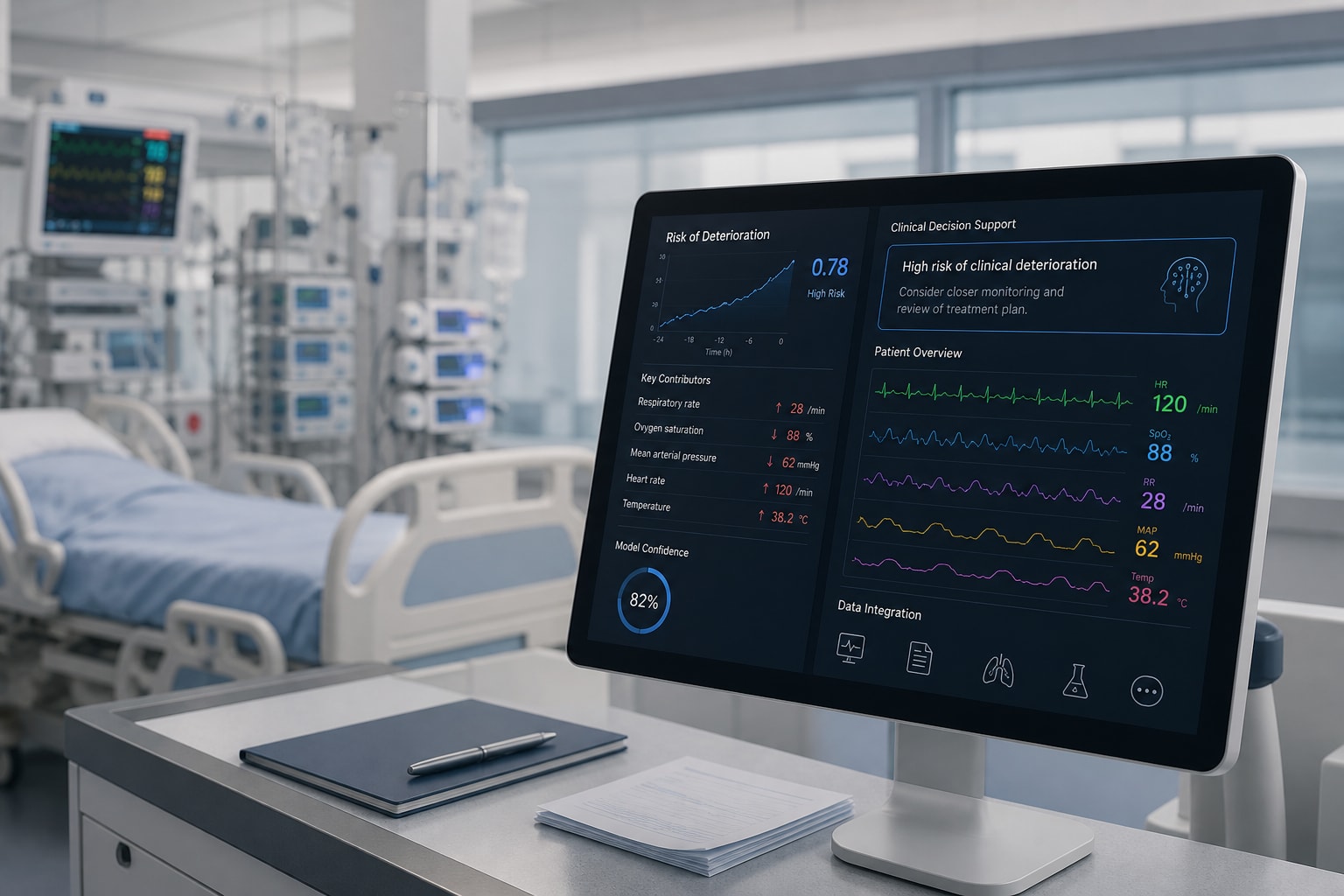
To identify challenges and support factors influencing the adoption of AI technologies in Chinese ICUs from the perspective of nurse managers.
Approach:
Framework Utilization: The study employs the Consolidated Framework for Implementation Research (CFIR) to analyze multilevel factors affecting AI implementation.
Key Findings:
AI technologies have potential benefits in enhancing patient safety and optimizing workflows in ICUs from the perspective of nurse managers.
Challenges to AI adoption identified by nurse managers include integration into existing workflows, data fragmentation, and ethical concerns.
Nurse managers play a critical role in decision-making and resource allocation, which significantly impacts AI implementation.
Interpretation:
The integration of AI in ICUs is complex and influenced by various organizational, individual, and process-related factors, necessitating a tailored approach for successful adoption.
Limitations:
Existing research primarily focuses on frontline nurses rather than nurse managers in ICU settings, which may limit understanding of the unique challenges faced by nurse managers.
The unique characteristics of ICUs may limit the applicability of findings from other healthcare environments to the context of nurse managers.
Conclusion:
Understanding the perspectives of ICU nurse managers is essential for addressing barriers and facilitating the effective implementation of AI technologies in critical care.