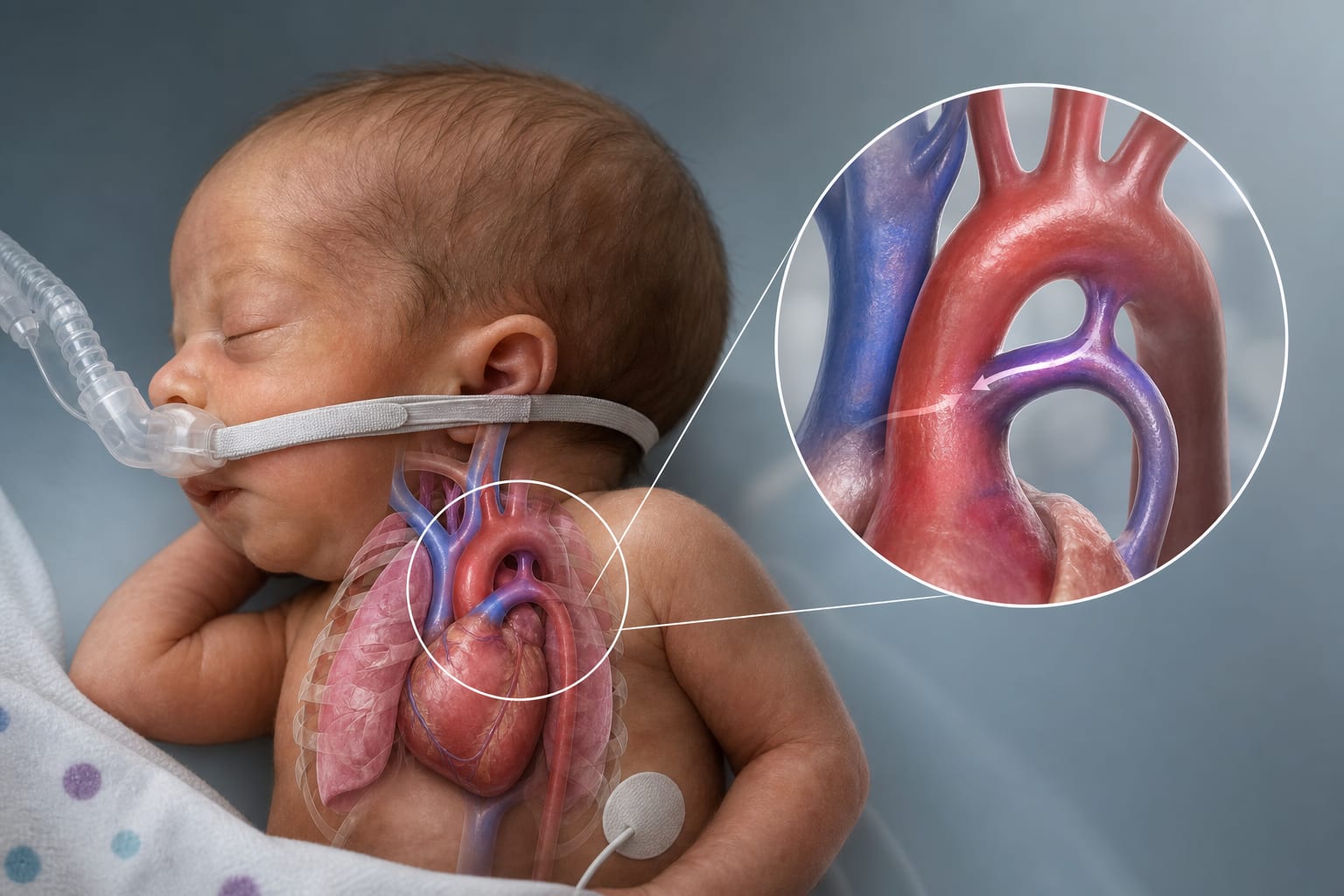
To evaluate the comparative effectiveness of four pharmacological regimens for managing patent ductus arteriosus (PDA) in preterm infants.
Key Findings:
42.3% treatment failure rate observed in infants treated for PDA.
No significant differences in closure effectiveness across the pharmacological regimens.
Treated infants had lower mortality odds (AOR 0.35) but higher odds of necrotizing enterocolitis (AOR 2.15).
Acetaminophen associated with increased mortality odds (AOR 1.37) compared to standard-dose ibuprofen.
Interpretation:
The study highlights the complexity of PDA management in preterm infants and the limitations of pharmacological comparisons without considering physiological nuances.
Limitations:
Survival bias.
Pharmacologic protocol deviations (28.1%).
Site-level variability in clinical practice.
Conclusion:
A shift toward individualized, physiologically based management of PDA is necessary, moving beyond simple pharmacological comparisons.