To evaluate the effectiveness of wearable fitness devices in predicting injury risk through readiness scores in physically active individuals.
Approach:
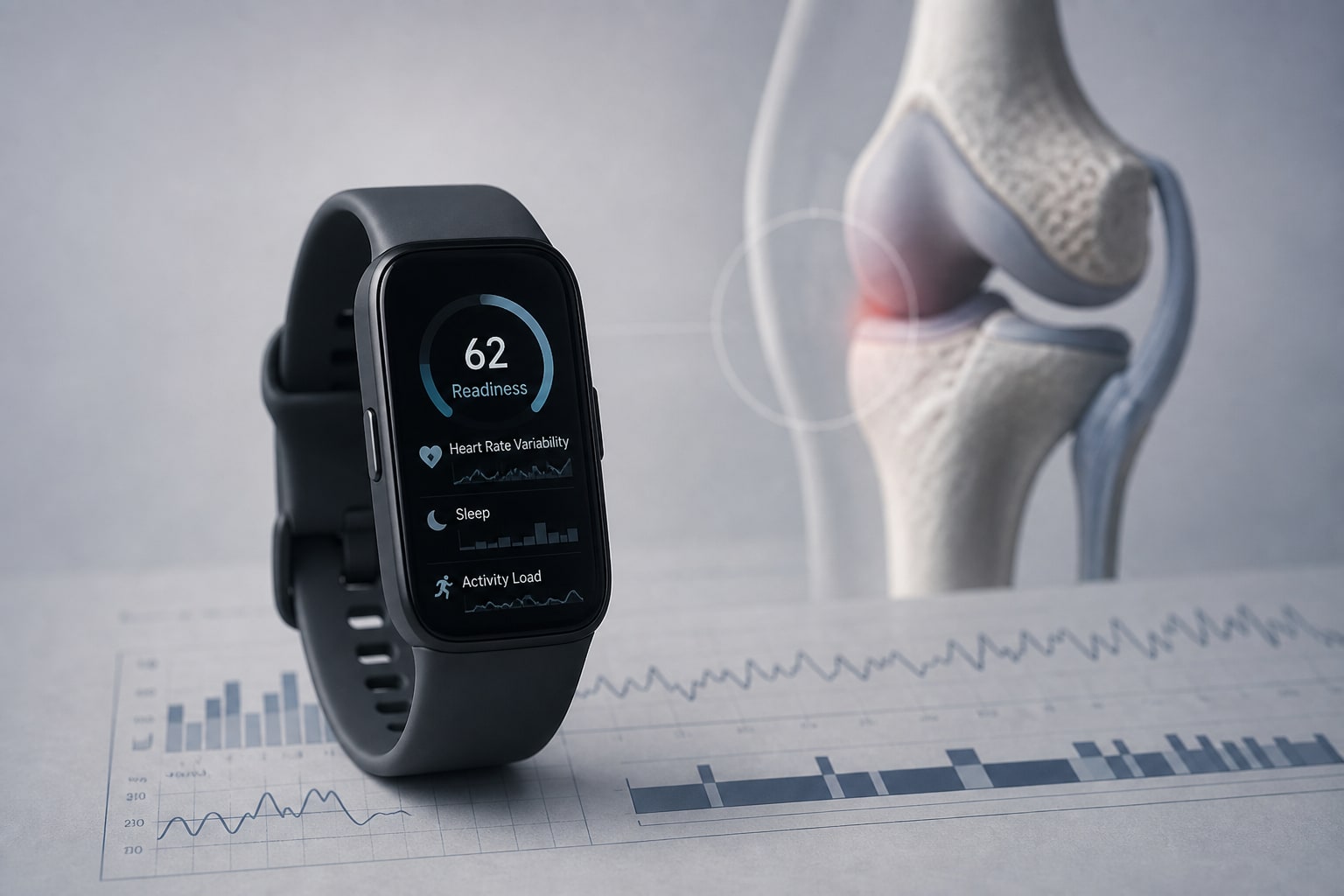
Wearable Device Functionality: Wearable devices monitor heart rate, physical activity, and sleep to provide a readiness score, which is marketed as a tool for identifying patterns related to injury risk.
Key Findings:
Readiness scores are derived from heart rate variability (HRV), sleep, and workload metrics, but do not directly predict injury.
HRV trends, when considered with workload, may provide valuable insights regarding injury risk.
Sleep is regarded as a strong indicator of injury risk, especially in relation to workload spikes.
Interpretation:
Wearable devices can provide useful data, but their interpretation should be cautious and considered alongside clinical history and examination.
Limitations:
Consumer-device accuracy varies significantly among manufacturers and does not match research-grade equipment.
There is a lack of defined frameworks for clinicians to integrate wearable data into treatment.
Conclusion:
Wearable fitness devices may offer insights into injury risk, but they should not be solely relied upon for predictions.