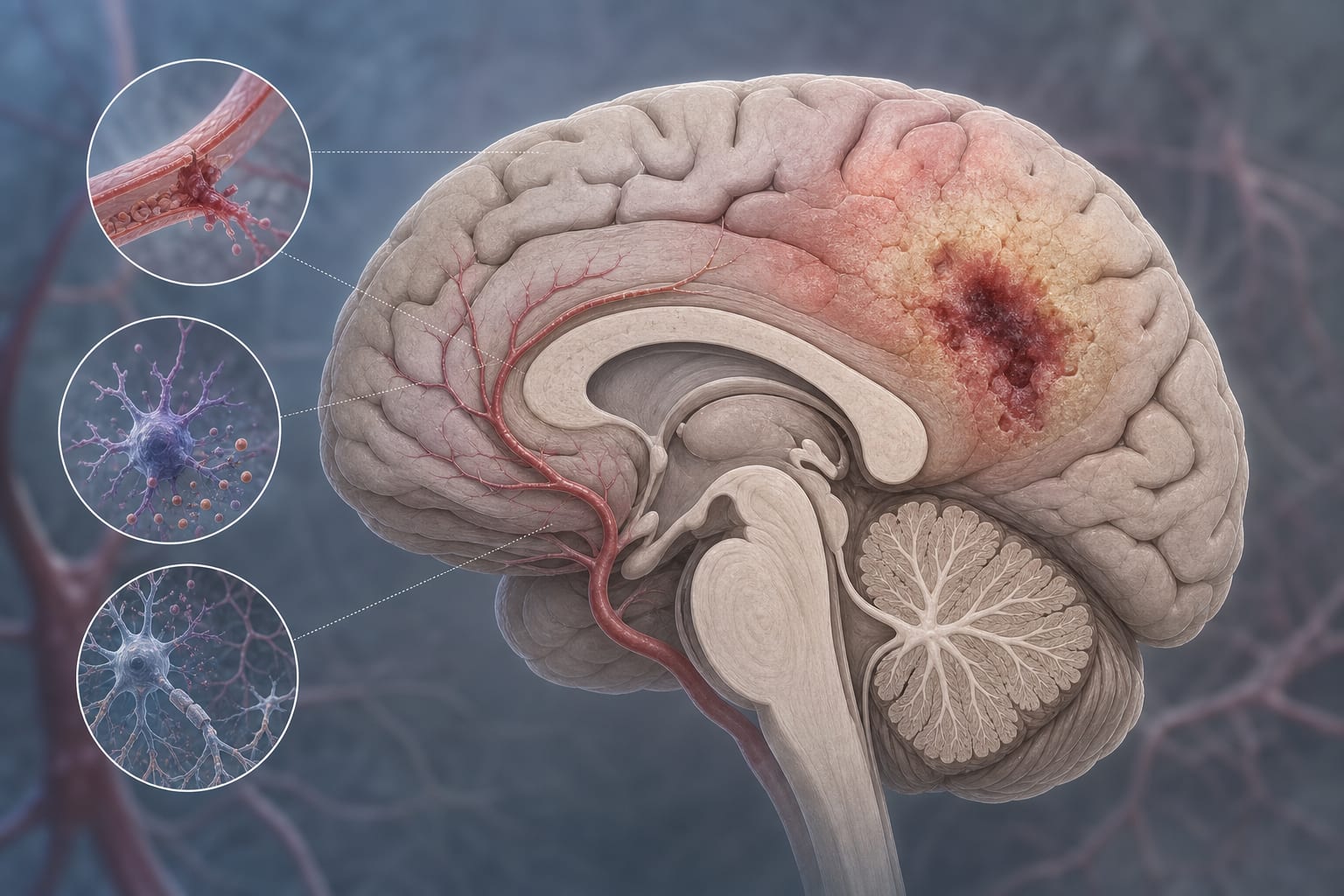
To synthesize contemporary insights into the pathophysiology and evolving strategies for the prevention and treatment of radiation-induced brain necrosis (RBN).
Approach:
Review Methodology: This narrative review synthesizes current knowledge on RBN prevention and treatment based on the authors’ expertise and a focused literature review, without a formal systematic search.
Key Findings:
RBN incidence ranges from 5-25% in patients undergoing radiotherapy for intracranial and head and neck malignancies.
Key pathogenesis factors include vascular injury and neuroinflammation.
Recent preventive strategies involve advanced radiotherapy techniques and pharmacological prophylaxis.
Treatment options include corticosteroids, bevacizumab, hyperbaric oxygen therapy, and emerging therapies like CSF1R inhibitors.
Imaging innovations such as MRS, PWI, and PET/CT enhance early detection and differential diagnosis.
Interpretation:
RBN presents significant clinical challenges, including diagnostic dilemmas and treatment resistance, necessitating ongoing research and optimization of therapeutic strategies.
Limitations:
The review does not include a formal quality assessment or quantitative synthesis of the evidence.
It is based on a non-systematic literature review rather than a comprehensive systematic search.
Conclusion:
The review highlights the need for effective prevention and management strategies for RBN as radiotherapy techniques evolve.
Harold Burstein, MD, PhD; Sara Tolaney, MD, MPH; Erica L. Mayer, MD, MPH; Nancy Lin, MD; and Ana C. Garrido-Castro, MD discuss important breast cancer research presented at the 2026 ESMO Breast Cancer Congress.