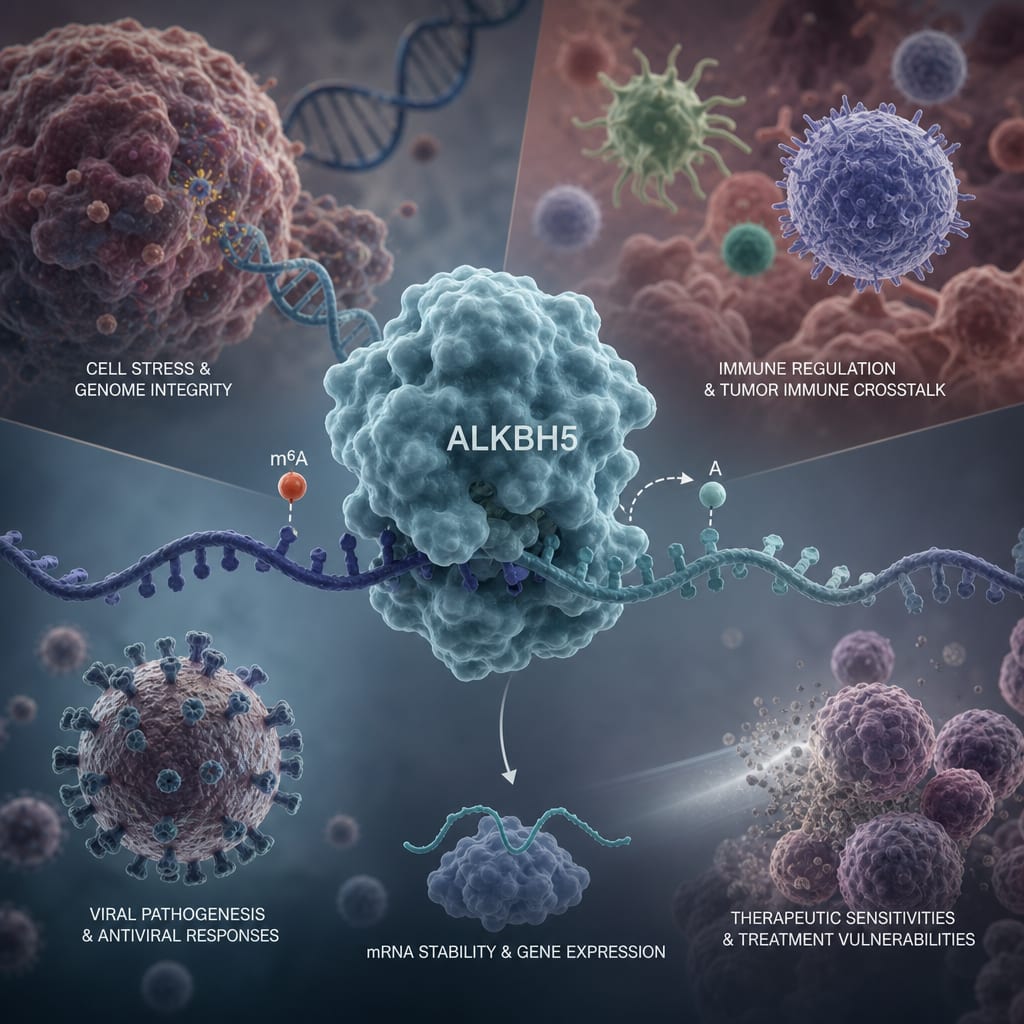
To integrate current evidence on ALKBH5's role in RNA metabolism, cellular stress adaptation, immune modulation, viral infection, and therapeutic responses, focusing on how these elements interact.
Key Findings:
ALKBH5 is a versatile m6A demethylase influencing RNA stability, translation, and gene expression across various contexts.
Its role varies across contexts, acting as an oncogene in cancers like non-small cell lung cancer and a tumor suppressor in others such as colorectal cancer.
ALKBH5 modulates immune cell development and function, impacting adaptive immunity, particularly in T-cell responses.
It plays dual roles in viral infections, enhancing antiviral defense or promoting viral persistence, depending on the context.
Interpretation:
ALKBH5's effects are context-dependent, influenced by the specific biological environment and the identity of target transcripts, which has significant implications for therapeutic strategies.
Limitations:
Current literature often treats ALKBH5 in isolation across different biological domains, leading to a lack of comprehensive understanding.
The absence of a unifying framework results in a fragmented understanding of its roles, as seen in varying descriptions of its functions.
Conclusion:
A context-dependent mechanistic framework is essential for understanding ALKBH5's diverse functions and its potential as a therapeutic target, highlighting the need for integrated approaches.