Chemogenetic activation of cholinergic intrinsic cardiac ganglia improves border zone oxygenation and reduces arrhythmias during acute local ischemia - Summary - MDSpire
Conexiant’s news site is now MDSpire News. Learn more
Advertisement
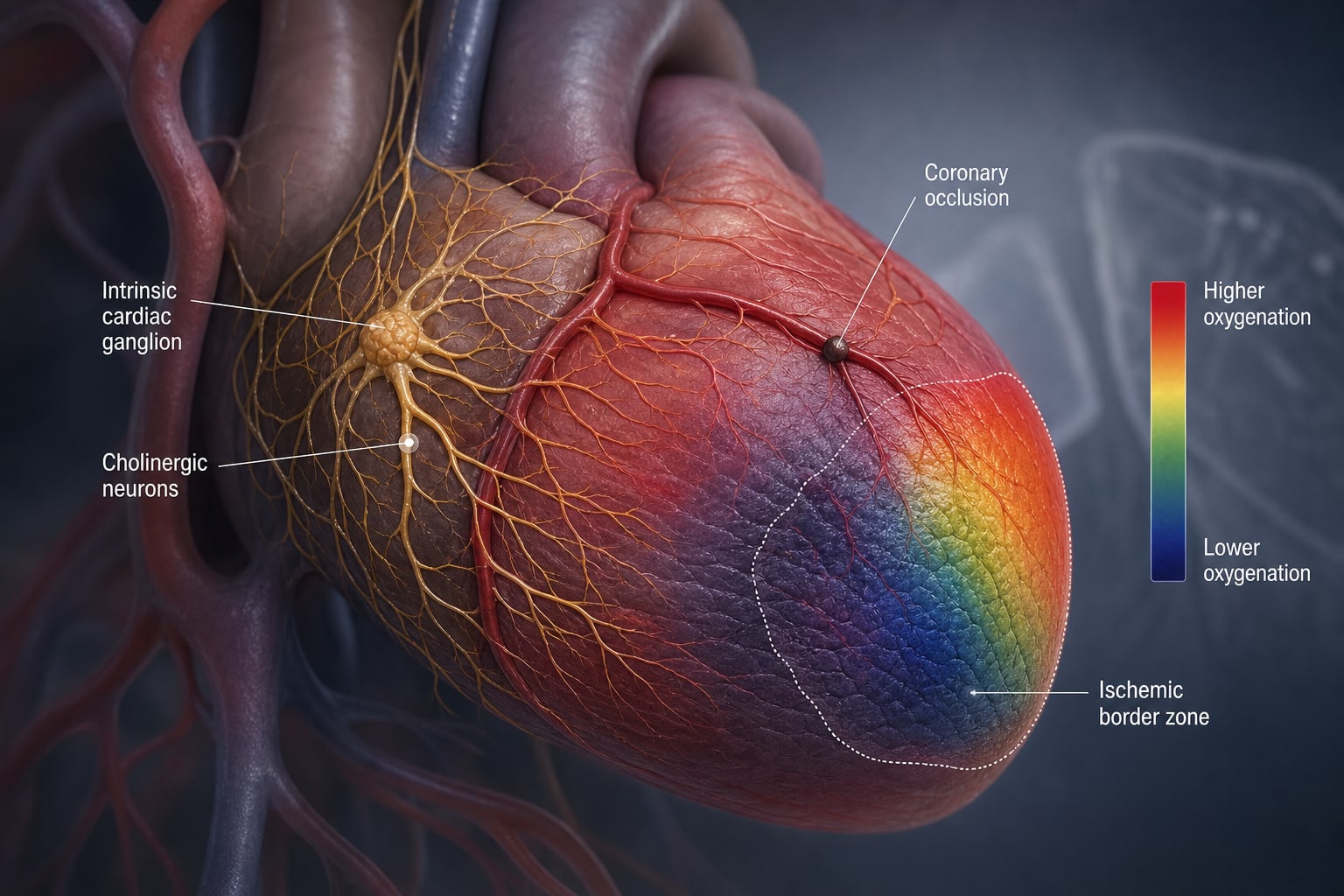
Stimulation of Cholinergic Neurons in Intrinsic Cardiac Ganglia Enhances Oxygenation in Border Zones and Mitigates Arrhythmias During Acute Local Ischemia
To test whether selective activation of cholinergic neurons within the intrinsic cardiac ganglia (ICG) reduces arrhythmias and improves oxygenation of ischemic border zone tissue after an acute coronary occlusion, potentially offering a novel therapeutic strategy.
Key Findings:
LAD ligation resulted in a significant drop in pO2 in the ischemic zone, highlighting the severity of ischemia.
DREADDs-mediated cholinergic ICG activation prolonged the PR interval and reduced arrhythmia incidence, indicating a protective effect.
Ischemic border zone pO2 increased significantly after cholinergic ICG activation, demonstrating improved oxygenation.
NADH fluorescence trended lower in the ischemic zone, indicating increased mitochondrial oxidation, which is beneficial.
Effects were blocked by the muscarinic antagonist atropine, confirming the mechanism of action.
Interpretation:
Selective stimulation of cholinergic ICG neurons could improve oxygen delivery to the ischemic border zone and reduce arrhythmias through a muscarinic-dependent mechanism, suggesting a new avenue for therapeutic intervention.
Limitations:
Conclusion:
The study supports further investigation of the intrinsic cardiac cholinergic network as a therapeutic target for early intervention in acute myocardial infarction, emphasizing the potential for improved patient outcomes.