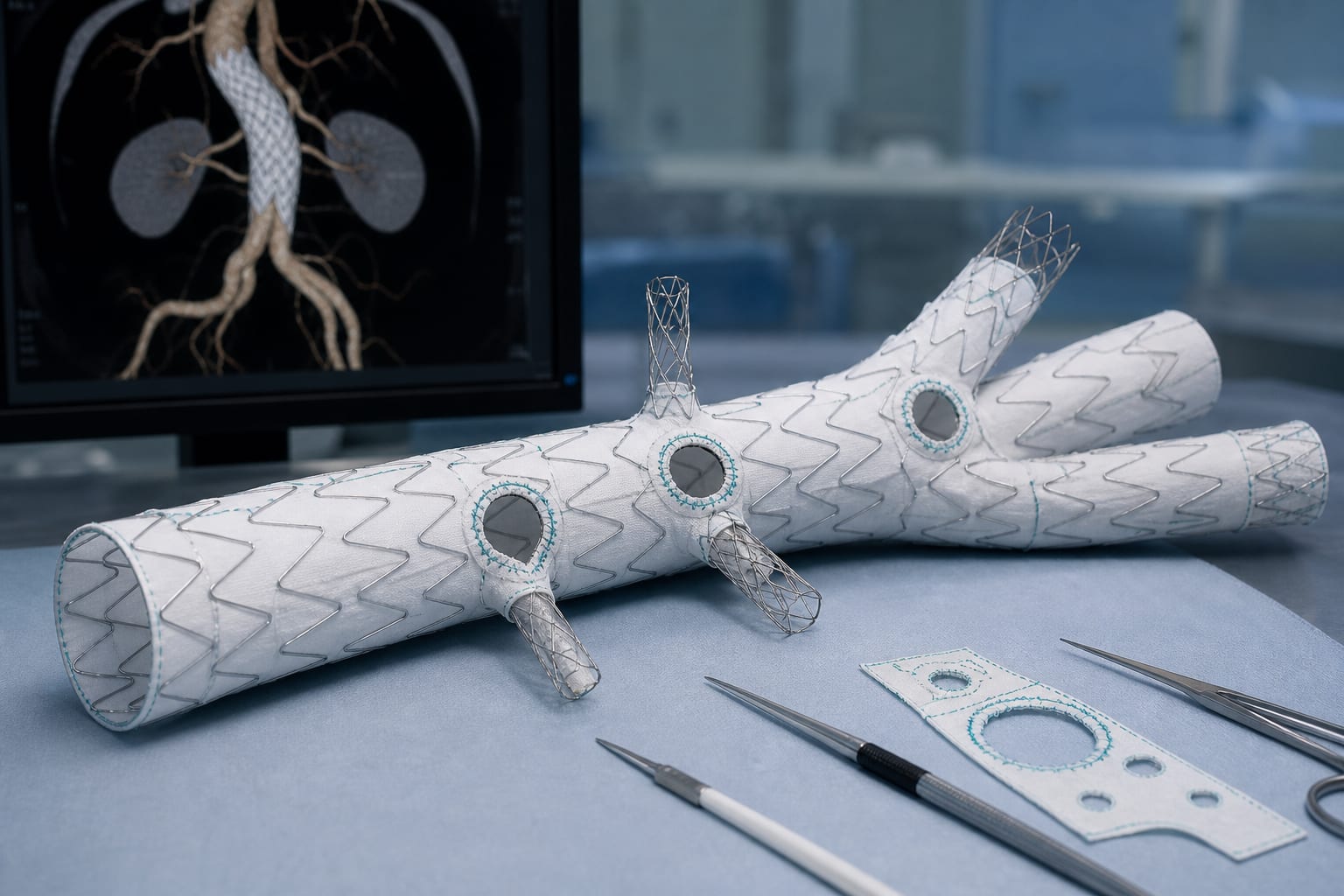
To propose guiding principles for the practice of physician-modified endografts (PMEG) in aortic repair.
Approach:
Specialized Aortic Centers: PMEG should be performed in high-volume aortic centers with sufficient expertise and capability to manage complications.
Training and Proctoring: Dedicated training and proctoring are essential for operators starting a PMEG program or changing techniques.
Reproducible Methods: PMEG planning and modifications should rely on reproducible methods supported by the best available evidence.
Experimental Validation: Novel PMEG techniques should undergo appropriate experimental validation before clinical implementation.
Key Findings:
PMEG allows for patient-specific modifications of endografts in urgent situations.
There is significant variability in PMEG practices.
Correct fenestration positioning is critical for successful outcomes, and templates are recommended for guidance.
Training and proctoring improve safety and efficacy during the learning curve of PMEG procedures.
Interpretation:
PMEG represents a flexible approach to aortic repair but requires careful planning, training, and adherence to evidence-based practices.
Limitations:
Variability in regulations and resources may affect the implementation of standardized practices.
Lack of consensus on optimal reinforcement strategies for fenestrations.
Conclusion:
PMEG is a promising alternative for complex aortic repairs, but it necessitates specialized training and adherence to best practices to ensure patient safety and procedural success.