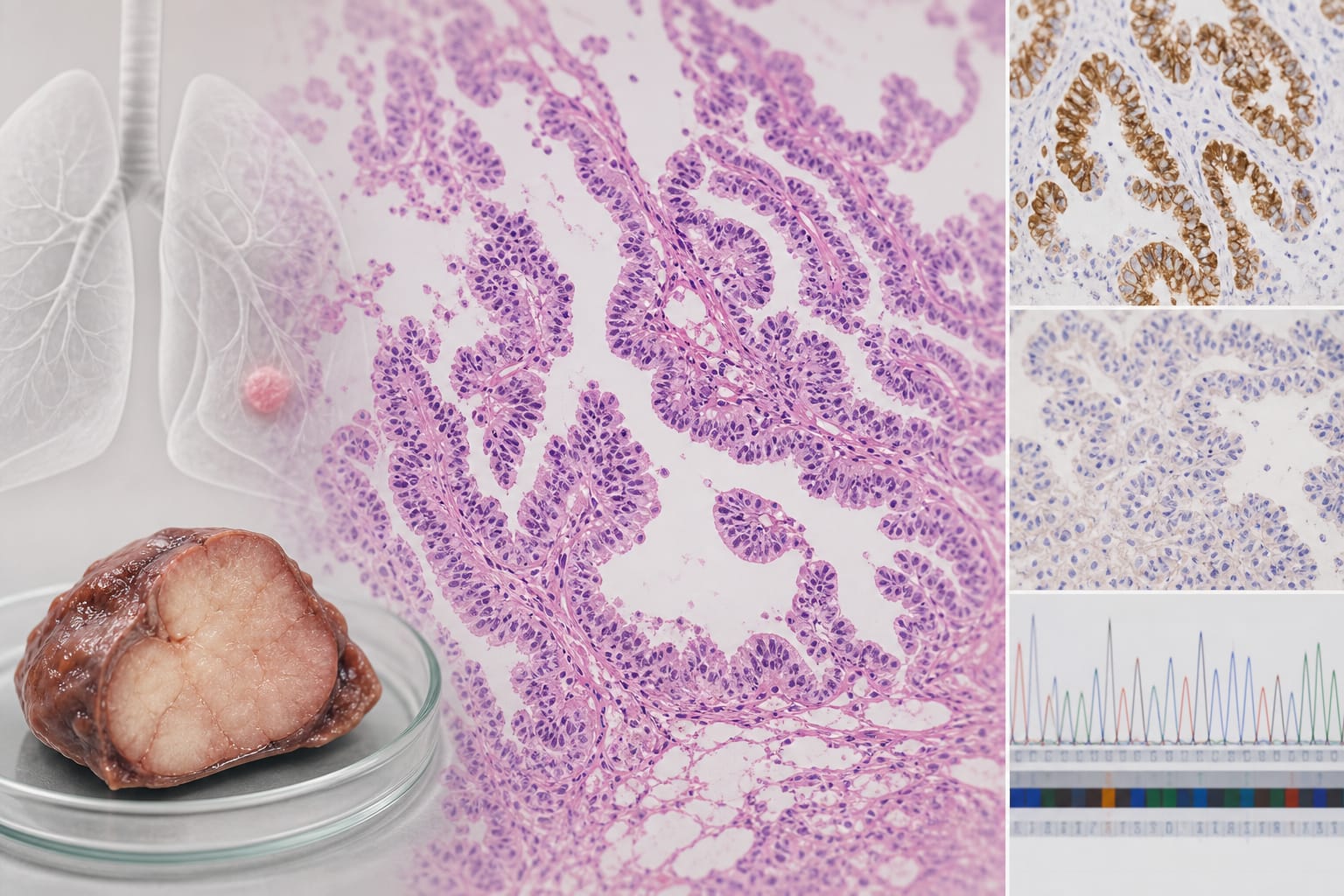
To report two cases of pulmonary alveolar adenoma and review existing literature on this rare neoplasm.
Approach:
Case 1: A 55-year-old female with left breast carcinoma presented with a lung nodule initially thought to be a metastasis. Surgical resection confirmed it as an alveolar adenoma.
Case 2: A 35-year-old female with a history of heart transplantation and chronic kidney disease had a lung nodule detected during a PET-CT scan. Wedge resection confirmed it as an alveolar adenoma.
Key Findings:
Alveolar adenomas are extremely rare, accounting for less than 1% of pulmonary neoplasms.
Both cases presented as incidental findings or mimicked metastasis.
Histological and immunohistochemical profiles confirmed the diagnosis of alveolar adenoma in both cases.
No significant genetic alterations were identified by next-generation sequencing.
Interpretation:
The rarity of alveolar adenomas necessitates their consideration in differential diagnoses for lung nodules, especially in patients with a history of malignancy.
Limitations:
The true incidence of alveolar adenomas may be underestimated due to incidental detection.
Comprehensive molecular profiling has not been widely performed in existing literature.
Conclusion:
Alveolar adenomas, while rare, should be recognized in clinical practice, particularly in patients with other neoplasms.
Long-read transcript sequencing uncovered protein-altering variants missed by reference transcript analyses and identified functional effects for a lung-specific DPP9 isoform.