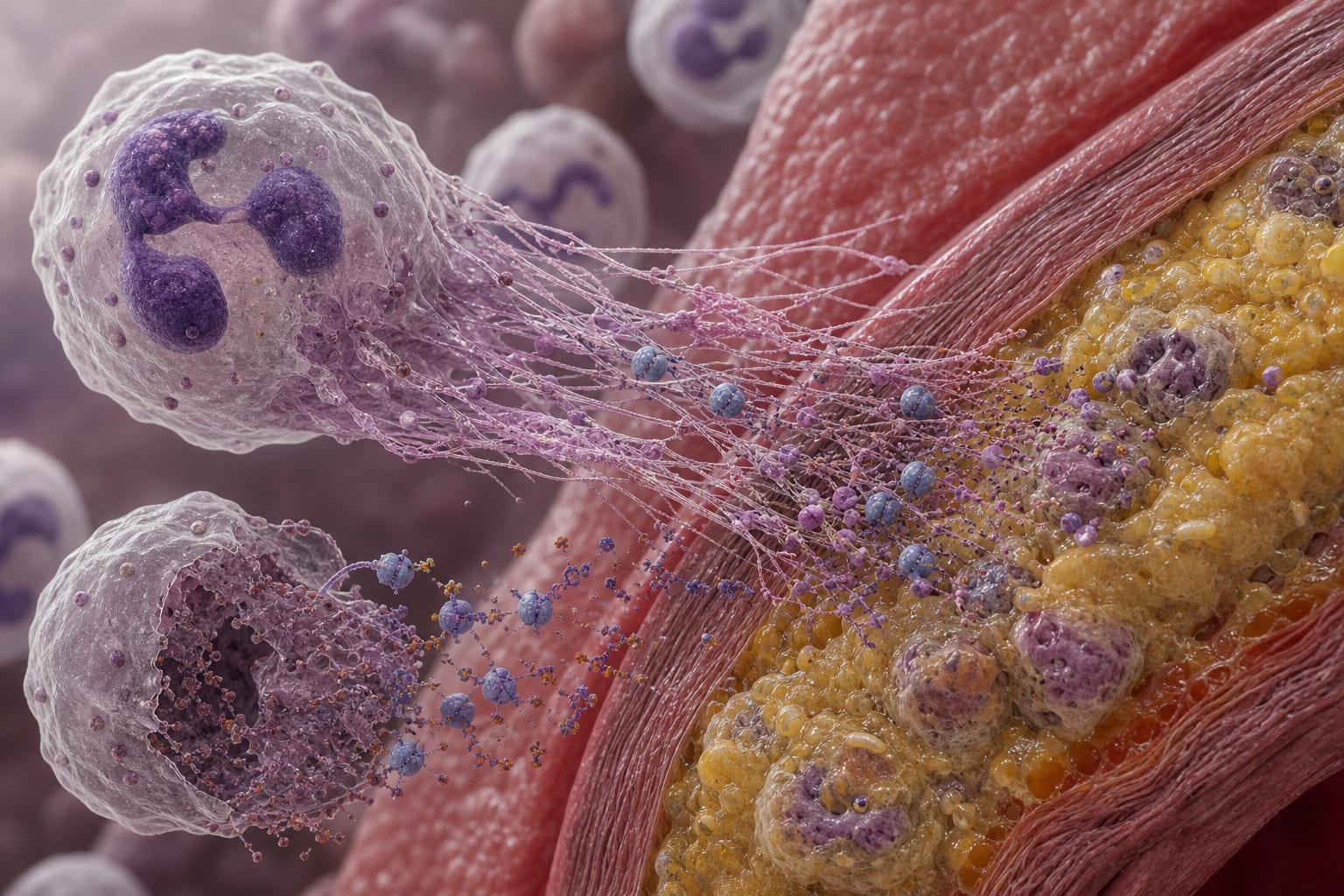
To elucidate the molecular mechanisms of neutrophil extracellular traps (NETs) and pyroptosis, emphasizing their significance in linking systemic autoimmune diseases with atherosclerosis.
Key Findings:
The NET-pyroptosis axis functions as a self-amplifying inflammatory loop driving chronic tissue injury, with implications for therapeutic interventions.
Gasdermin D amplifies NET release context-dependently, while Gasdermin E mediates critical immune-stromal interactions, highlighting potential targets for therapy.
Emerging therapeutic strategies targeting peptidylarginine deiminase 4 and gasdermin pore formation show promise in mitigating systemic inflammation and cardiovascular burden, warranting further investigation.
Interpretation:
The interplay between NETs and pyroptosis provides a novel framework for understanding the increased cardiovascular risk in autoimmune disorders, suggesting potential therapeutic targets that could reshape clinical approaches.
Limitations:
The review primarily synthesizes existing literature without presenting new experimental data; future studies should focus on longitudinal data collection.
Further research is needed to validate the therapeutic strategies discussed, particularly through clinical trials.
Conclusion:
Targeting the interaction between NETs and pyroptosis may lead to significant advancements in treating chronic inflammatory disorders and improving patient outcomes, potentially transforming clinical practice.
Federal prosecutors allege that a Florida physician and research staff fabricated clinical trial records that were submitted into database systems used to evaluate investigational drugs.
Nearly 40% of registry patients would have been excluded from phase 3 randomized controlled trials, with exclusion criteria distributed unevenly across drug classes.