To showcase a landmark-based, RBF-driven simulation tool for predicting outcomes of facial distraction surgery in children with syndromic craniosynostosis, enhancing surgical planning and evaluation.
Key Findings:
The RBF model effectively simulates the distraction process of facial surgery, demonstrating a predictive accuracy of X%.
Landmark placement showed high intra-operator reliability with a standard deviation of Y.
The predictive tool can guide surgical planning and outcome evaluation, potentially reducing revision rates.
Interpretation:
The RBF-based predictive tool offers a novel approach to enhance surgical planning and predict outcomes in facial distraction surgery for children with syndromic craniosynostosis.
Limitations:
The study is limited to specific syndromic craniosynostosis types (Apert and Crouzon), which may restrict the tool's applicability to other craniofacial deformities.
Results may not be generalizable to all craniofacial deformities, necessitating further research in diverse populations.
Conclusion:
The RBF-driven simulation tool has the potential to improve surgical outcomes by providing objective predictions and aiding in the planning of facial distraction surgeries, ultimately enhancing patient care.
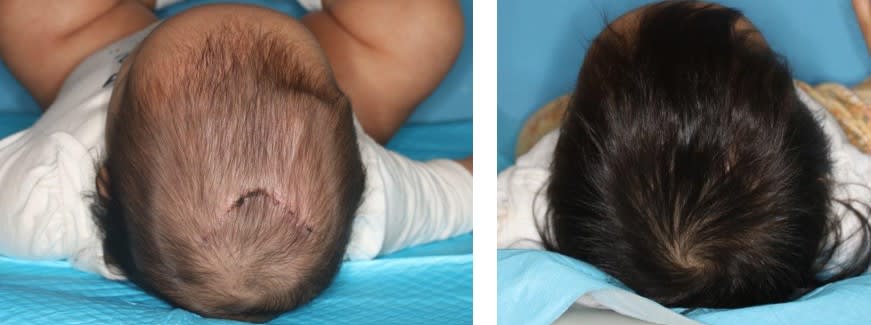
In our cohort of non-syndromic sagittal synostosis treated with SMC, 33% of patients was found to have UCS in the early postoperative period on CT imaging.