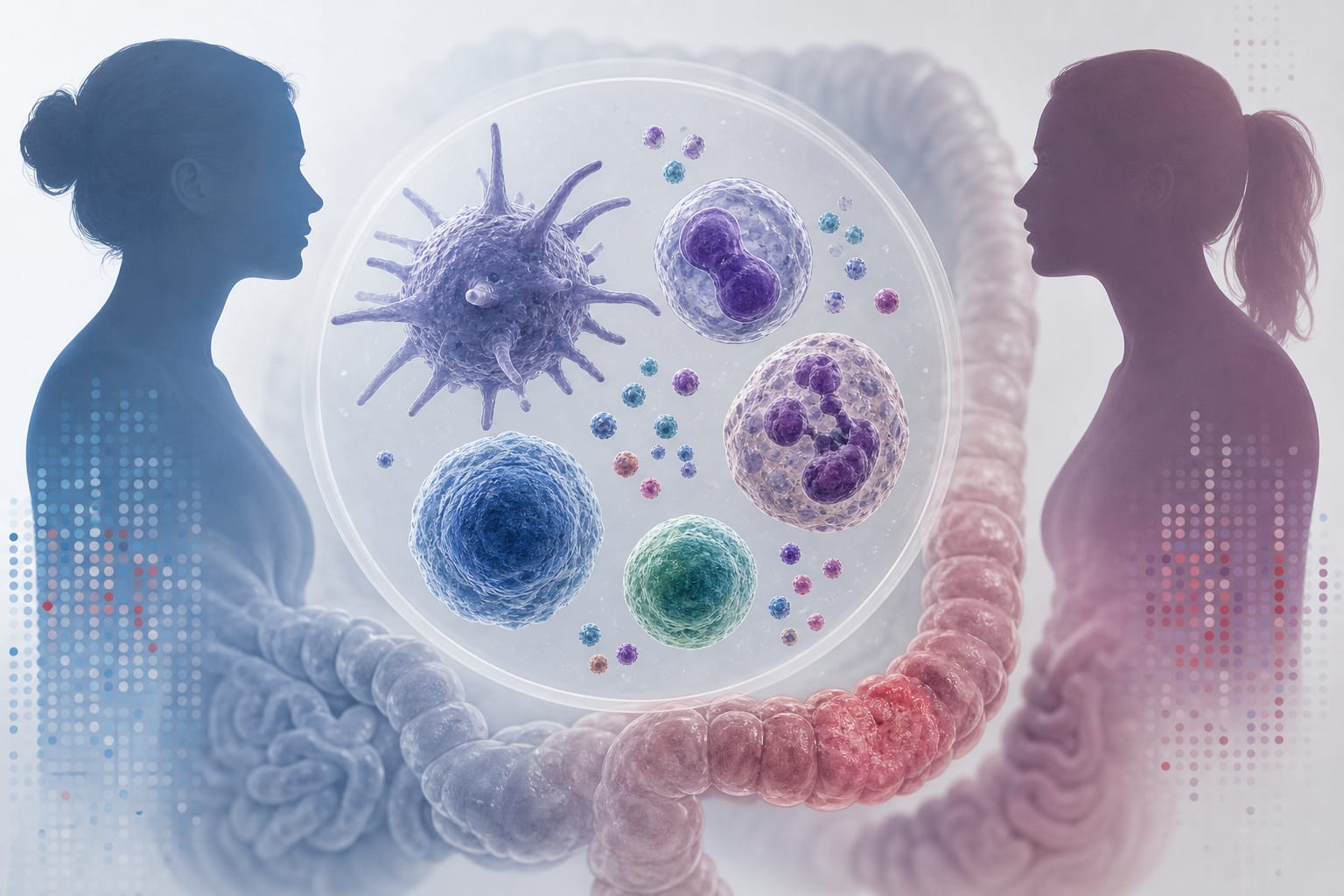
To delineate peripheral immune profiles in ulcerative colitis (UC) and examine associations among immunity, fatigue, and gender differences.
Key Findings:
Active UC is associated with increased neutrophils and classical monocytes, along with elevated TNF, BDNF, and sTREM-2 levels.
In remission, there is an increase in plasmacytoid and CD141+ DCs, and Th9/Th22 cells indicating protective immune modulation.
Fatigue severity correlates with specific immune subsets differently in males and females, with distinct immune profiles observed.
Interpretation:
Peripheral immune dysregulation in UC correlates with fatigue intensity in a sex-specific manner, highlighting the importance of immune biomarkers for personalized fatigue management and potential clinical applications.
Limitations:
The study's sample size may limit the generalizability of findings, particularly regarding gender-specific responses.
Potential confounding factors such as psychological comorbidities were not fully controlled, which may influence fatigue outcomes.
Conclusion:
Understanding gender-specific immune profiles can enhance fatigue management strategies in ulcerative colitis patients and guide future research.