Operationalizing Digital Health Equity in Artificial Intelligence–Enabled Patient Decision Aids for Older Adults: Mixed Methods Study - Summary - MDSpire
Advertisement
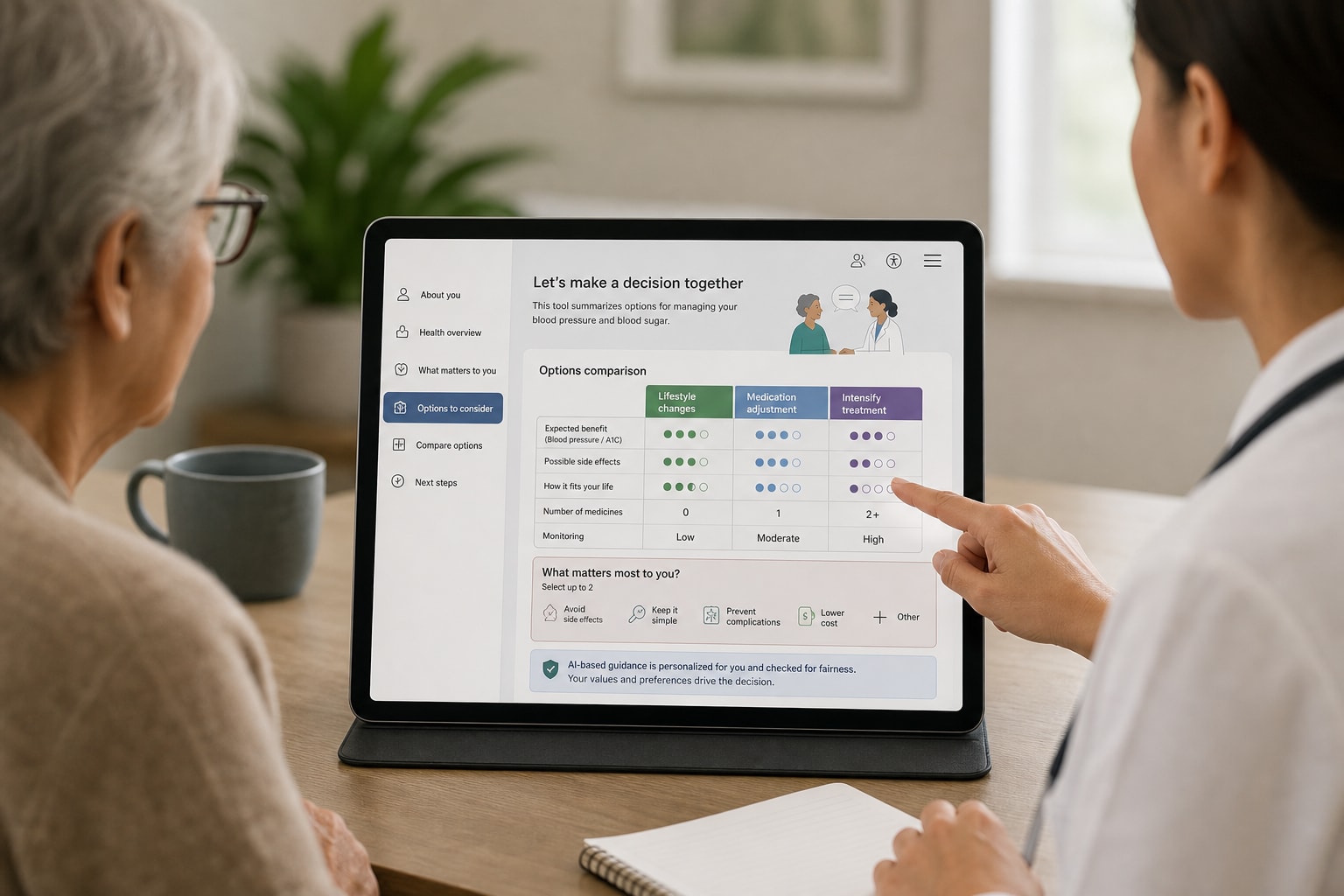
Operationalizing Digital Health Equity in Artificial Intelligence–Enabled Patient Decision Aids for Older Adults: Mixed Methods Study
To systematically identify equity-related determinants and generate actionable design strategies for AI-PDAs supporting shared decision-making among older adults with hypertension and/or diabetes in Hong Kong.
Approach:
Stakeholder Interviews: Conducted semistructured interviews with older adults, health care providers, and medical students to gather insights on equity determinants in health care and digital environments.
Umbrella Review: Synthesized evidence-based strategies for addressing identified equity determinants through a comprehensive review of existing literature.
Expert Consultations: Integrated insights from interviews and literature review into actionable recommendations for operationalizing the Digital Health Equity Framework.
Key Findings:
Older adults face challenges in processing complex health information, which can hinder the adoption of AI-PDAs in their care.
There is a lack of consideration for the diverse needs of older adults in the development of digital health tools.
The Digital Health Equity Framework can guide the identification of digital determinants of health relevant to older adults.
Interpretation:
The study highlights the need for equitable design in AI-PDAs to ensure they are accessible and beneficial for diverse aging populations.
Limitations:
The study's findings are specific to older adults with hypertension and diabetes in Hong Kong and may not be generalizable to other populations.
Limited attention has been given to operationalizing equity principles in the design of digital health tools for older adults.
Conclusion:
The recommendations developed may inform the design and implementation of equitable patient-facing AI tools in similar settings.
by Cindy Yue Tian, Xiaochen Yang, Kailu Wang, Annie Wai-Ling Cheung, Jonathan Chun-Hei Ma, Canjie Lu, Jasmine Cheuk-Ying Yu, Crystal Ying Chan, Jiamin Chen, Kun Ouyang, Ivan Wai-Kiu Lin, Tim Hung-Cheong Pang, Shi Zhao, Yingwei Wang, Eliza Lai-Yi Wong
A review of 56 qualitative studies found residents' emotional experiences were influenced by interactions among training demands, workplace relationships, and their evolving professional identity.
Researchers found larger biological age gaps in more recent birth cohorts and observed associations with higher risk of several cancers diagnosed before age 55.