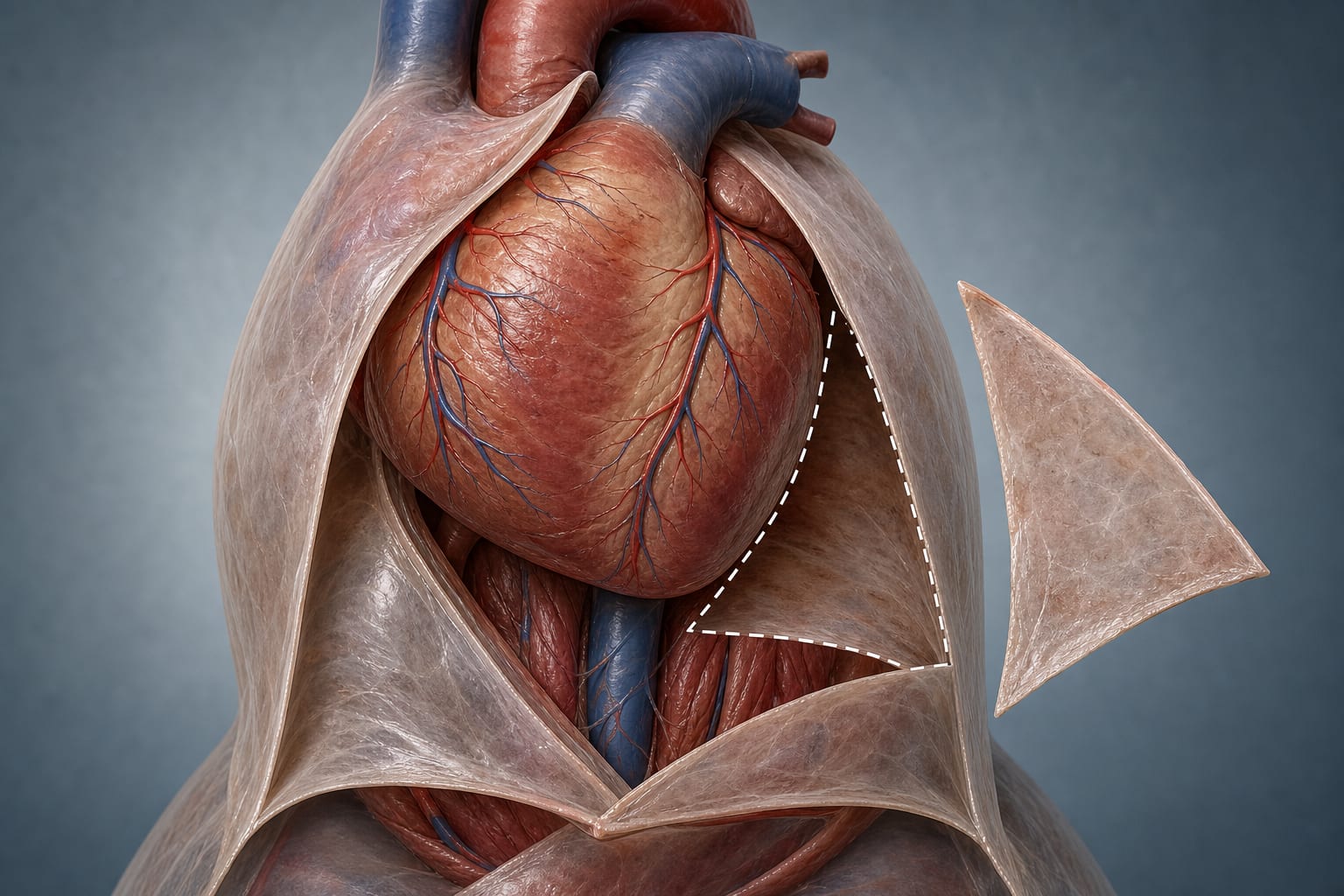
To evaluate the effectiveness of triangular posterior pericardiectomy in reducing postoperative complications in patients undergoing CABG with cardiopulmonary bypass.
Approach:
Study Design: Retrospective, non-randomized, single-center observational study including 489 patients undergoing CABG with cardiopulmonary bypass from 2017 to 2023.
Patient Groups: Patients were divided into two groups: standard surgery (no pericardiectomy, n = 347) and triangular posterior pericardiectomy (n = 142).
Phenotypic Analysis: Unsupervised taxonomic classification based on clinical responses was used to identify phenotypes related to postoperative outcomes.
Key Findings:
Four phenotypes were identified, with Phenotype 4 showing the highest prevalence of TPP (92%) and the best outcomes.
Phenotype 4 had the lowest inflammatory response, absence of pericardial effusion, and no incidence of POAF or atrial fibrillation at 12 months.
Phenotypes with lower TPP prevalence exhibited higher CRP levels, greater drainage volumes, and increased incidence of POAF (35%).
TPP was not associated with increased pleural complications.
Interpretation:
Triangular posterior pericardiectomy is associated with a favorable postoperative profile characterized by reduced inflammation, minimal pericardial effusion, lower drainage, and absence of early and late atrial fibrillation after CABG.
Limitations:
Retrospective design may introduce selection bias.
Single-center study limits generalizability of findings.
Non-randomized nature may affect the comparability of groups.
Conclusion:
Triangular posterior pericardiectomy may improve postoperative outcomes following CABG.