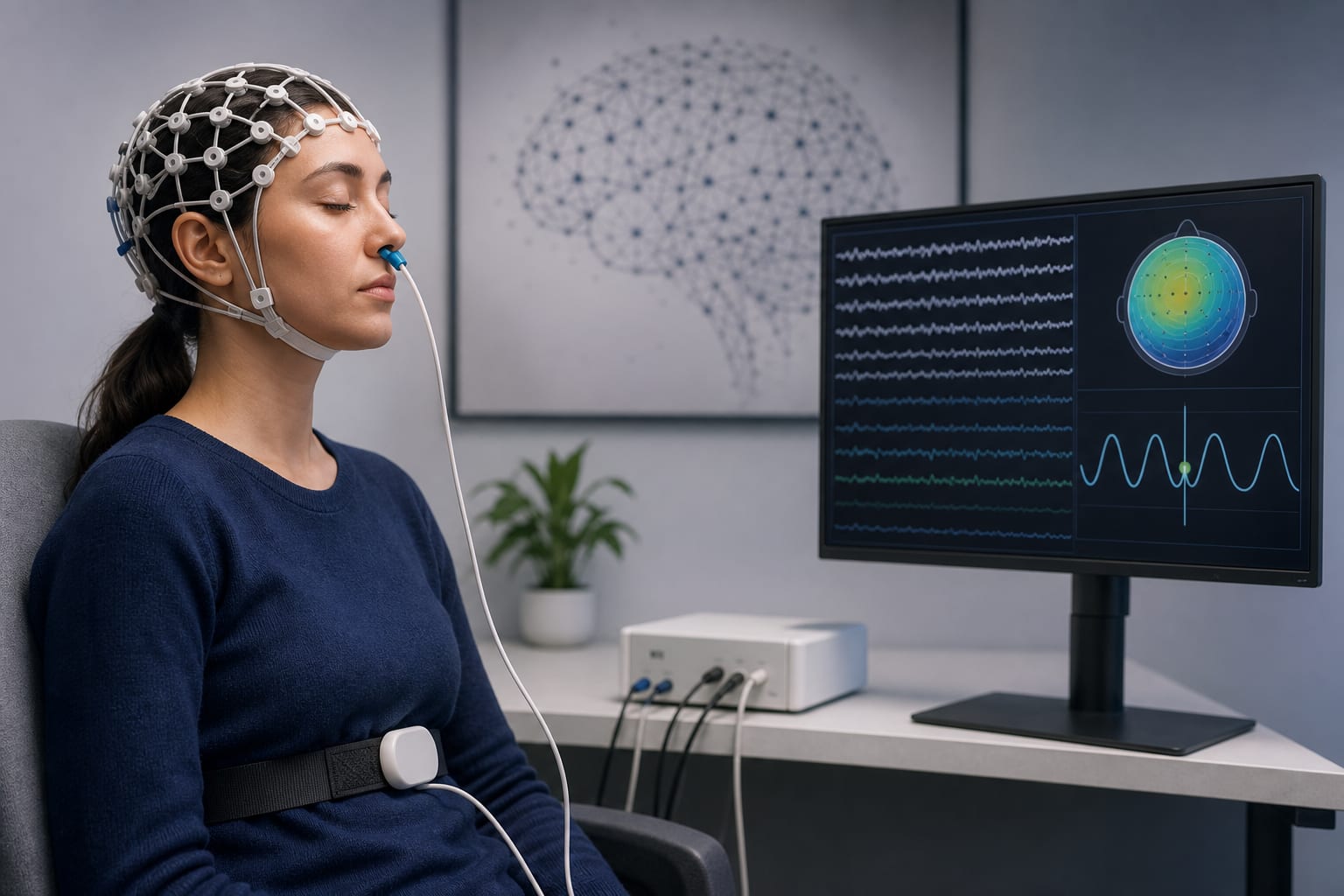
To investigate the rapid effects of respiratory modulation on affective states and underlying neurophysiological dynamics.
Approach:
Participants: 26 breathwork-naive participants were recruited, with 24 retained for final analysis.
Intervention: Participants completed a 40-minute intermittent real-time respiratory modulation protocol comprising two 20-minute sessions.
Assessment Methods: Multimodal assessments included electroencephalography (EEG) and the Profile of Mood States (POMS) to quantify changes in affective states.
EEG Analysis: Focus on prefrontal oscillatory activity, examining band-specific power variations associated with affective processing.
Key Findings:
Significant improvements in affective states with reduced negative psychological symptoms and enhanced positive mood (p < 0.05).
Decreased FZ beta-band power and reduced FZ/FCZ beta-band Midline Differential Index (p < 0.05).
Theta-band changes were non-significant.
Interpretation:
Short-duration controlled respiration may induce measurable and rapid modulation of both subjective states and neural computational phenotypes of emotion.
Limitations:
Small sample size of 24 participants.
Exclusion of two EEG datasets due to excessive noise.
Conclusion:
The study provides preliminary evidence for a mechanism-driven link between psychomotor respiratory patterns and prefrontal EEG oscillations.