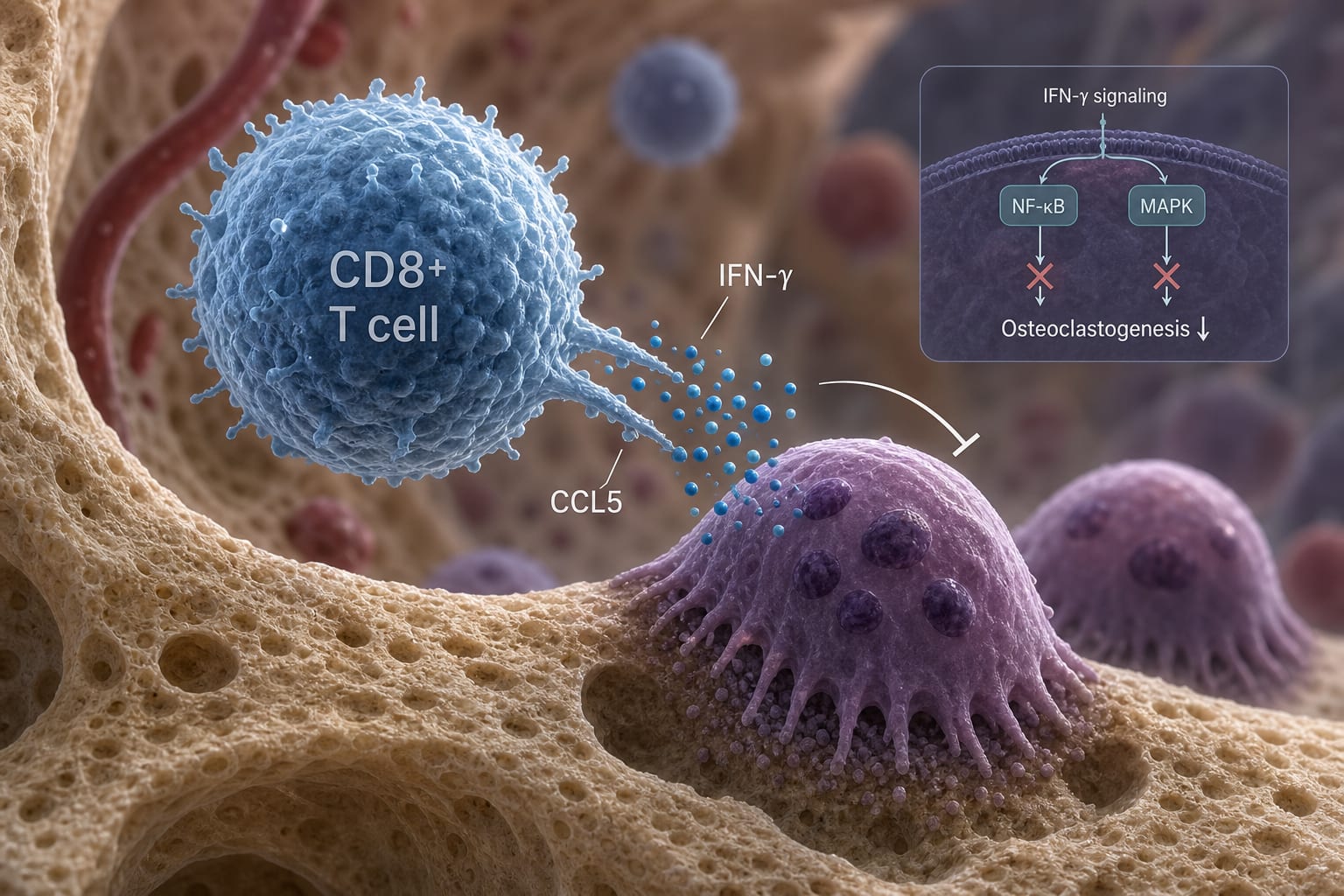
To explore the dual roles of CD8+ T cells in osteoporosis and their significant impact on bone metabolism.
Key Findings:
CD8+ T cells can either protect bone mass by secreting IFN-γ or promote bone loss through CCL5 release, depending on local signals and conditions.
Estrogen deficiency leads to increased CCL5 release from CD8+ T cells, activating osteoclast precursors and accelerating bone loss, highlighting the need for targeted therapies.
Aging and chronic inflammation result in the accumulation of senescent CD28- CD8+ T cells, which exhibit a SASP that suppresses osteoblast differentiation, indicating a potential therapeutic target.
CD8+ T cells may induce apoptosis in osteoblasts and osteocytes, worsening bone loss through various pathways, emphasizing the complexity of their role.
Granzyme K from CD8+ T cells protects against bone loss, while CCL5 promotes it, suggesting these molecules could serve as biomarkers or therapeutic targets.
Interpretation:
The functional role of CD8+ T cells in osteoporosis is context-dependent, influenced by hormonal, metabolic, and inflammatory signals, with potential therapeutic implications.
Limitations:
The review is based on existing literature and may not encompass all recent findings, particularly emerging studies.
Further in vivo studies are needed to validate the proposed mechanisms and therapeutic targets, especially in diverse populations.
Conclusion:
Targeting specific pathogenic pathways in CD8+ T cells could restore osteoimmune balance and provide new therapeutic strategies for osteoporosis, emphasizing the importance of these findings.
Published evidence linked liraglutide and semaglutide to improvements in psoriasis severity, inflammatory markers, and metabolic outcomes, while evidence in psoriatic arthritis remained sparse.
Teriparatide followed by zoledronic acid increased bone mineral density but did not reduce fracture risk compared with standard care in adults with osteogenesis imperfecta.