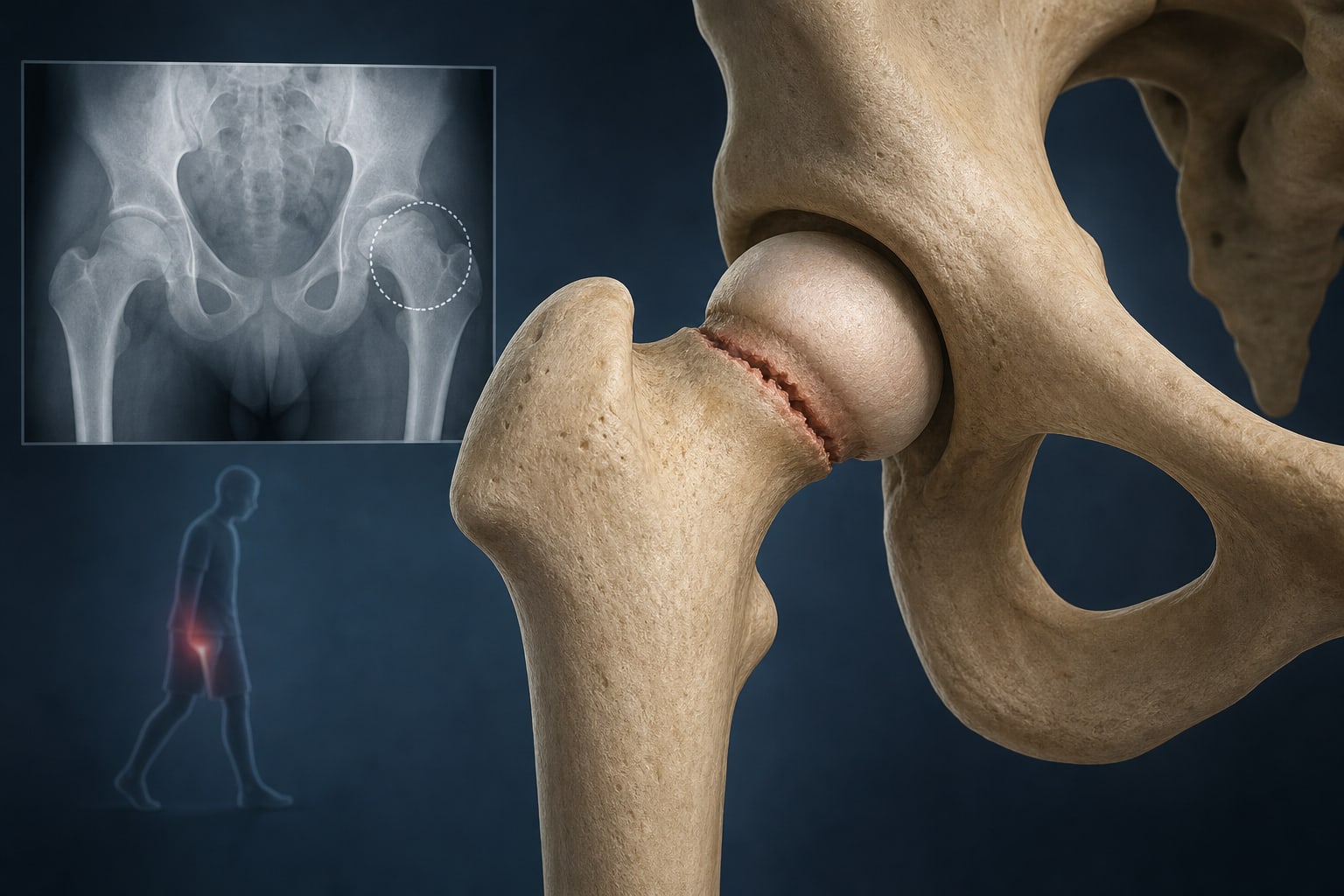
To present a case of delayed diagnosis of slipped capital femoral epiphysis (SCFE) and highlight the importance of timely recognition for improving patient outcomes.
Approach:
Key Findings:
SCFE is often misdiagnosed or diagnosed late, leading to worsened prognosis and increased risk of complications.
The patient exhibited typical symptoms of SCFE but was initially misdiagnosed with functional pain, delaying appropriate treatment.
Endocrinological conditions such as insulin resistance and delayed puberty were identified during evaluation, which may have contributed to the patient's condition.
Interpretation:
The case illustrates the need for heightened awareness of SCFE in adolescents presenting with lower limb pain, even when initial imaging appears normal, to facilitate timely diagnosis.
Limitations:
The MRI conducted did not specifically evaluate the hips, limiting the diagnostic clarity.
Initial imaging studies were not available for direct review, which may affect the reliability of the findings.
Conclusion:
Timely diagnosis of SCFE is crucial to prevent complications and the need for more invasive treatments.