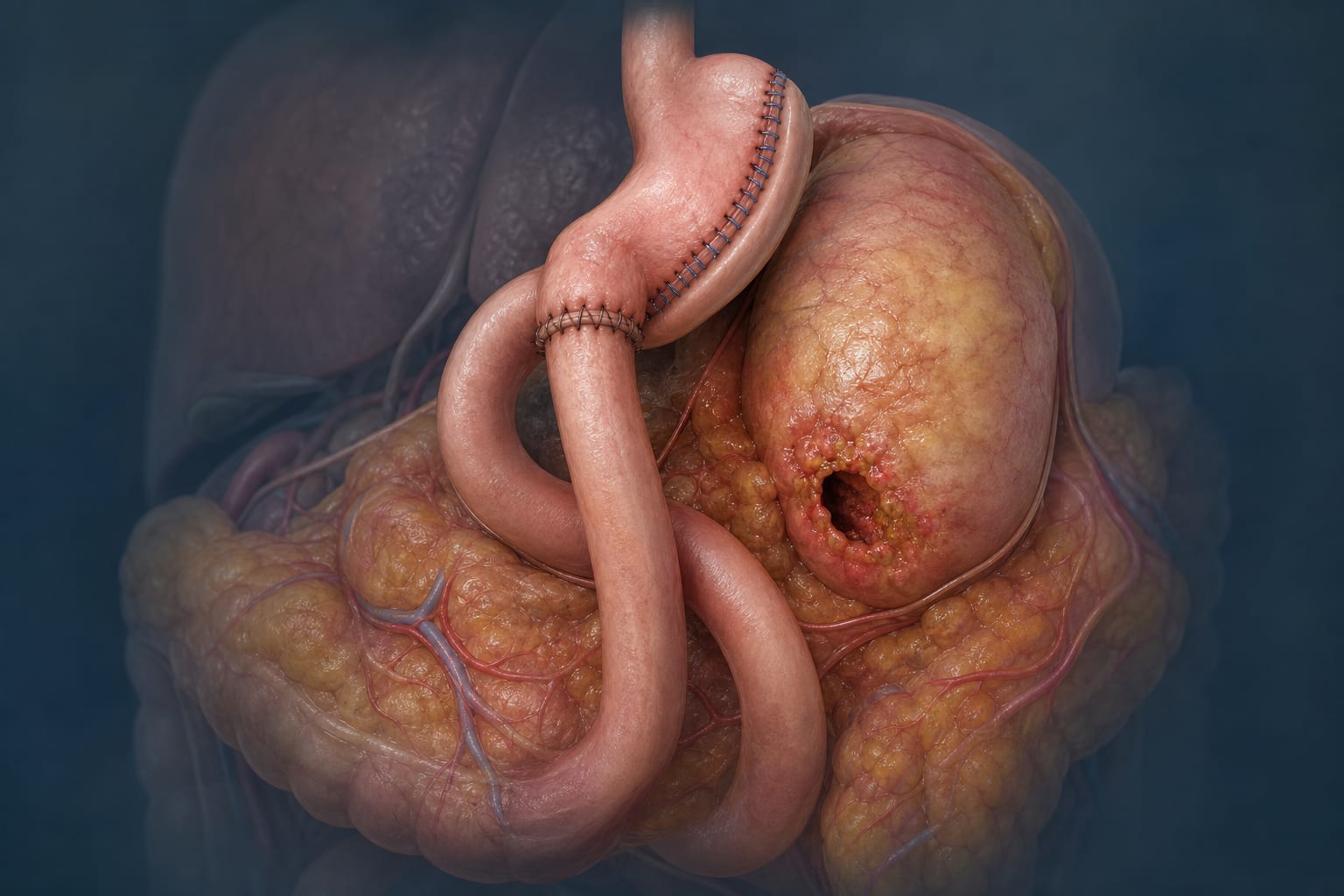
To determine the average TSBL in Indian patients with obesity undergoing bypass operations and analyze specific demographic, anthropometric, and metabolic parameters influencing TSBL.
Key Findings:
Mean TSBL was 797.7 cm, with significant differences between genders (775 cm for females, 833.9 cm for males).
No significant difference in TSBL based on hypertension and dyslipidemia; however, TSBL was significantly longer in patients with type 2 diabetes mellitus.
Age negatively correlated with TSBL, while height and weight positively correlated.
After adjustment, only age, height, and diabetes significantly predicted TSBL variability.
Interpretation:
The study highlights the variability in TSBL among obese individuals and its correlation with certain demographic and metabolic factors, which can inform tailored surgical approaches to optimize outcomes.
Limitations:
Retrospective design may introduce bias, affecting the reliability of the findings.
Single-center study limits generalizability to broader populations.
Intraoperative measurement may carry risks of bowel injury, which could impact patient safety.
Conclusion:
Understanding TSBL variability is crucial for tailoring metabolic and bariatric surgical interventions, ultimately optimizing weight loss and metabolic outcomes in obese patients.