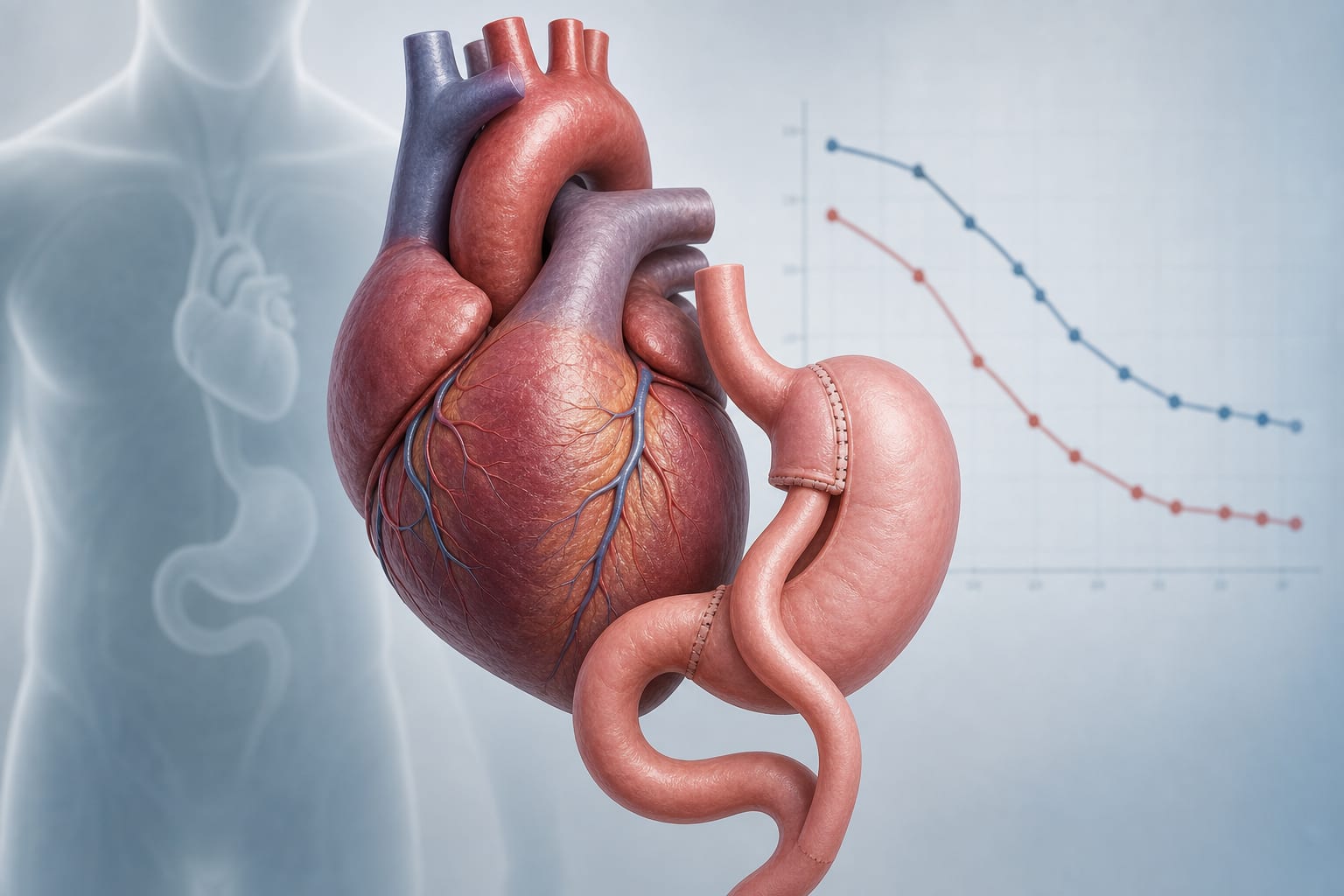
To evaluate adolescents who underwent laparoscopic sleeve gastrectomy (LSG) by assessing BMI, %EWL, GLP-1 and GIP levels, WR incidence, and the potential role of Semaglutide as an adjunctive treatment for weight loss.
Key Findings:
LSG is effective for adolescent obesity, leading to significant weight loss and metabolic improvements, with Semaglutide showing promise as an adjunctive treatment.
Weight regain typically occurs 2-3 years postoperatively, associated with declining incretin responses, highlighting the need for ongoing management.
Semaglutide may serve as an adjunctive treatment to mitigate weight regain, warranting further investigation.
Interpretation:
The study highlights the importance of gut hormones in weight management post-LSG and suggests that pharmacological interventions like Semaglutide could enhance long-term outcomes by potentially stabilizing incretin responses.
Limitations:
Retrospective design may introduce bias.
Limited generalizability due to single-center study.
Potential confounding factors such as variations in postoperative care and individual patient differences.
Conclusion:
LSG is a durable intervention for adolescent obesity, but weight regain is a concern that may be addressed with additional pharmacological support, such as Semaglutide, to improve long-term outcomes.