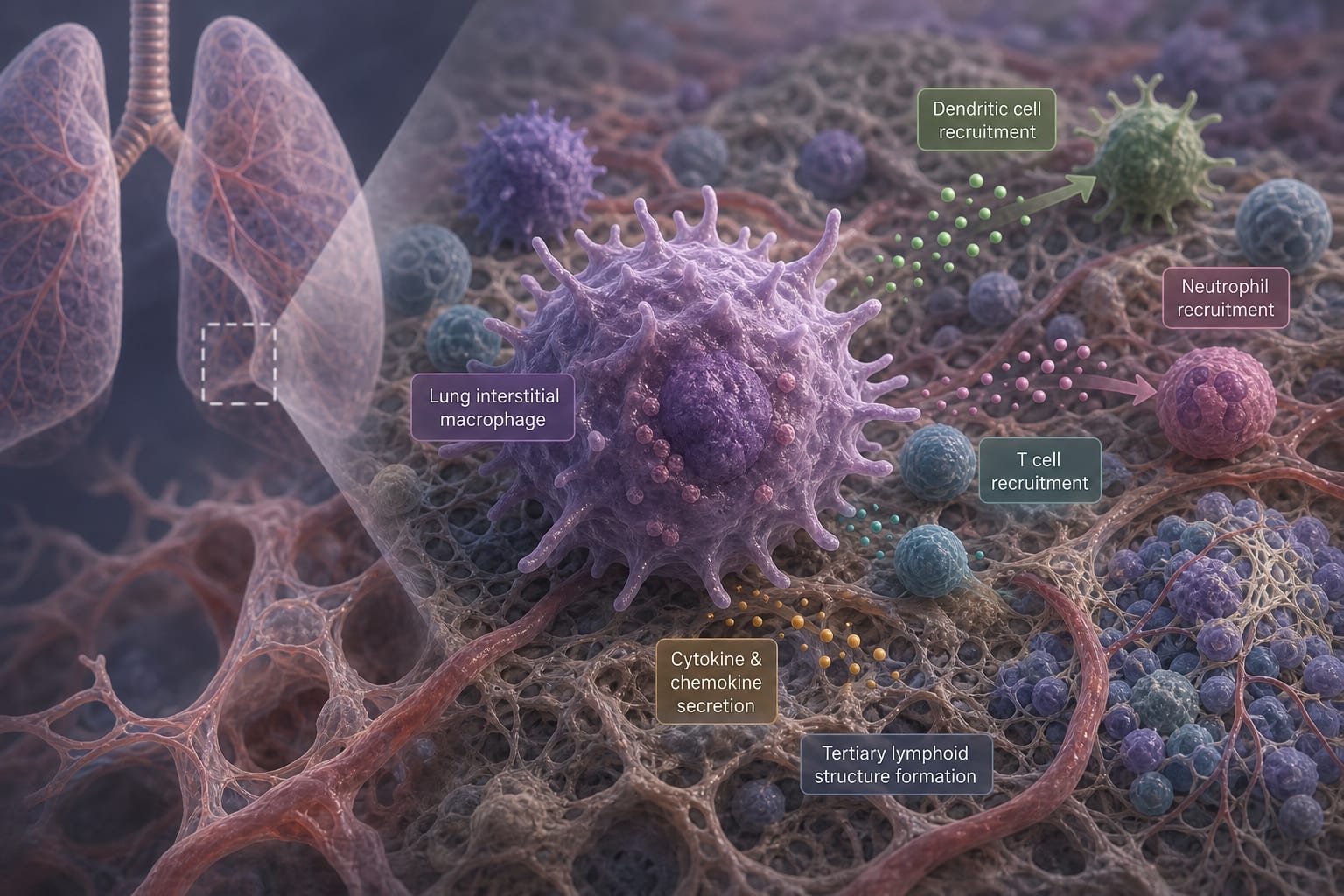
To define the molecular programs, potential divisions of labor, and spatial organization of murine lung interstitial macrophages (IMs), highlighting their significance in lung health and disease.
Approach:
Key Findings:
Distinct cytokine and receptor gene profiles were observed between CD206hi and CD206lo IM subsets, indicating functional specialization.
IM subsets exhibited unique innate immune signatures, including complement components and pattern recognition receptors, which may influence immune responses.
Spatial transcriptomics revealed that IMs predominantly localized to bronchovascular bundles, interstitium, and periphery of the lung, suggesting specific roles in lung architecture.
CD206hi and CD206lo IMs occupied specific anatomical niches with differential gene expression, reflecting their specialized functions.
Interpretation:
The findings enhance the understanding of IM heterogeneity and identify molecular programs linked to immune functions and tissue maintenance, with potential applications in therapeutic strategies.
Limitations:
Lack of specific IM-subset depletion models limits the understanding of their individual roles, which may affect the interpretation of their functional contributions.
Conclusion:
The study delineates a complex molecular and spatial landscape of IM subsets, providing a framework for future functional studies and insights into lung disease mechanisms.