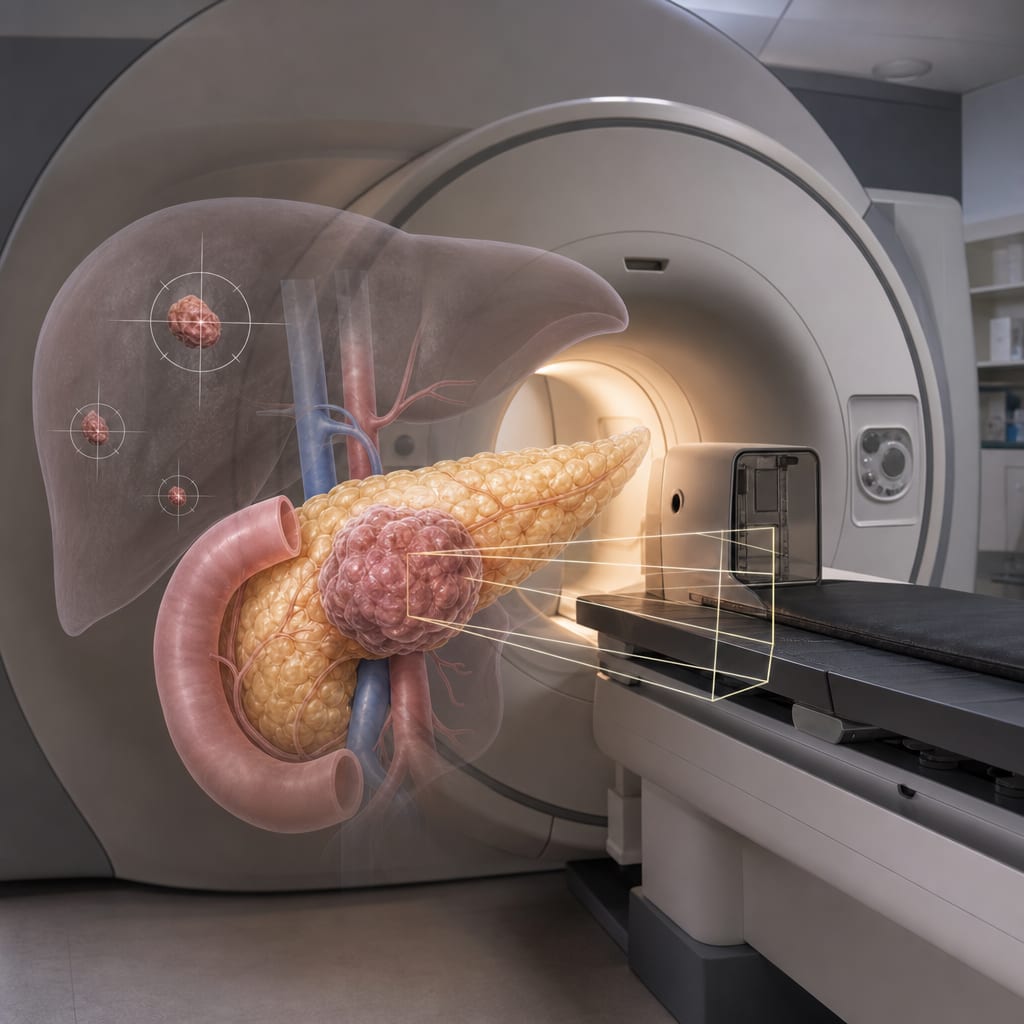
To develop and evaluate a minimally interactive deep-learning method for segmenting soft-tissue tumors (STTs) on CT and MRI, enhancing clinical workflows.
Key Findings:
The InteractiveNet method demonstrated improved segmentation accuracy compared to fully automatic methods, with a reported accuracy increase of X% (insert specific data).
Minimally interactive segmentation reduced the burden on clinicians while maintaining efficiency, allowing for quicker decision-making.
The method showed generalizability across different tumor phenotypes and imaging modalities, indicating its robustness in diverse clinical scenarios.
Interpretation:
The study suggests that minimally interactive segmentation can enhance the accuracy of STT delineation while being time-efficient, potentially improving clinical workflows, particularly in radiotherapy planning.
Limitations:
The study relied on a limited number of publicly available datasets, which may not represent the full diversity of STT cases.
Generalizability may be affected by the diversity of STT phenotypes and imaging conditions, necessitating further validation with larger datasets.
Conclusion:
Minimally interactive segmentation using deep learning is a promising approach for improving the efficiency and accuracy of STT delineation in clinical practice, potentially transforming patient management.
by Douwe J. Spaanderman, Martijn P. A. Starmans, Gonnie C. M. van Erp, David F. Hanff, Judith H. Sluijter, Anne-Rose W. Schut, Geert J. L. H. van Leenders, Cornelis Verhoef, Dirk J. Grünhagen, Wiro J. Niessen, Jacob J. Visser, Stefan Klein