Aging-driven metabolic abnormalities remodel intercellular communication through the gut–liver–heart axis and may promote coronary artery disease: the key role of bile acid metabolism - Summary - MDSpire
Conexiant’s news site is now MDSpire News. Learn more
Advertisement
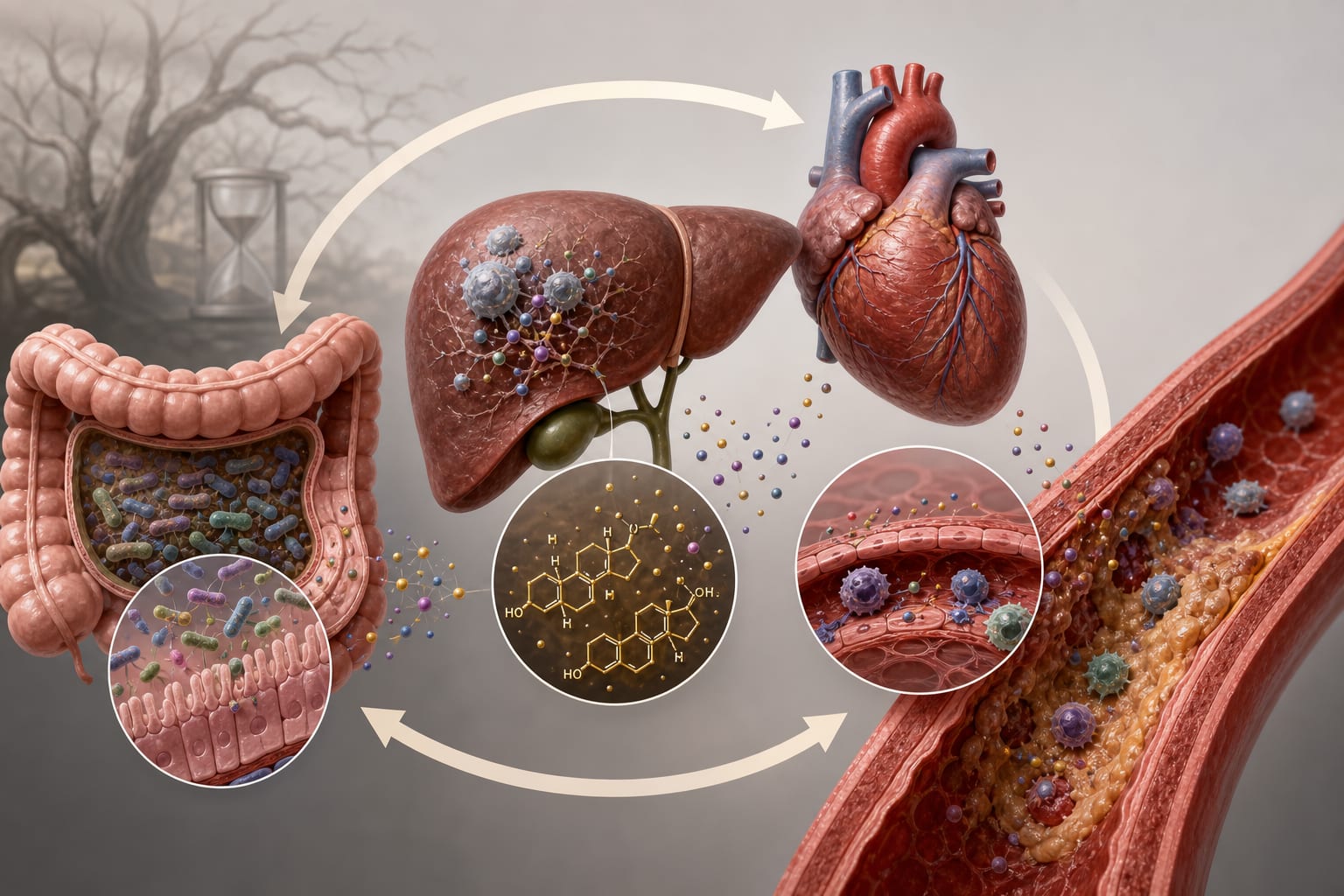
Metabolic Changes Associated with Aging Alter Intercellular Interactions via the Gut–Liver–Heart Axis and May Contribute to Coronary Artery Disease: The Critical Function of Bile Acid Metabolism
To outline how aging affects the gut–liver–heart axis and contributes to coronary artery disease (CAD) through metabolic changes, particularly focusing on bile acid metabolism.
Approach:
Integration of Evidence: The review integrates cellular, molecular, and clinical evidence to demonstrate the relationship between aging, bile acid metabolism, and CAD.
Focus on Immunometabolic Remodeling: It discusses how aging leads to immunometabolic remodeling that sustains chronic vascular inflammation.
Emerging Interventions: The review appraises potential immune–metabolic interventions for CAD prevention and therapy in older adults.
Key Findings:
Aging is a strong independent risk factor for CAD, with traditional risk models failing to capture the full extent of risk in older populations.
Cellular senescence and the senescence-associated secretory phenotype (SASP) contribute to chronic inflammation and CAD progression.
Dysbiosis in the gut microbiota affects bile acid metabolism, leading to systemic inflammation and cardiovascular risk.
Altered bile acid signaling impacts macrophage activation and vascular health, contributing to endothelial dysfunction, foam cell formation, plaque instability, and adverse cardiac remodeling.
Interpretation:
The review presents bile acid signaling as a critical link between aging, inflammation, and CAD.
Limitations:
Most proposed interventions are currently supported only by preclinical or early-phase human data.
Conclusion:
The review emphasizes the interconnectedness of the gut, liver, and heart in the context of aging and CAD.