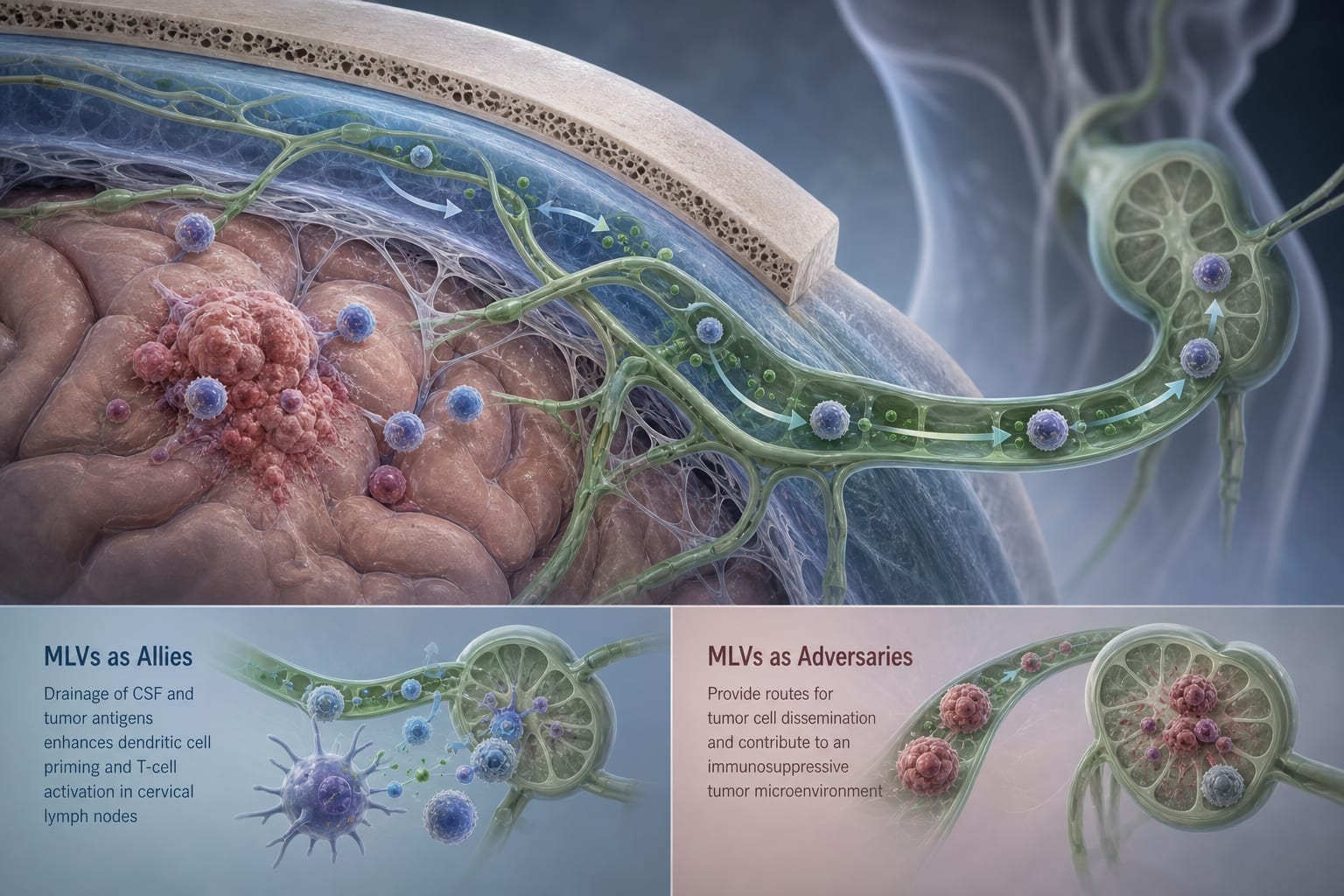
To explore the dual roles of meningeal lymphatic vessels (MLVs) in brain metastases and their potential as therapeutic targets, emphasizing their implications for improving treatment outcomes.
Key Findings:
MLVs promote anti-tumor immunity by draining tumor antigens and supporting T-cell activation in early stages.
Pathological remodeling of MLVs due to tumor-derived factors leads to immune evasion and facilitates tumor spread, highlighting the mechanisms involved.
MLVs serve as a critical link between the CNS and the immune system, influencing both immune responses and tumor dynamics.
Interpretation:
MLVs exhibit a dual 'friend and foe' role in brain metastases, making them a promising target for therapeutic intervention.
Limitations:
Current understanding of MLVs in brain metastases is limited, necessitating further research into their biological roles.
Therapeutic strategies targeting MLVs are still in early stages and require further research to validate their efficacy.
Conclusion:
Targeting MLVs could enhance immunotherapy and drug delivery while limiting metastatic spread, representing a novel approach in treating brain metastases and addressing current therapeutic challenges.