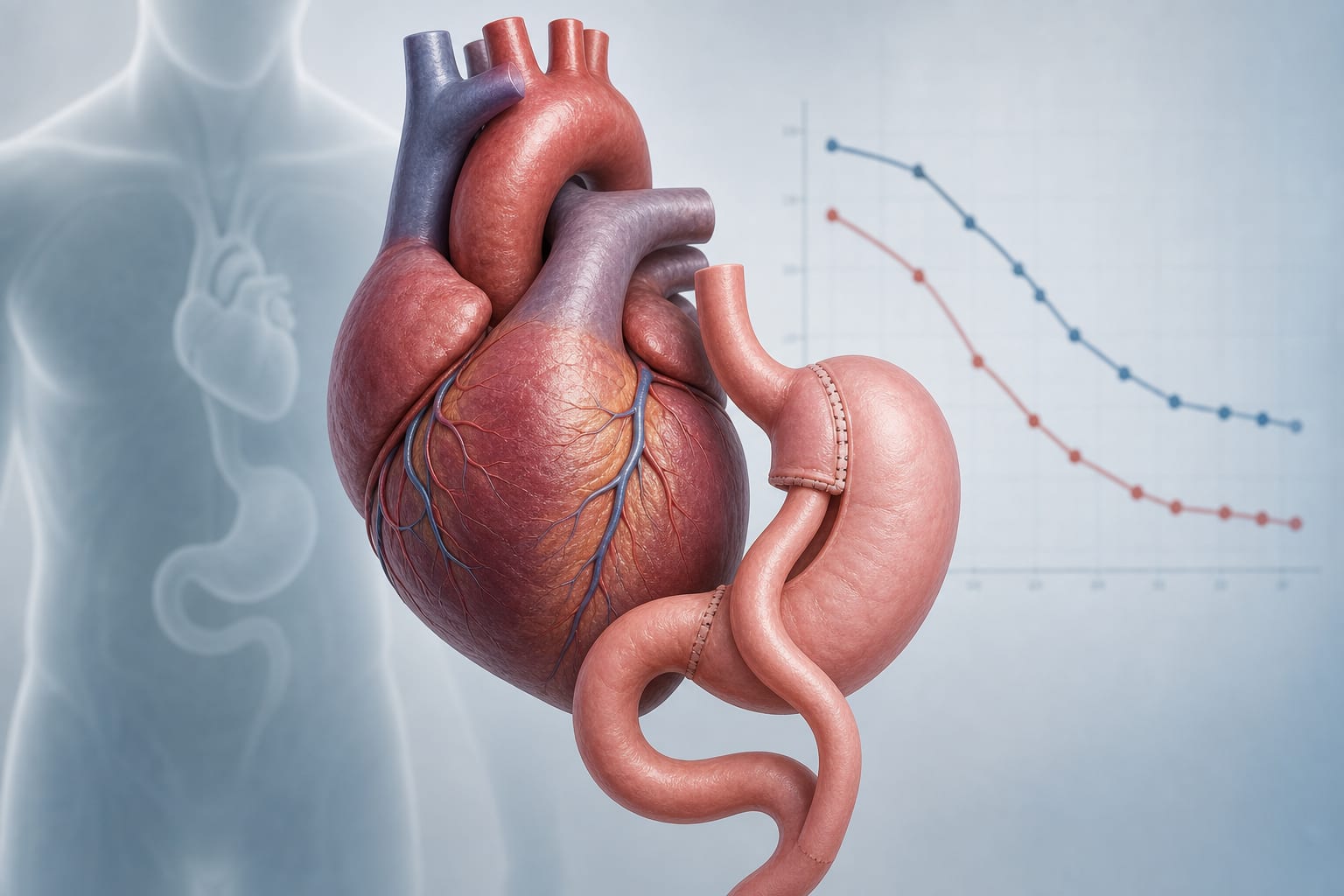
To compare the efficacy of Roux-en-Y gastric bypass (RYGB) with long alimentary limb (AL) versus long biliopancreatic limb (BPL) on HbA1c levels in obese individuals with type 2 diabetes (T2D), focusing on primary and secondary endpoints.
Key Findings:
The study aimed to assess the impact of limb length on HbA1c levels at 12 months post-surgery, with specific data to be included.
Longer BPL was hypothesized to improve T2D outcomes compared to longer AL, with expected results to be detailed.
Interpretation:
The findings may provide insights into optimizing RYGB techniques for better T2D management in obese patients.
Limitations:
Insufficient recruitment and high dropout rates in the non-surgical arm limited randomization, potentially biasing results.
The study was conducted at a single center, which may affect generalizability; further context on this limitation is needed.
Conclusion:
The study aims to clarify the relationship between RYGB limb lengths and T2D outcomes, potentially guiding surgical practices based on specific findings.
by Lena Seidemann, Roland Morgenroth, Yusef Moulla, Undine Gabriele Lange, Orestis Lyros, Matthias Blüher, David Petroff, Christiane Prettin, Norbert Köhler, Arne Dietrich