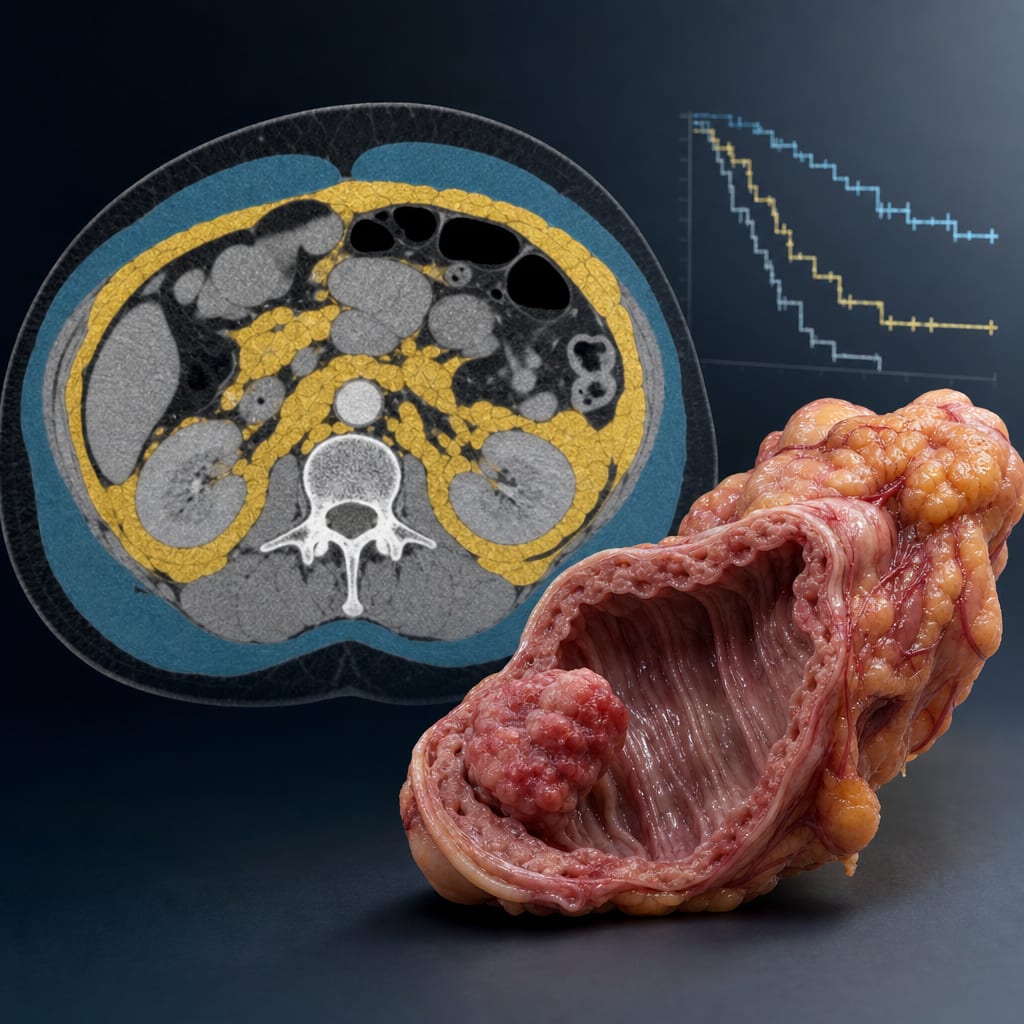
To evaluate the predictive value of combining visceral fat area (VFA) with blood lipid levels for perioperative risk and long-term prognosis in patients undergoing radical resection for colorectal cancer (CRC), highlighting the significance of this combination.
Key Findings:
No significant differences in short-term complications among VFA/lipid groups.
Significant stratification in long-term survival; high VFA and high lipid levels associated with better overall and recurrence-free survival, supporting the 'obesity paradox' which should be briefly explained.
Age, TNM stage, and surgical approach identified as independent prognostic factors.
Interpretation:
The combination of VFA and blood lipid levels may serve as a useful preoperative indicator for risk stratification and prognostic assessment in CRC patients, with implications for clinical practice.
Limitations:
Retrospective design may introduce bias.
Single-center study limits generalizability.
Potential confounding factors not fully controlled, impacting results.
Conclusion:
High VFA and high lipid levels may be associated with improved survival outcomes in CRC patients, supporting the need for comprehensive metabolic assessments preoperatively and further research to validate these findings.