Editorial: Launching a dedicated collection on the intersection of cancer and heart diseases
-
By
-
Moez Karim Aziz
-
July 8, 2026
Objective:
To present a collection of manuscripts addressing the interplay between cancer and cardiovascular disorders, providing insights into the cardiovascular effects of oncologic therapies.
Approach:
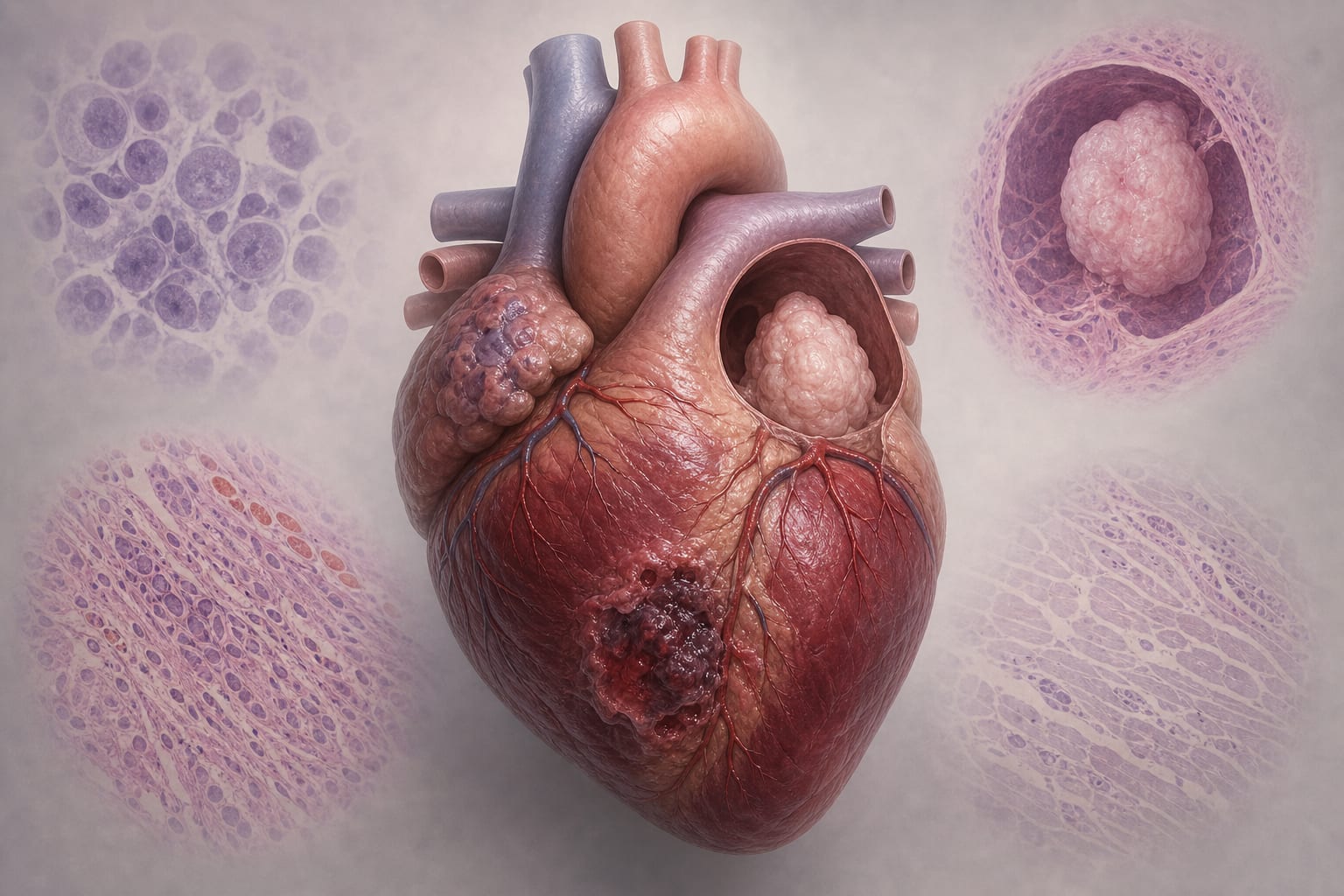
- Case Reports: The collection includes case reports detailing cardiovascular effects of cancer therapies, including a case where doxorubicin-cyclophosphamide therapy led to myocardial infarction and hereditary cardiac myxomas linked to PRKAR1A mutations.
- Interdisciplinary Strategies: A case report on cardiac angiosarcoma emphasizes the need for an interdisciplinary approach involving multiple specialties for effective management.
- Prognostic Markers: The collection discusses the importance of nutritional and inflammatory status as prognostic markers in oncologic patients, particularly in lung cancer survivors.
- Trends in Multiple Myeloma: A retrospective study highlights increasing cardiotoxicity in multiple myeloma patients, noting significant incidences of heart failure, thromboembolism, hypertension, and arrhythmias.
Key Findings:
- Approximately 30% of cancer patients have comorbid cardiovascular disease.
- Doxorubicin may contribute to coronary inflammation in addition to causing cardiomyopathy.
- PRKAR1A mutations are responsible for about 80% of familial cardiac myxomas.
- Nutritional and inflammatory status are valuable prognostic markers in oncologic patients.
- There is an increasing incidence of cardiotoxicity in patients treated for multiple myeloma.
Interpretation:
The collection underscores the complexity of managing patients with concurrent cancer and cardiovascular conditions, advocating for a multidisciplinary approach.
Limitations:
- The collection does not provide an exhaustive account of all developments in cardio-oncology.
- Further research is needed to elucidate the impact of interventions on cardiac conditions in cancer patients.
Conclusion:
The collection emphasizes the importance of a multidisciplinary team in managing complex cases in cardio-oncology.
Sources:
Based on findings from:
Editorial: introducing special collection on cancer and cardiovascular disorders
Moez Karim Aziz. Bmc Cardiovascular Disorders, 2026.
https://link.springer.com/article/10.1186/s12872-026-06181-1
This content is an AI-generated, fully rewritten summary based on a published scholarly article. It does not reproduce the original text and is not a substitute for the original publication. Readers are encouraged to consult the source for full context, data, and methodology.