Surgical treatment of multiple breast cancer brain metastases: clinical characteristics and factors impacting postoperative survival - Summary - MDSpire
Advertisement
Surgical treatment of multiple breast cancer brain metastases: clinical characteristics and factors impacting postoperative survival
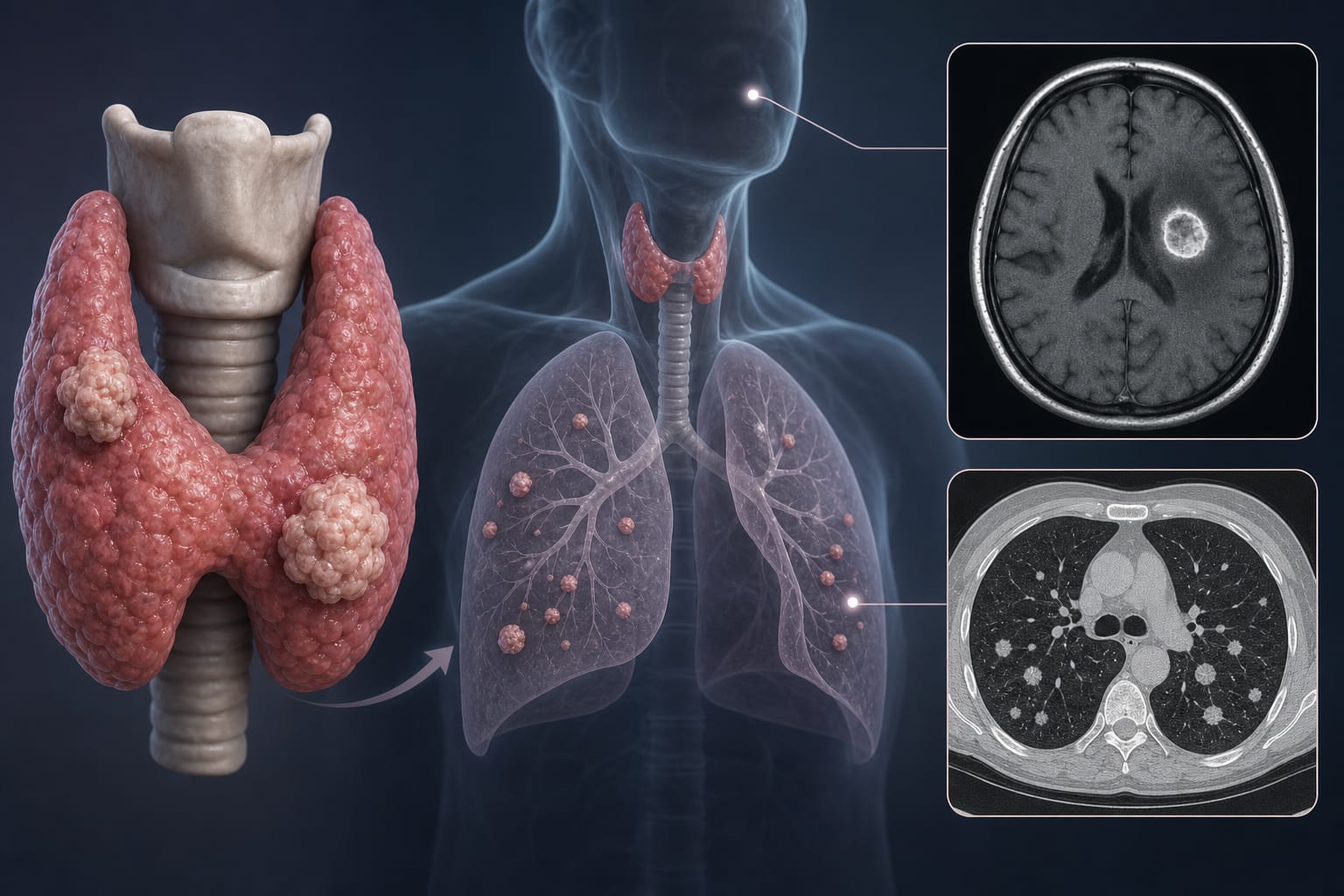
To analyze outcomes of individuals with multiple breast cancer brain metastases (BCBM) who underwent surgical resection and compare their clinical characteristics and treatment outcomes with those of patients having single BCBM.
Key Findings:
Median overall survival after BCBM surgery ranges from 6 to 18 months, highlighting the variability based on clinical factors.
Negative progesterone receptor status, infratentorial tumor localization, hepatic metastasis, and positive HER2 status are associated with multiple BM, indicating potential targets for treatment.
The cohort consisted of 93 patients, with 30 having multiple BM, underscoring the need for tailored treatment approaches.
Interpretation:
Surgical resection of multiple BCBM may be beneficial, with specific clinical characteristics influencing outcomes and survival rates, suggesting a need for personalized treatment strategies.
Limitations:
Retrospective design may introduce selection bias, limiting the generalizability of findings.
Limited sample size for subgroup analyses may affect the robustness of conclusions.
Conclusion:
Surgical treatment for multiple BCBM can be considered, particularly in patients with specific clinical profiles, although further studies are needed to confirm these findings and explore their implications for clinical practice.
by Anna Michel, Laurèl Rauschenbach, Hanah Karadachi, Meltem Gümüs, Yahya Ahmadipour, Marvin Darkwah Oppong, Christoph Pöttgen, Jörg Hense, Neriman Özkan, Karsten H. Wrede, Philipp Dammann, Ulrich Sure, Ramazan Jabbarli