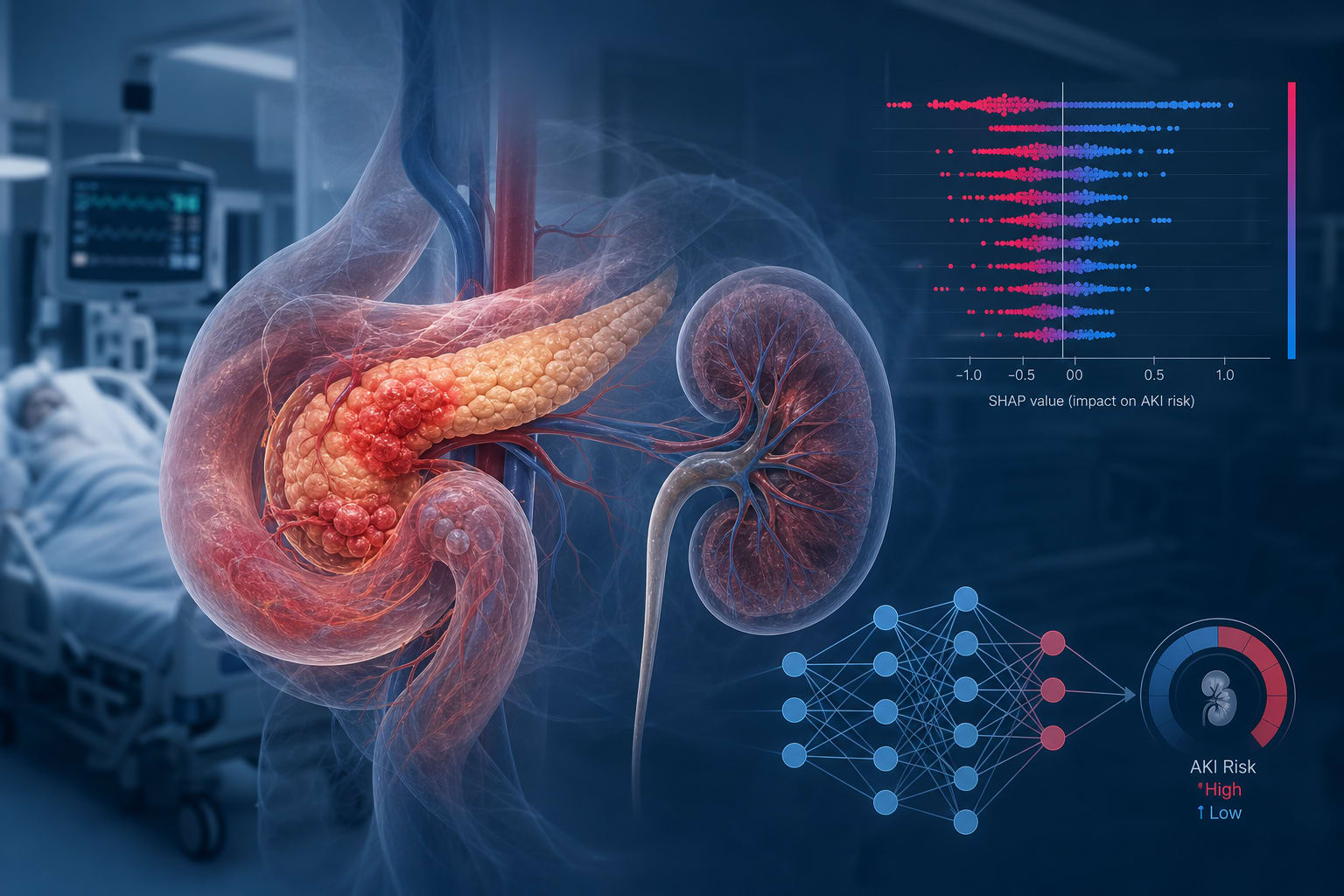
To develop and externally validate an interpretable machine learning model for early ICU-based prediction of AKI in critically ill patients with acute pancreatitis.
Approach:
Study Design: A retrospective study of acute pancreatitis patients admitted to the ICU, with an external validation cohort from the MIMIC-IV database.
Data Collection: Data was collected from electronic medical records within 24 hours of ICU admission, including demographic data, medical history, laboratory indicators, vital signs, and treatment.
Model Development: An interpretable machine learning model was developed using SHAP analysis to enhance transparency and facilitate clinical decision-making.
Key Findings:
AKI is a common complication in acute pancreatitis patients, associated with increased mortality and healthcare burden.
Current AKI diagnosis methods, relying on serum creatinine and urine output, are often inadequate in critically ill patients.
Machine learning models can improve AKI risk assessment but often lack interpretability.
Interpretation:
The study highlights the potential of interpretable machine learning techniques in predicting AKI in critically ill patients with acute pancreatitis, addressing limitations of traditional diagnostic methods.
Limitations:
The study is retrospective and may have inherent biases.
External validation was limited to one database (MIMIC-IV).
The model's applicability in diverse clinical settings remains to be established.
Conclusion:
The developed machine learning model provides a promising approach for early detection of AKI in acute pancreatitis patients in the ICU setting.