Microchannel-assisted precision surgical treatment for thoracic ossification of the ligamentum flavum: a comparative retrospective study - Summary - MDSpire
Advertisement
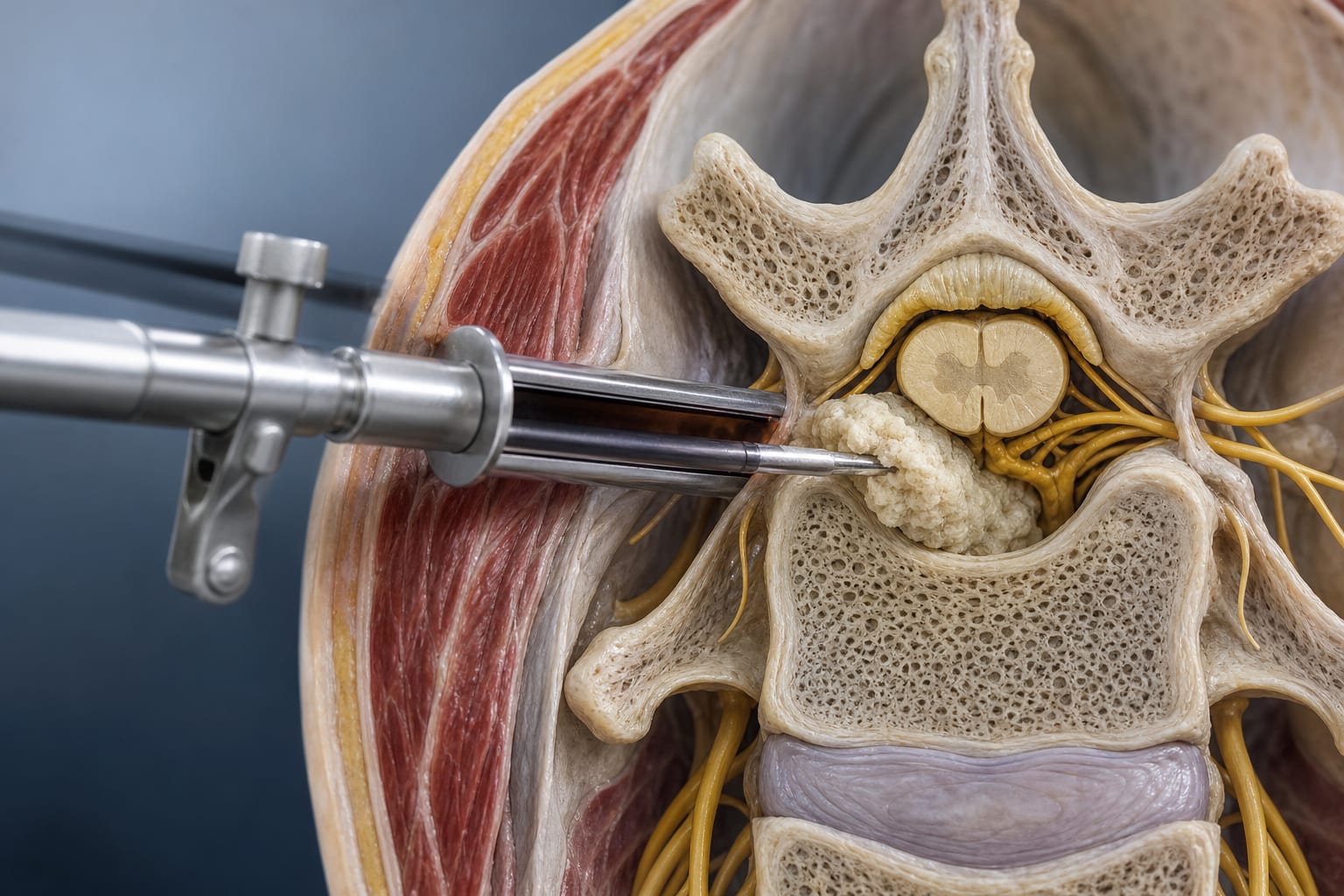
Microchannel-assisted precision surgical treatment for thoracic ossification of the ligamentum flavum: a comparative retrospective study
To investigate the clinical efficacy of the microchannel-assisted technique for precise treatment in patients with focal thoracic ossification of the ligamentum flavum, highlighting its potential advantages over conventional methods.
Key Findings:
No postoperative neurological deterioration was observed in either group.
The JOA score improvement rate at 2-year follow-up was comparable between groups A and B (P > 0.05), indicating similar long-term efficacy.
Group A showed superior VAS scores for thoracic back pain at 1 week and 1 month postoperatively (P < 0.05), but not at 3 months.
Significant differences in operative time, blood loss, length of stay, wound length, and time to walking were noted between the two groups (P < 0.05).
Interpretation:
The microchannel-assisted technique is a safe and effective minimally invasive treatment for focal thoracic ossification of the ligamentum flavum, offering advantages in perioperative parameters while ensuring comparable long-term neurological outcomes, which may influence surgical practice.
Limitations:
The study was retrospective and non-randomized, which may introduce bias and affect the reliability of the findings.
The sample size was relatively small, limiting the generalizability of the findings to a broader population.
Conclusion:
The microchannel-assisted technique significantly reduces operative time, decreases intraoperative blood loss, promotes postoperative recovery, and lowers complication rates while ensuring comparable long-term neurological outcomes.