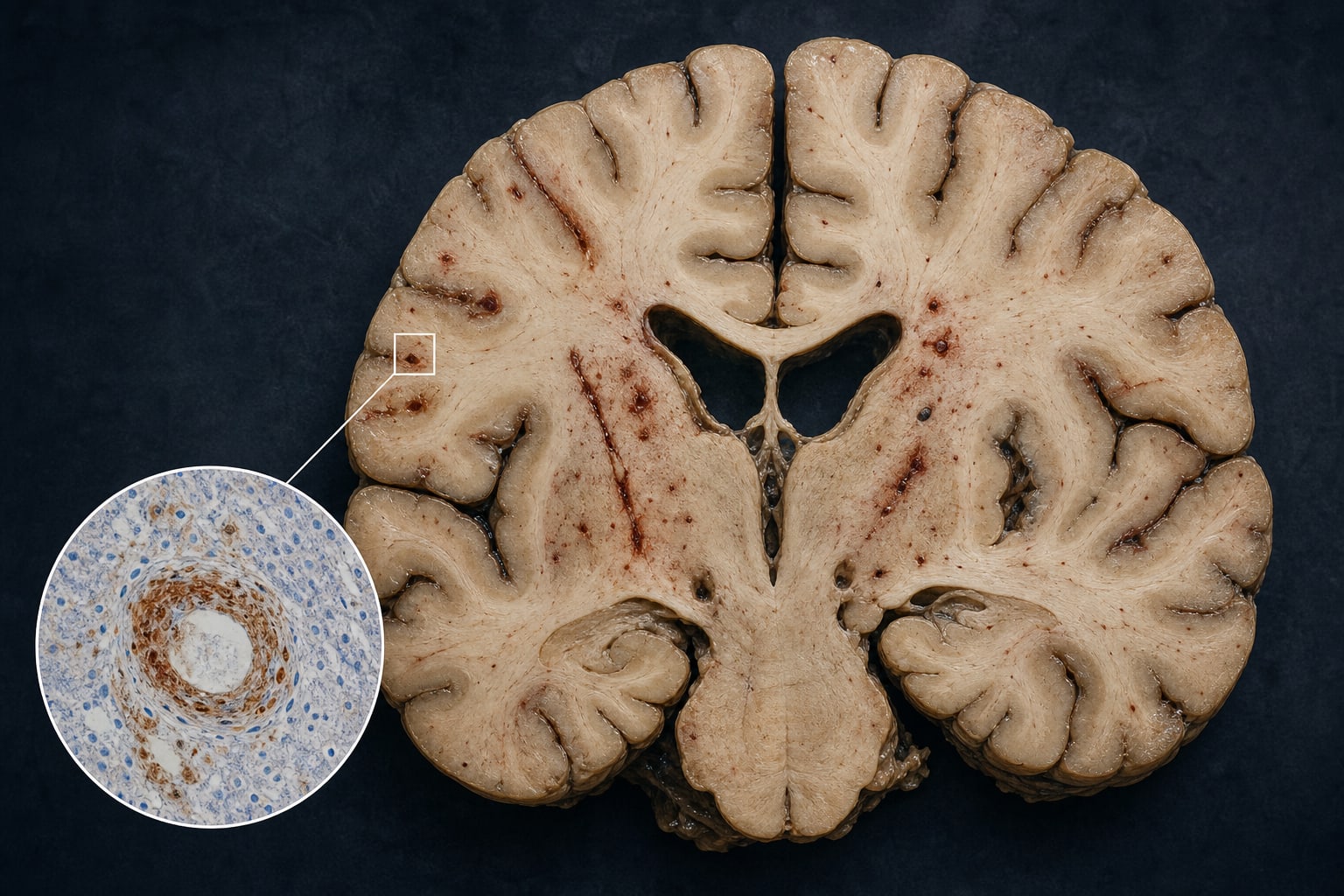
To investigate the presence of Chlamydia pneumoniae and NLRP3 inflammasome activation in the retinas of patients with Alzheimer's disease.
Key Findings:
Retinal tissue from Alzheimer's patients showed more frequent detection of C pneumoniae DNA and antigen compared to controls.
C pneumoniae was localized to multiple retinal layers, including the ganglion cell layer and inner nuclear layer.
Increased expression of NLRP3, ASC, and cleaved caspase-1 was found in retinas from Alzheimer's patients, indicating NLRP3 inflammasome activation.
Colocalization of bacterial markers with amyloid-beta deposits was observed.
Interpretation:
The findings suggest a potential link between infection, innate immune activation, and retinal pathology in Alzheimer's disease, highlighting the diagnostic relevance of retinal tissue.
Limitations:
The study had a limited sample size.
The cross-sectional design does not establish causality.
It remains unclear whether C pneumoniae infection precedes or follows neurodegenerative changes.
Conclusion:
Further investigation is warranted to confirm these findings and explore the role of retinal microbial or inflammasome markers in clinical diagnostics.