To evaluate the efficacy of a scalable digital mental health treatment (DMHT) for reducing symptoms of depression and anxiety in breast cancer survivors (BCS) and to assess the effect of human coaching on engagement among those with low initial engagement.
Approach:
Study Design: A randomized clinical trial (RCT) using the Sequential, Multiple Assignment, Randomized Trial (SMART) design, recruiting participants across the US from September 2021 to November 2022.
Participants: Women aged 18 or older diagnosed with breast cancer (stages I-III) within the last 5 years, experiencing high symptoms of depression or anxiety.
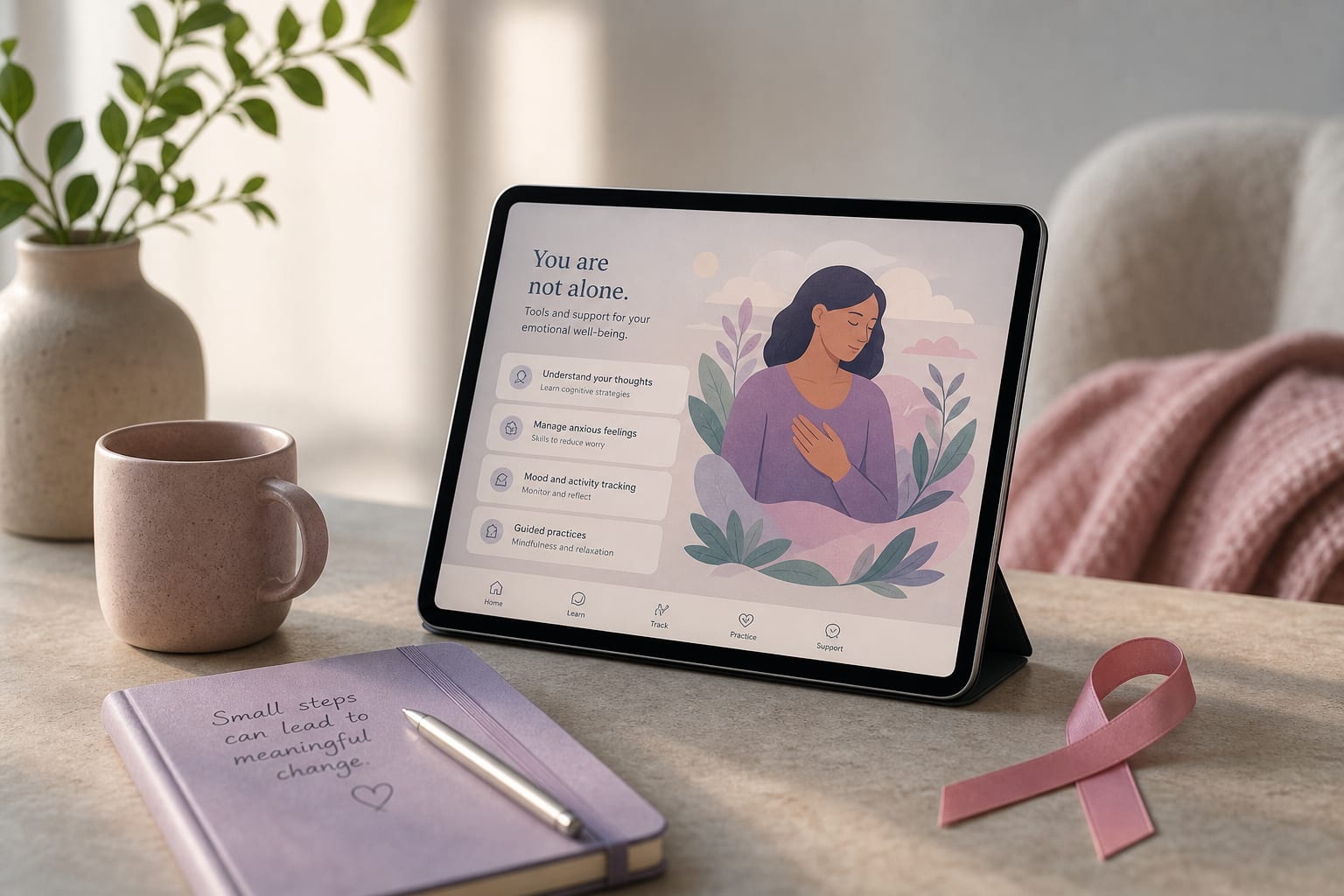
Intervention: Participants were randomized to receive either the DMHT (IntelliCare) or a patient education program for 8 weeks.
Engagement Monitoring: Daily DMHT use was monitored, categorizing participants into optimal or suboptimal engagement based on application usage in the first week.
Coaching Strategy: Suboptimally engaged participants were randomized to receive additional coaching or no coaching starting in week 2.
Key Findings:
Nearly half of women diagnosed with invasive breast cancer report clinically significant symptoms of depression or anxiety within the first year.
Digital mental health treatments (DMHTs) delivered through smartphone applications may help overcome barriers to accessing mental health care.
Sustained engagement with DMHTs is critical for efficacy, with adaptive coaching strategies potentially improving engagement among those with low initial engagement.
Interpretation:
The study aims to evaluate the efficacy of DMHTs in reducing symptoms of depression and anxiety in breast cancer survivors and to assess the effect of coaching on engagement.
Limitations:
Participants were not blinded to their condition due to the nature of the intervention.
Exclusion criteria may limit generalizability to all breast cancer survivors.
Conclusion:
The trial seeks to determine the effectiveness of DMHTs and coaching strategies in improving mental health outcomes for breast cancer survivors.