Association between objective sleep structure and suicidal ideation in patients with depression: a study based on polysomnographic regression and cluster analysis - Summary - MDSpire
To examine associations between objective sleep structure and current suicidal ideation (SI) in depressed patients and to explore the utility of sleep-clinical clustering for SI stratification.
Approach:
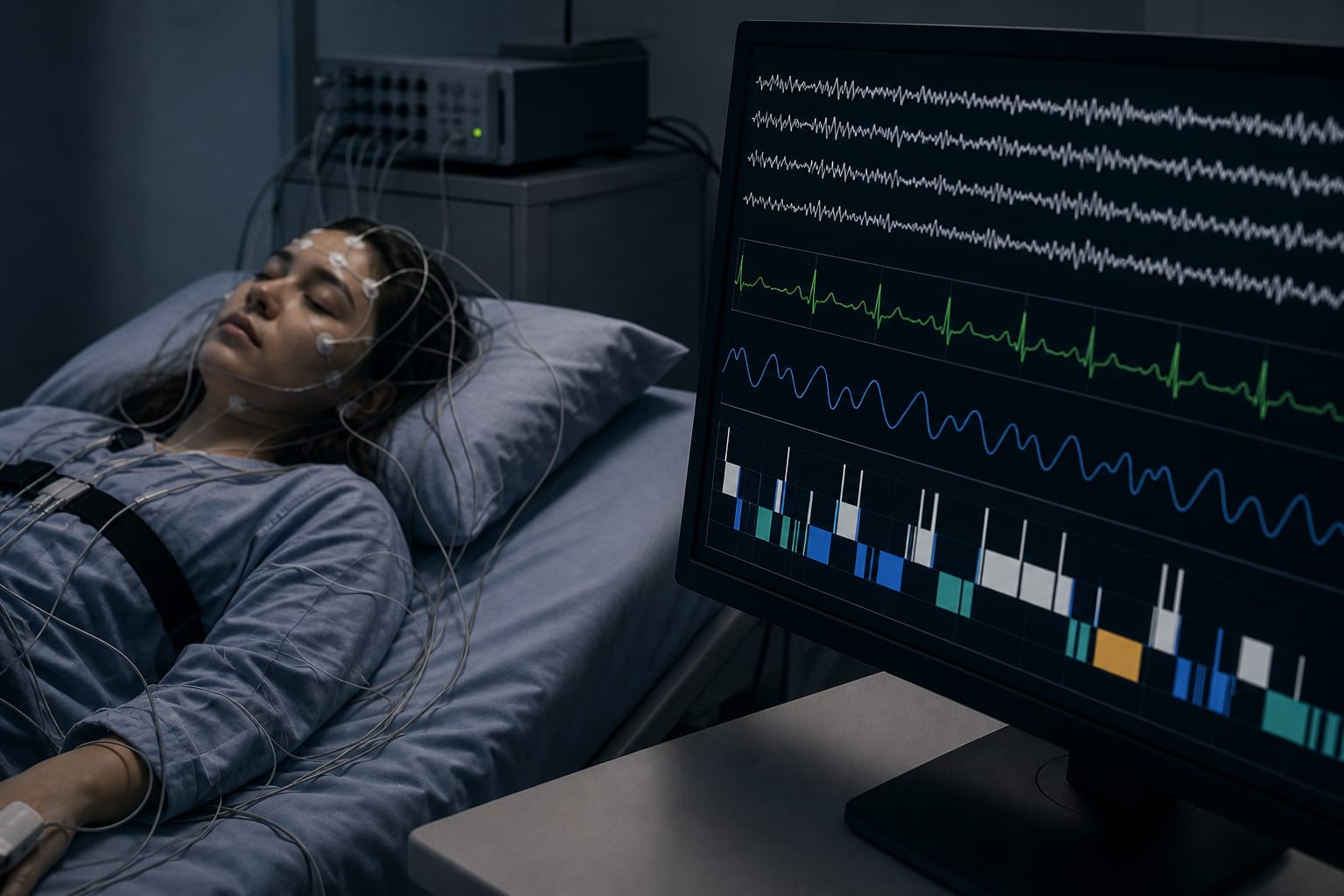
Participants: 287 patients with depressive disorder underwent clinical assessment and overnight polysomnography (PSG).
Assessment of SI: Current SI was assessed using item 3 of the HAMD-17.
Only the HAMD total score was independently associated with current SI (OR = 1.683, p < 0.001).
Cluster analysis revealed three subgroups with distinct SI rates: Cluster 1 (37.04%), Cluster 2 (70.37%), Cluster 3 (60.80%).
Membership in Clusters 2 + 3 was associated with current SI (OR = 3.152, p < 0.001).
Interpretation:
Depression severity was the primary factor associated with current SI, while PSG-derived sleep-clinical clusters may help characterize presentations of SI.
Limitations:
The study's exploratory nature requires validation in larger longitudinal samples.
The primary cluster association was attenuated when adjusting for HAMD total score.
Conclusion:
PSG-derived sleep-clinical clusters may provide insights into the heterogeneity of current SI in depressed patients.