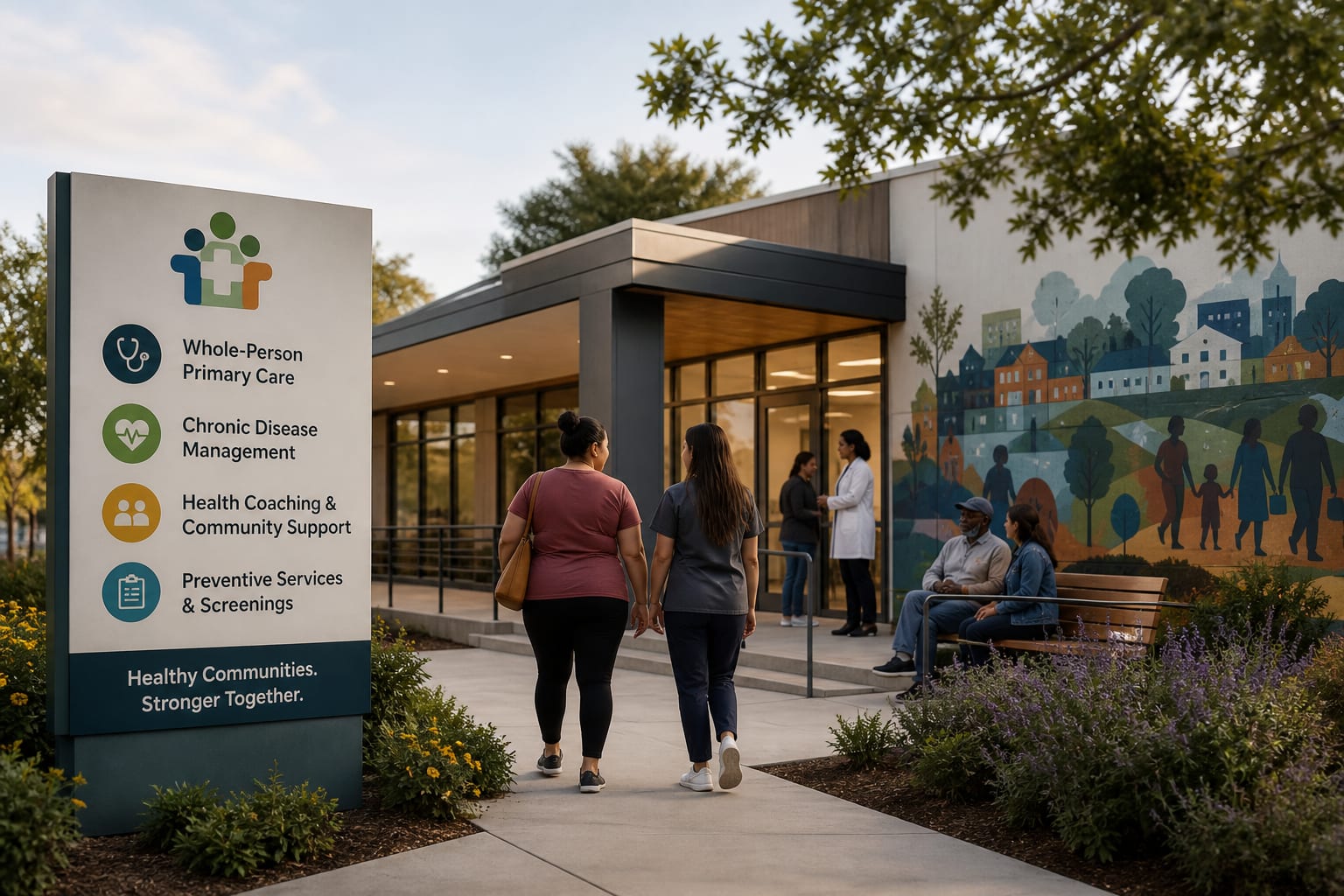
To assess the implementation of the Neighborhood Health Hub (NHH) Model in medically underserved areas (MUAs) to improve access to essential preventive services.
Approach:
NHH Model Description: The NHH Model provides convenient access to preventive services through neighborhood-level health and wellness hubs, utilizing trained lay health coaches to promote behavioral change and chronic disease self-management.
Community Engagement: The model leverages community health workers (CHWs) who share cultural backgrounds with the populations served, enhancing the delivery of culturally appropriate care.
Key Findings:
Health coaches and CHWs can effectively reduce health disparities and improve obesity-related health behaviors, as evidenced by various studies.
The NHH Model addresses social determinants of health and connects community-based self-management services with primary care.
Health hubs serve as accessible points of contact for populations, promoting coordination and continuity of care.
Interpretation:
The NHH Model emphasizes community-based strategies and health coaching in improving health outcomes in MUAs.
Limitations:
Limited data on the effectiveness of decentralized health coaching programs in MUAs exists, which may affect the generalizability of findings.
Challenges in ensuring participation due to social barriers such as transportation and childcare were noted.
Conclusion:
The NHH Model aims to enhance access to health services within communities, addressing both access and social determinants of health.
by James E. Bailey, Deborah O. Ogunsanmi, Sultan Mahmud, Umar Y. Kabir, Alexandria M. Boykins, Susan W. Butterworth, Asos Mahmood, Burton L. Hayes, Esra Ozdenerol, F. Maury Ballenger, Satya Surbhi
Investigators examined Life’s Essential 8 scores and carotid ultrasonography measures across cardiovascular-kidney-metabolic stages in 1,283 young adults.