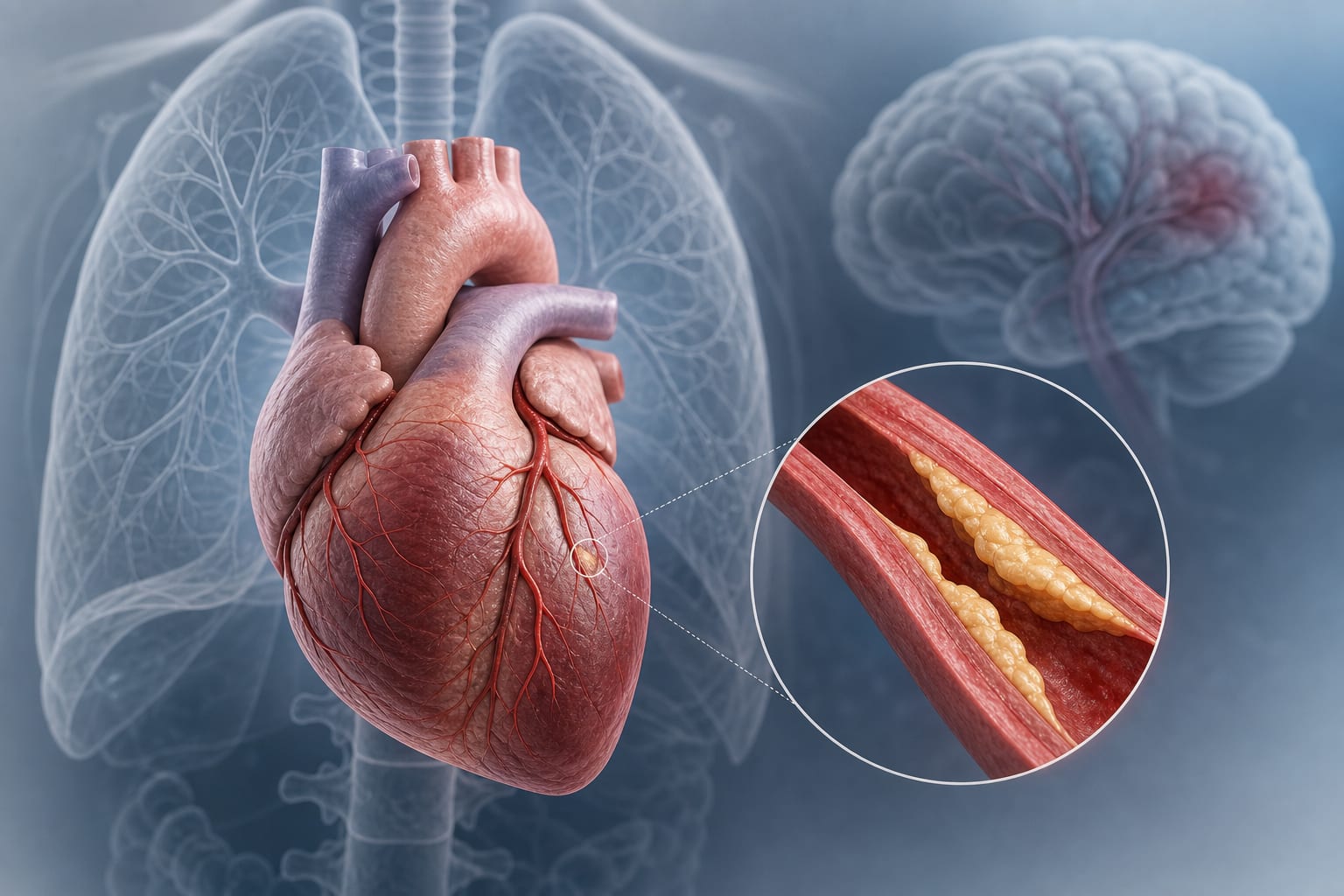
Case Report: Spontaneous coronary artery dissection presenting as MINOCA in uncontrolled Graves’ disease - Summary - MDSpire

Case Report: Spontaneous coronary artery dissection presenting as MINOCA in uncontrolled Graves’ disease

  • By

  • Yunfeng Pan

  • Hao Han

  • Jijie Chen

  • Shiyi Zhang

  • July 2, 2026

  • 0 min

Share

Objective:

To report a case of hyperthyroidism-associated spontaneous coronary artery dissection (SCAD) and explore the link between severe thyrotoxicosis and coronary arterial vulnerability.

Approach:
  • Method: A
  • Method: s
  • Method: t
  • Method: a
  • Method: g
  • Method: e
  • Method: d
  • Method: d
  • Method: i
  • Method: a
  • Method: g
  • Method: n
  • Method: o
  • Method: s
  • Method: t
  • Method: i
  • Method: c
  • Method: a
  • Method: p
  • Method: p
  • Method: r
  • Method: o
  • Method: a
  • Method: c
  • Method: h
  • Method: w
  • Method: a
  • Method: s
  • Method: a
  • Method: d
  • Method: o
  • Method: p
  • Method: t
  • Method: e
  • Method: d
  • Method: ,
  • Method: p
  • Method: r
  • Method: i
  • Method: o
  • Method: r
  • Method: i
  • Method: t
  • Method: i
  • Method: z
  • Method: i
  • Method: n
  • Method: g
  • Method: c
  • Method: o
  • Method: n
  • Method: s
  • Method: e
  • Method: r
  • Method: v
  • Method: a
  • Method: t
  • Method: i
  • Method: v
  • Method: e
  • Method: m
  • Method: a
  • Method: n
  • Method: a
  • Method: g
  • Method: e
  • Method: m
  • Method: e
  • Method: n
  • Method: t
  • Method: ,
  • Method: i
  • Method: n
  • Method: c
  • Method: l
  • Method: u
  • Method: d
  • Method: i
  • Method: n
  • Method: g
  • Method: c
  • Method: a
  • Method: r
  • Method: d
  • Method: i
  • Method: o
  • Method: v
  • Method: a
  • Method: s
  • Method: c
  • Method: u
  • Method: l
  • Method: a
  • Method: r
  • Method: a
  • Method: n
  • Method: d
  • Method: a
  • Method: n
  • Method: t
  • Method: i
  • Method: t
  • Method: h
  • Method: y
  • Method: r
  • Method: o
  • Method: i
  • Method: d
  • Method: t
  • Method: h
  • Method: e
  • Method: r
  • Method: a
  • Method: p
  • Method: y
  • Method: ,
  • Method: w
  • Method: h
  • Method: i
  • Method: l
  • Method: e
  • Method: d
  • Method: e
  • Method: f
  • Method: e
  • Method: r
  • Method: r
  • Method: i
  • Method: n
  • Method: g
  • Method: i
  • Method: n
  • Method: v
  • Method: a
  • Method: s
  • Method: i
  • Method: v
  • Method: e
  • Method: i
  • Method: m
  • Method: a
  • Method: g
  • Method: i
  • Method: n
  • Method: g
  • Method: d
  • Method: u
  • Method: e
  • Method: t
  • Method: o
  • Method: t
  • Method: h
  • Method: e
  • Method: r
  • Method: i
  • Method: s
  • Method: k
  • Method: o
  • Method: f
  • Method: t
  • Method: h
  • Method: y
  • Method: r
  • Method: o
  • Method: i
  • Method: d
  • Method: s
  • Method: t
  • Method: o
  • Method: r
  • Method: m
  • Method: .
Key Findings:
  • Emergent coronary angiography revealed a long narrowing in the left anterior descending artery with preserved TIMI 3 flow, indicating a non-obstructive lesion consistent with MINOCA.
  • Intravascular ultrasound at three months confirmed persistent intramural hematoma, diagnosing SCAD.
  • The patient remained asymptomatic at one-year follow-up.
Interpretation:

This case presents a potential association between severe thyrotoxicosis and coronary arterial vulnerability, highlighting the diagnostic challenges in MINOCA presentations.

Limitations:
  • The case is a single report and may not be generalizable.
  • The staged approach may not be applicable in all cases of MINOCA.
Conclusion:

Severe thyrotoxicosis may contribute to SCAD, and a staged diagnostic strategy can minimize procedural risks in such patients.

Original Source(s)

Related Content