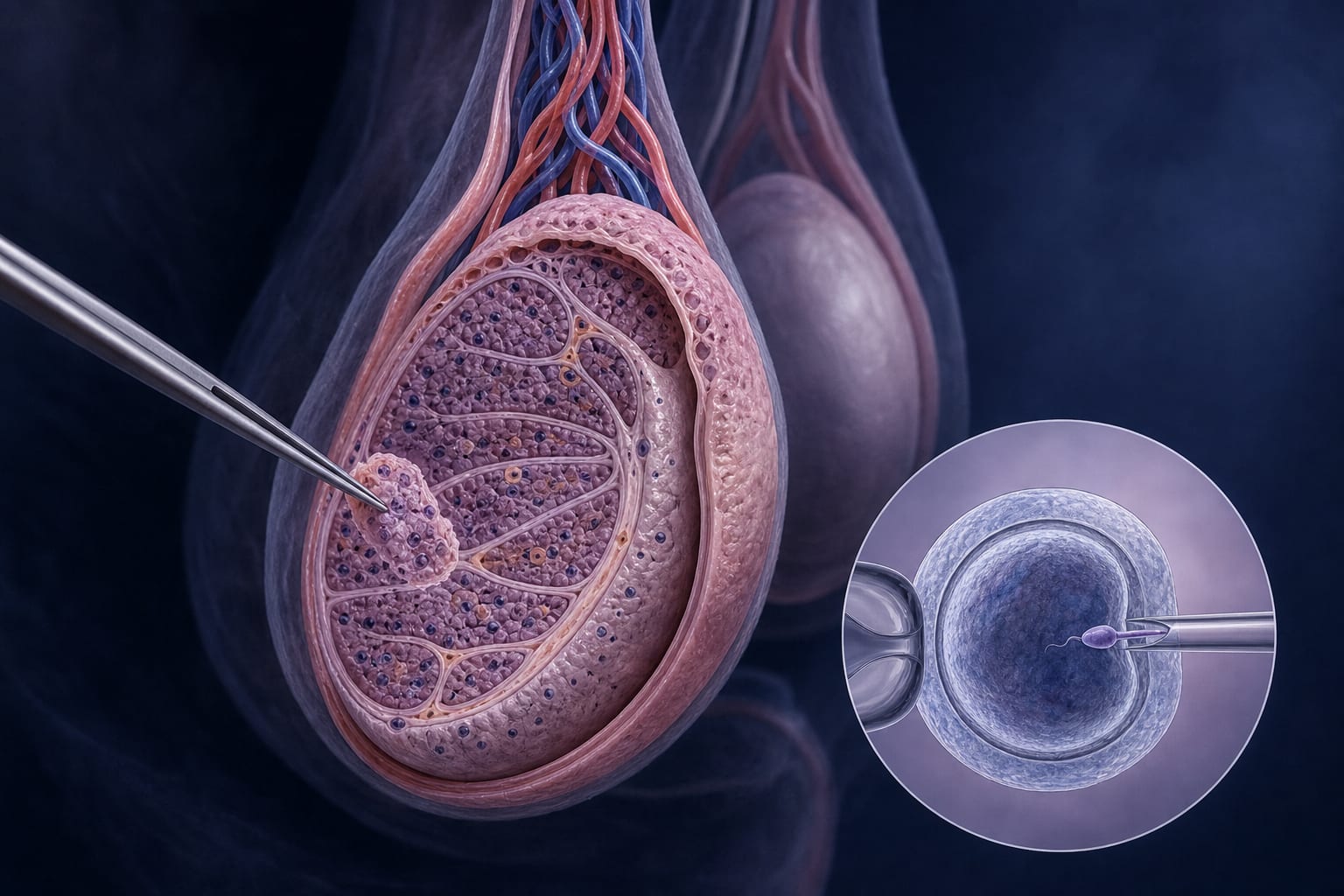
To determine whether physiologic gonadotropin-based hormonal optimization (hCG with FSH) increases sperm availability for ICSI in men with idiopathic non-obstructive azoospermia (NOA) and biochemical hypogonadism.
Approach:
Study Design: A multicenter, randomized, controlled, parallel-group superiority trial allocating participants 1:1 to hormonal therapy or standard-of-care (SOC).
Participants: Men with idiopathic NOA, total testosterone <350 ng/dL, and FSH ≥7.6 IU/L, excluding those with specific criteria such as cryptorchidism or prior chemotherapy.
Intervention: Participants in the intervention arm receive gonadotropin-based hormonal optimization using hCG and recombinant FSH, with hormonal monitoring and dose titration.
Control: The control arm receives standard management without hormonal therapy.
Endpoints: Primary endpoint is sperm availability suitable for ICSI from randomization through Week 16; secondary outcomes include micro-TESE sperm retrieval success, need for surgery, embryologic outcomes, and treatment safety.
Key Findings:
Microdissection testicular sperm extraction (micro-TESE) has variable success rates (40%-60%) in retrieving sperm for ICSI.
Evidence from randomized controlled trials assessing the efficacy of hormonal optimization in enhancing spermatogenesis in hypogonadal men is lacking.
The APHRODITE criteria classify men with idiopathic infertility and hypogonadism to identify those who may benefit from endocrine modulation.
Interpretation:
Limitations:
Exclusion criteria may limit generalizability to all men with NOA.
The study focuses on a specific subgroup (APHRODITE Groups 3 and 4) which may not represent the entire NOA population.
Conclusion:
This trial is designed to evaluate whether gonadotropin-based hormonal optimization improves sperm availability for ICSI in men with idiopathic NOA.