Frequent oropharyngeal detection of Treponema pallidum DNA in patients with syphilis: a cross-sectional study of three anatomical sampling sites - Summary - MDSpire
Conexiant’s news site is now MDSpire News. Learn more
Advertisement
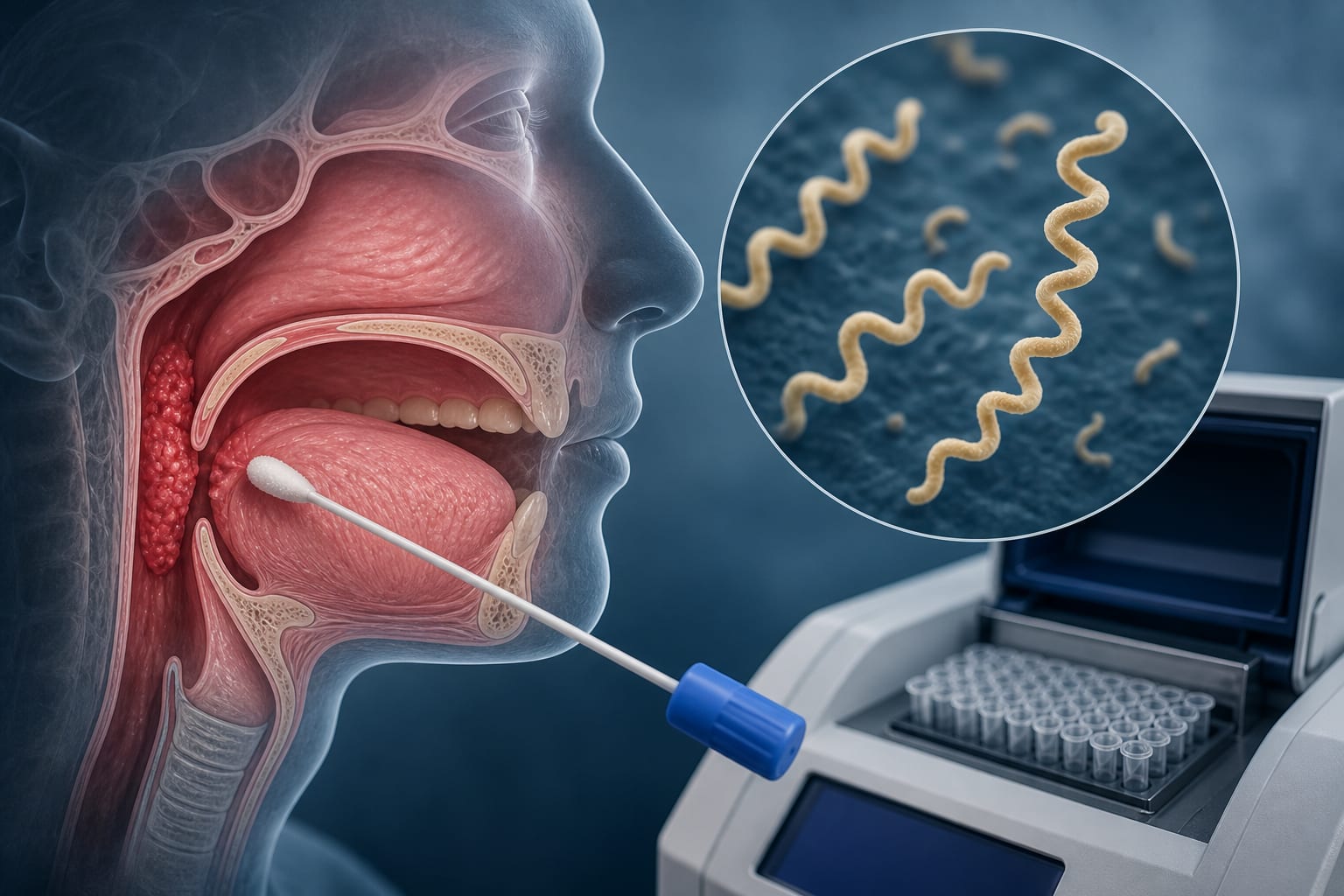
Prevalent Detection of Treponema pallidum DNA in the Oropharynx of Syphilis Patients: A Cross-Sectional Analysis Across Three Anatomical Sampling Locations
To compare Treponema pallidum polymerase chain reaction (PCR) positivity across oropharyngeal, anorectal, and urogenital sites and assess its associations with syphilis stage and Venereal Disease Research Laboratory (VDRL) titer.
Approach:
Study Design: This retrospective cross-sectional study included 70 patients with serologically confirmed syphilis at a specialist sexually transmitted infection clinic in Gdańsk, Poland, **from May 2024 through December 2025**. Researchers analyzed 171 samples; not every patient provided samples from all three sites.
Key Findings:
PCR positivity was highest in oropharyngeal samples (27/65, 41.5%), compared with urogenital (13/65, 20.0%) and anorectal (8/41, 19.5%) samples.
In the adjusted analysis, oropharyngeal samples had higher odds of positivity than urogenital samples. Late or unknown-duration syphilis had lower odds of positivity than early syphilis, while each doubling of VDRL titer was associated with higher odds.
Of 48 PCR-positive samples, 31 (64.6%) came from sites with neither local symptoms nor objective clinical findings.
Interpretation:
Oropharyngeal sampling warrants prospective evaluation as an adjunct to serology when early syphilis is suspected and suitable lesion material is unavailable. The findings do not establish its use for routine screening or as a replacement for serology.
Limitations:
The retrospective, single-clinic study was small, and incomplete three-site sampling could have introduced selection bias.
The study lacked syphilis-negative oropharyngeal controls and independent molecular confirmation of positive oropharyngeal results, so it could not directly establish the assay’s specificity in oral samples.
Conclusion:
Treponema pallidum DNA was detected most frequently in oropharyngeal samples, including at clinically normal sites. Prospective diagnostic studies are needed before oropharyngeal sampling can be recommended for routine practice.