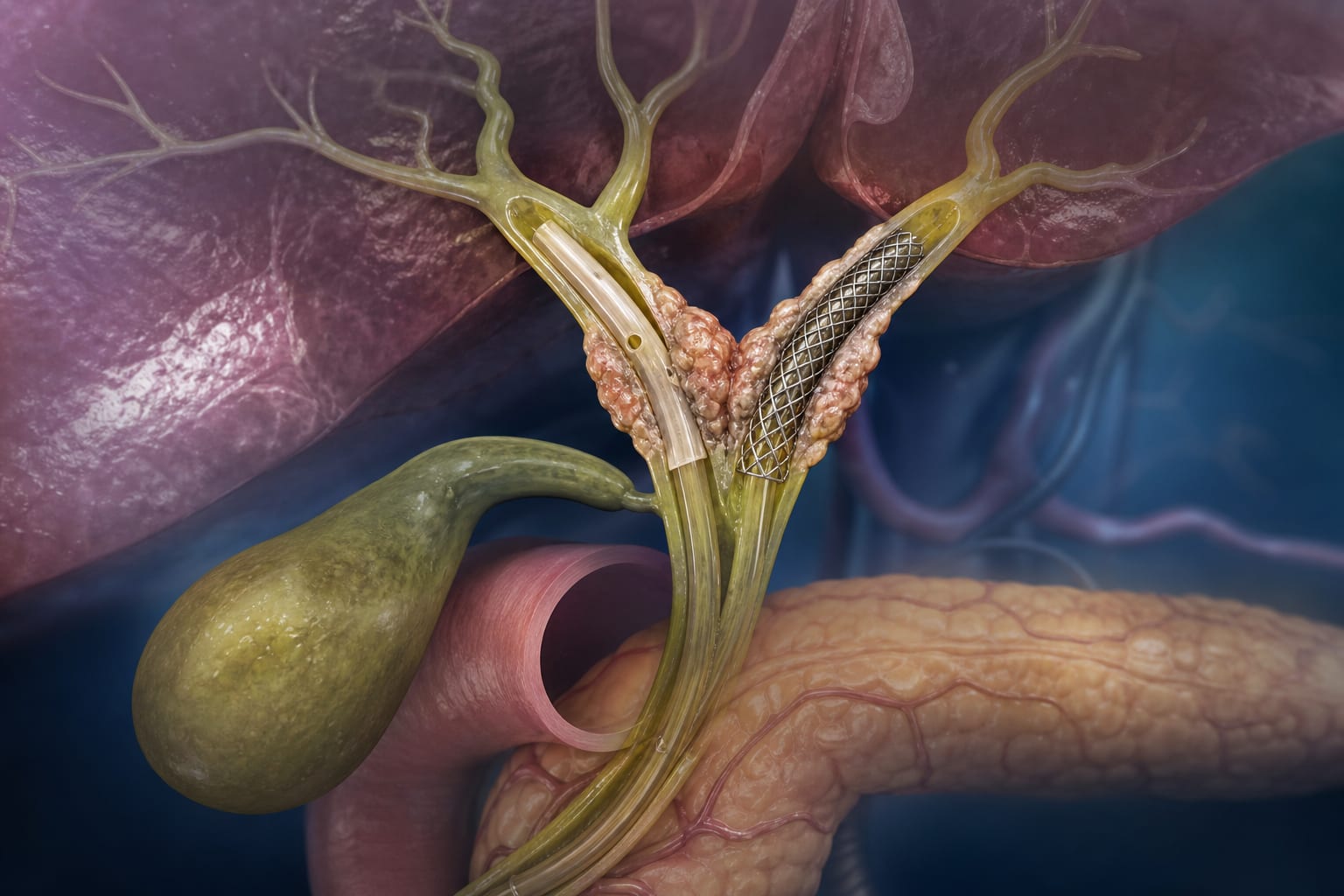
To assess the clinical success and stent patency rates of endoscopic drainage using SEMS versus PS in patients with unresectable malignant hilar biliary obstruction, along with overall survival, reintervention rates, and the need for PTBD.
Approach:
Study Design: A retrospective study conducted at the Instituto do Câncer do Estado de São Paulo (ICESP) analyzing ERCP procedures for malignant neoplasms.
Patient Inclusion: Included patients with unresectable MHBO classified as Bismuth II to IV who underwent endoscopic drainage from January 2015 to December 2022.
Procedure: ERCP was performed under general anesthesia, with stent type and placement determined by the endoscopist based on anatomical complexity and patient condition.
Key Findings:
SEMS are associated with lower dysfunction rates and longer patency compared to PS.
Some studies report improved clinical success and survival rates with SEMS, but findings are not consistently replicated.
A higher incidence of PTBD was noted in patients with SEMS.
Interpretation:
The study highlights the ongoing debate regarding the benefits of SEMS versus PS in managing MHBO, particularly concerning patency and survival outcomes.
Limitations:
Retrospective design may introduce bias.
Exclusion of patients with drainage failure limits generalizability.
Conclusion:
The study provides insights into the comparative effectiveness of SEMS and PS in the management of MHBO, emphasizing the need for further research.
by Pastor Joaquín Ortiz Mendieta, Bruno da Costa Martins, Deborah Marques Centeno, Julia Mayumi Gregorio, Rafael Utimura Sueta, Adriana Vaz Safatle Ribeiro, Caterina Maria Pia Simoni Pennacchi, Carla Cristina Gusmon, Gustavo Andrade de Paulo, Luciano Henrique Lenz Tolentino, Marcelo Simas de Lima, Renata Nobre Moura, Sebastian Naschold Geiger, Fauze Maluf-Filho