Integrating chemokine signatures and multi-omic biomarkers to predict immunotherapy response in non-small cell lung cancer: a comprehensive narrative review - Summary - MDSpire
Advertisement
Integrating chemokine signatures and multi-omic biomarkers to predict immunotherapy response in non-small cell lung cancer: a comprehensive narrative review
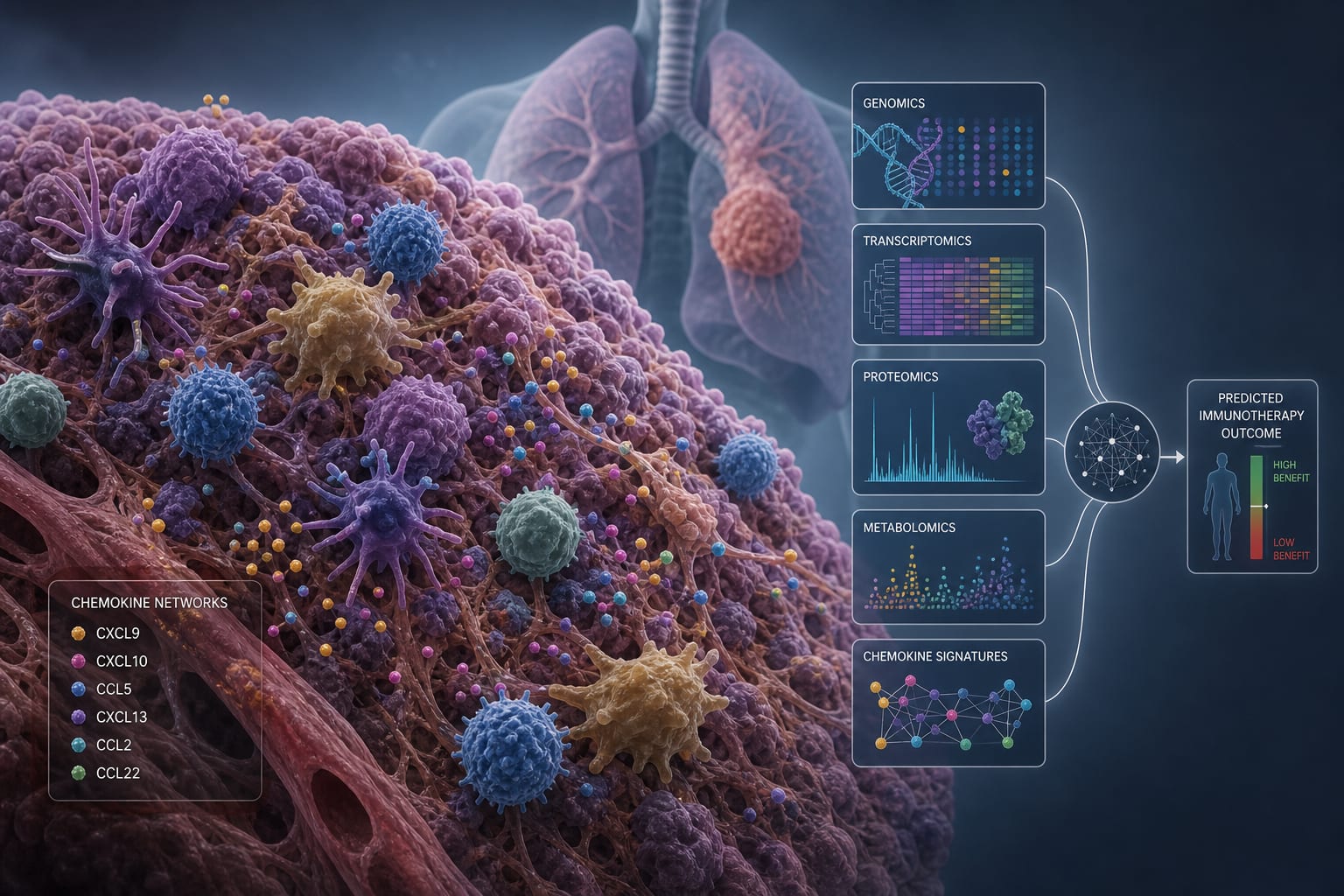
To evaluate emerging predictive tools for immunotherapy outcomes in NSCLC, focusing on chemokine signatures and multi-omic biomarkers.
Approach:
Literature Search: A comprehensive narrative literature search of PubMed and EMBASE (2015–2026) was performed to identify relevant peer-reviewed studies, clinical trials, and computational analyses.
Key Findings:
Only 20–30% of unselected NSCLC patients achieve durable responses to immune checkpoint inhibitors (ICIs).
Tumor-derived chemokines, particularly pro-inflammatory Th1-type chemokines, are associated with favorable responses to ICIs, while immunosuppressive chemokines correlate with resistance.
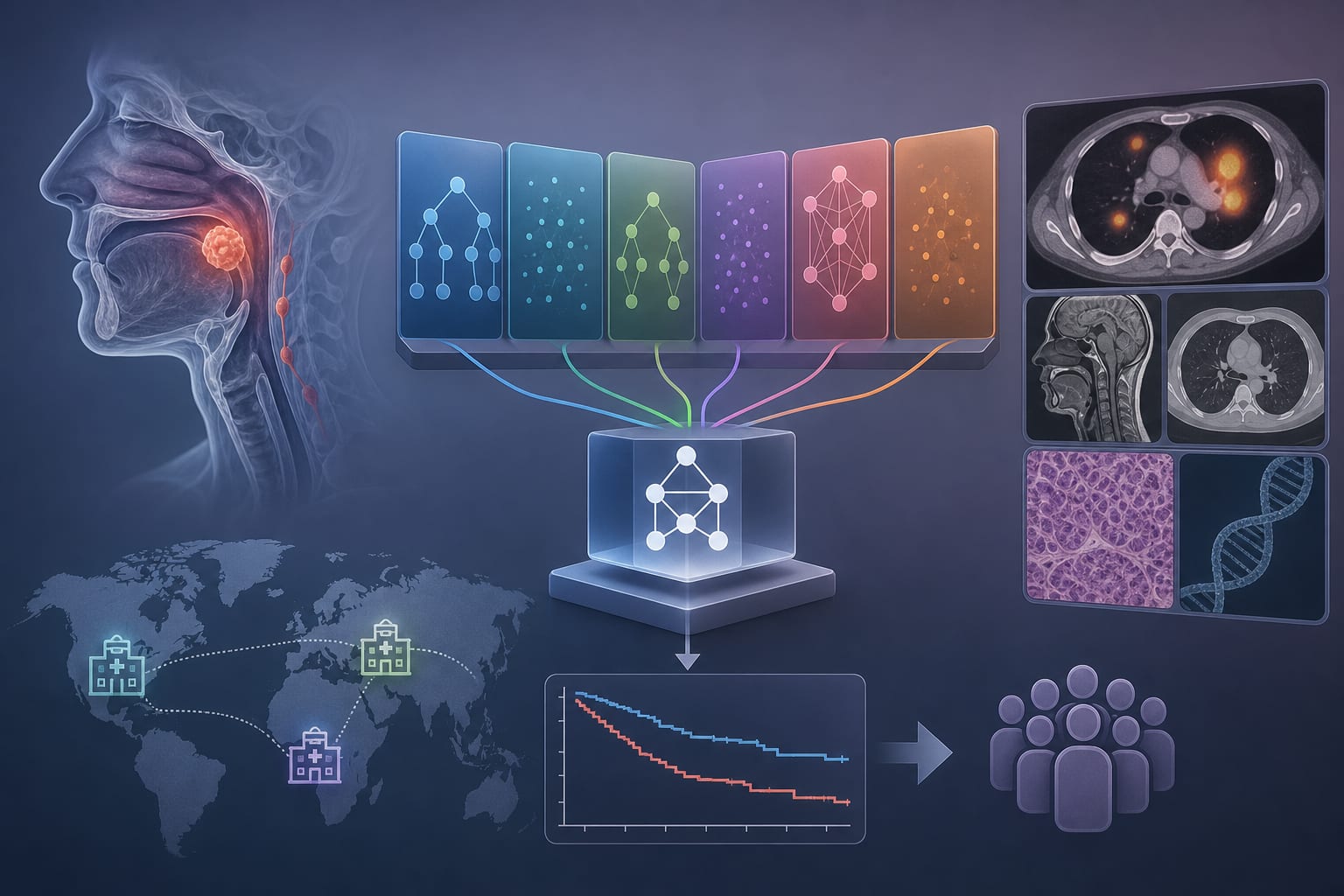
Multi-omic integration yields predictive models that outperform single biomarkers in identifying ICI responders.
Specific genetic alterations in NSCLC tumors, such as co-mutations in STK11/LKB1 or KEAP1, influence the efficacy of checkpoint inhibitors.
Emerging composite biomarkers and machine learning models improve prediction accuracy for immunotherapy benefits.
Interpretation:
Integrating chemokine profiles with multi-omic data holds promise for improving patient selection for immunotherapy in NSCLC.
Limitations:
Challenges include tumor heterogeneity, assay standardization, and data integration complexity.
Emerging models require prospective validation in clinical trials.
Conclusion:
Combining chemokine profiling with multi-omic biomarkers may refine patient selection for immunotherapy in NSCLC.
Dana-Farber Cancer Institute's Dr. Sara Tolaney presented a subgroup analysis of the ASCENT-04 study based on biomarkers. Across all subgroups, patients who received sacituzumab govitecan plus pembro as first-line therapy had longer progression-free survival compared to standard therapy.