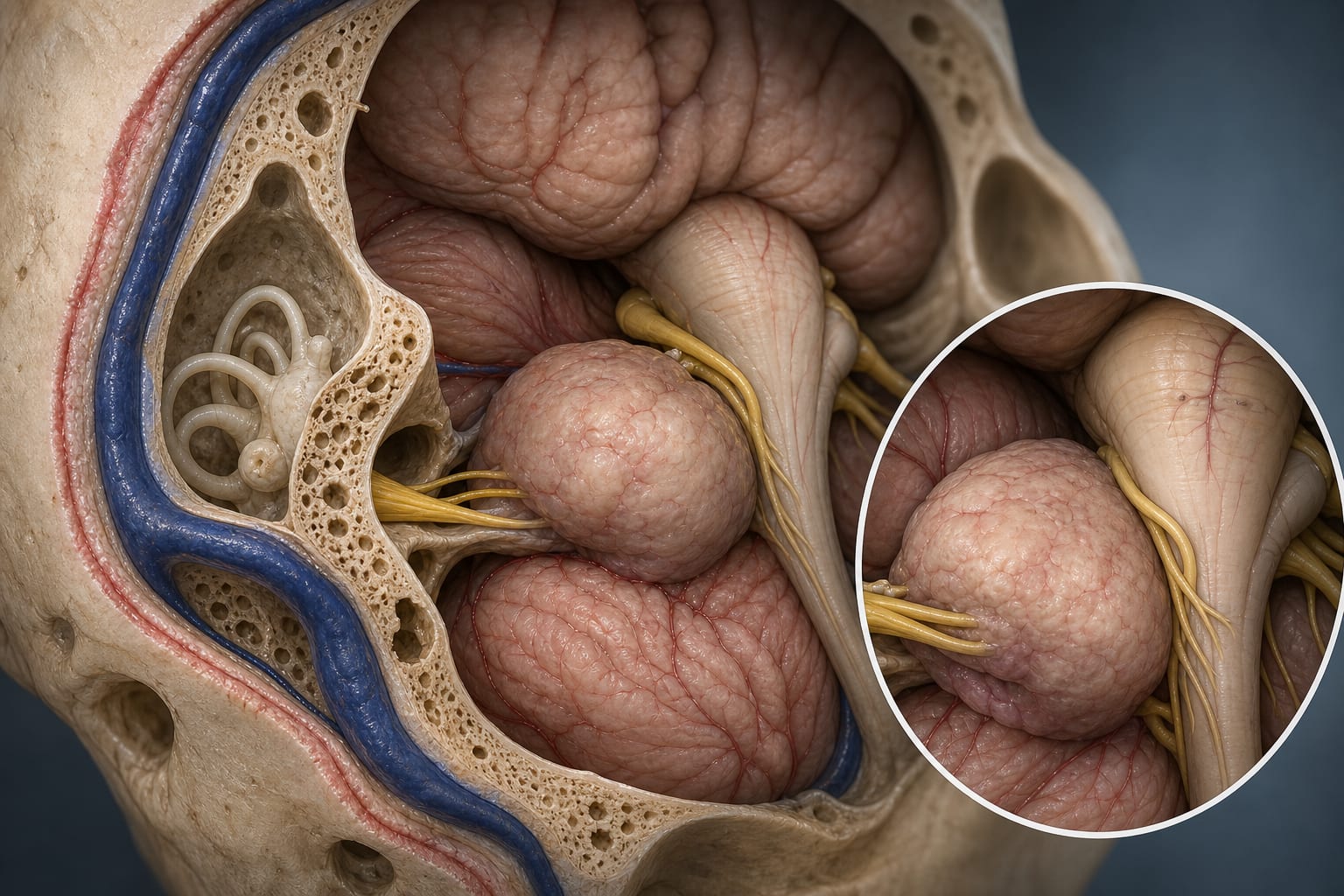
To develop and validate a supervised machine-learning model for detecting middle ear effusion from smartphone-captured tympanic membrane images in pediatric patients, addressing the high misdiagnosis rates in clinical practice.
Approach:
Key Findings:
The model achieved 96% sensitivity, 81% specificity, and 89% accuracy during training, indicating strong initial performance.
Testing performance showed 87% sensitivity, 74% specificity, and 81% accuracy, reflecting a decline that may be attributed to sample size.
Balanced accuracy on the test set was 80.4% with an F1 score of 82.5%, highlighting the model's overall effectiveness.
Interpretation:
The supervised machine-learning algorithm demonstrated promising results in detecting middle ear effusion from smartphone images, indicating potential for improved diagnostic accuracy in clinical settings.
Limitations:
Limited sample size may have contributed to performance differences between training and testing.
No external validation was performed, raising concerns about generalizability.
Lack of comparison with clinician diagnostic performance limits the study's applicability.
Potential information leakage due to image-level data splitting could affect results.
Uniform image quality may limit generalizability due to device heterogeneity.
Conclusion:
The study suggests that smartphone-based imaging combined with machine learning could enhance the detection of middle ear effusion in pediatric patients, potentially improving diagnostic accuracy in clinical settings.
Systematic review identifies key prognostic factors for TMD pain and function but emphasizes low-certainty evidence and need for more rigorous research.