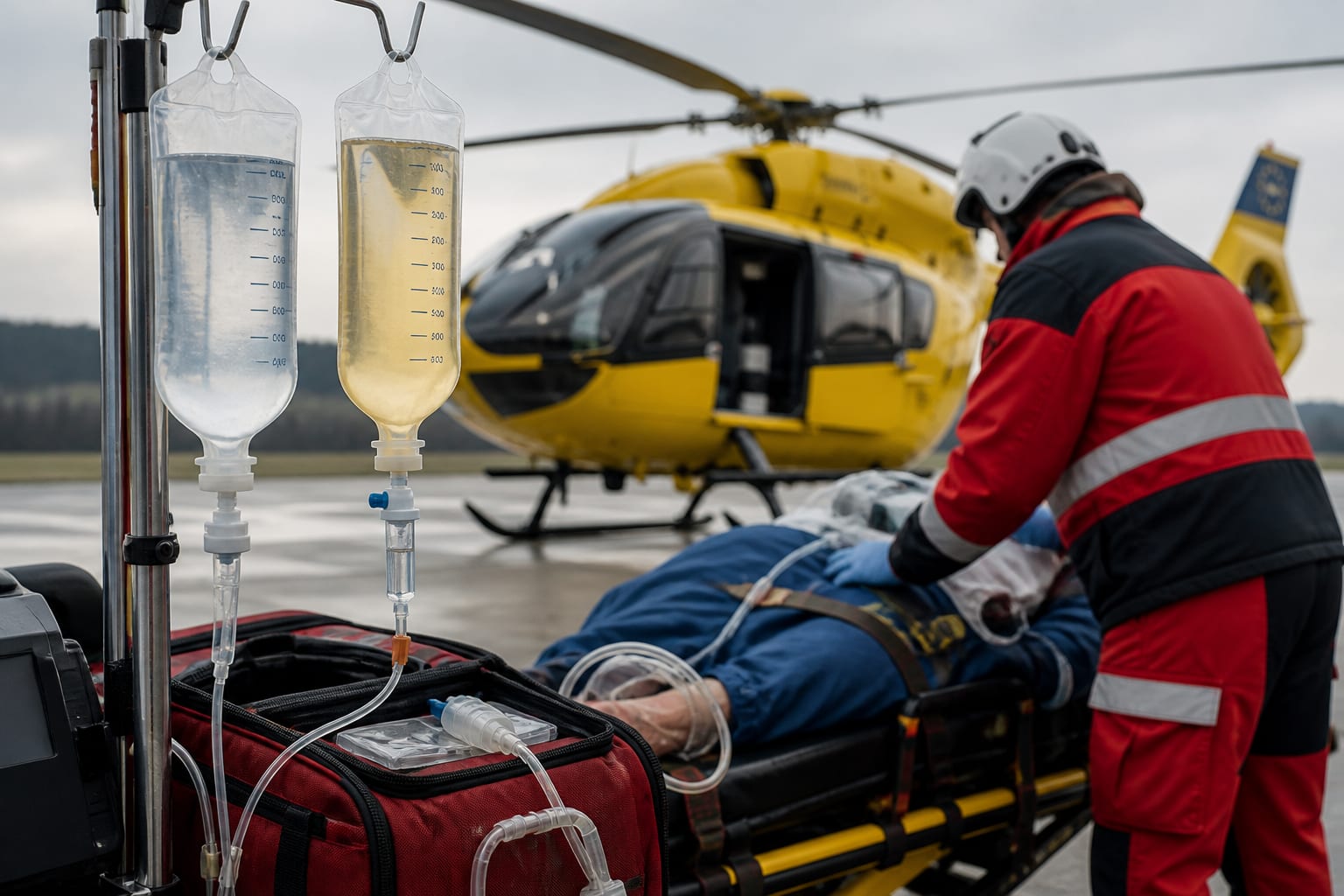
To describe changes in hydroxyethyl starch (HES) use across missions by two German helicopter emergency medical services (HEMS).
Approach:
Design and data: Descriptive analysis of separate ADAC and DRF HEMS databases; missions without patient contact were excluded.
Analysis: Annual HES use was assessed with Mann–Kendall trend tests and Theil–Sen slopes. Trends between operators from 2012–2022 were compared using Pearson correlation.
Key Findings:
ADAC data covered 811,000 patient-contact missions from 2004–2022. HES use fell from 3,104 cases (13.4%) in 2004 to 81 (0.2%) in 2022; the downward trend was significant (p < 0.001).
DRF data covered 364,386 patient-contact missions from 2012–2022. HES use fell from 1,564 cases (4.6%) in 2012 to 105 (0.3%) in 2022; the downward trend was significant (p < 0.001).
Across the 11 years from 2012–2022, annual HES-use trends at ADAC and DRF were strongly positively correlated (r = 0.984, 95% CI 0.937–0.996; p < 0.001).
Interpretation:
The authors report that HES use was almost absent by 2022 and that crystalloids had become the principal prehospital fluid therapy. They note that the safety of HES 130/04 for prehospital patients with shock or major bleeding remains unestablished.
Limitations:
The analysis was descriptive and based on two operators’ databases, which were evaluated independently because of differences in documentation and legal circumstances.
The study reports utilization trends, not comparative patient outcomes or the safety and effectiveness of HES in prehospital emergency patients.
Conclusion:
The authors state that further research is needed to determine whether current crystalloid regimens should continue or HES 130/04 can be used safely for prehospital fluid resuscitation.